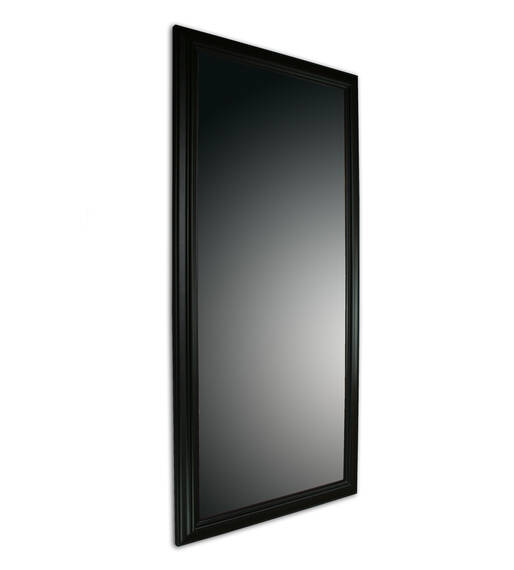
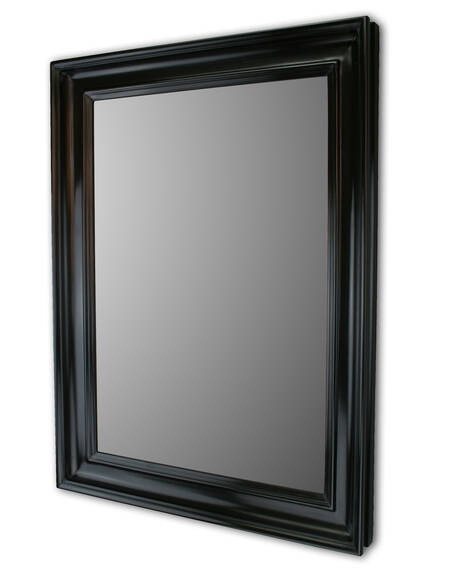
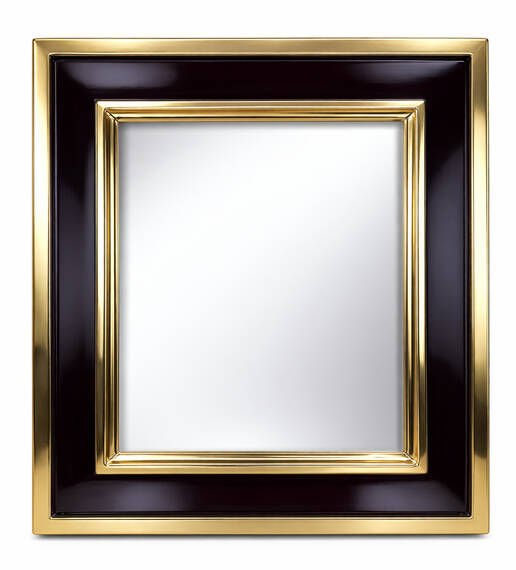
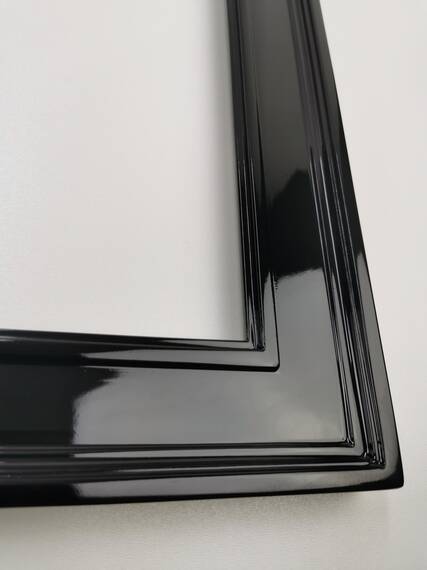
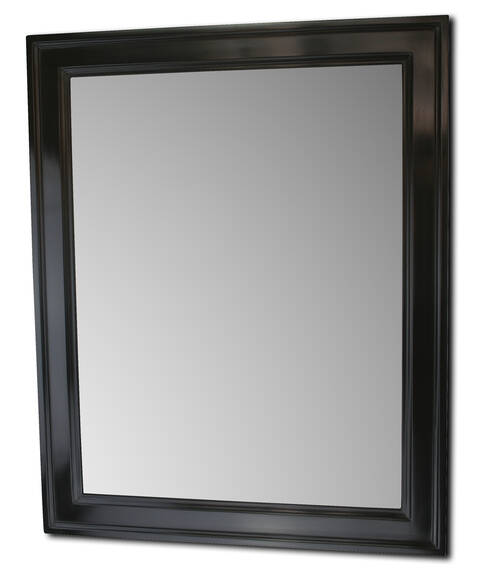
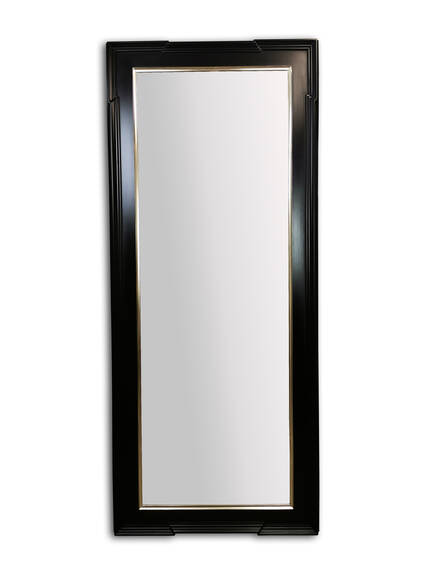
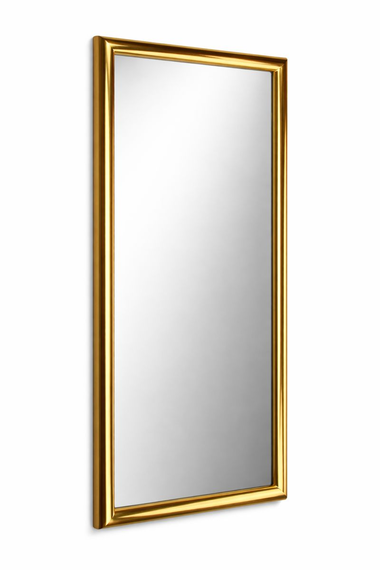
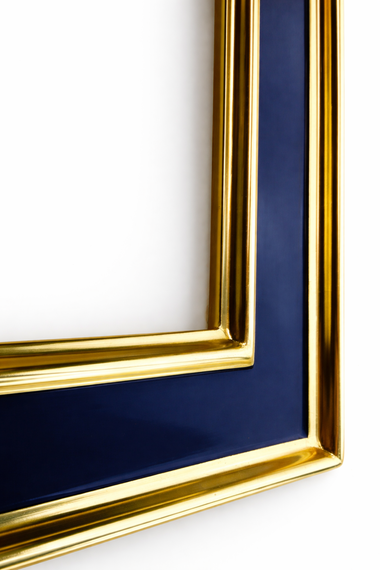
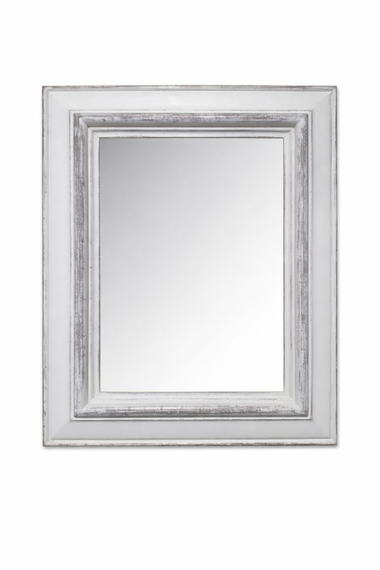
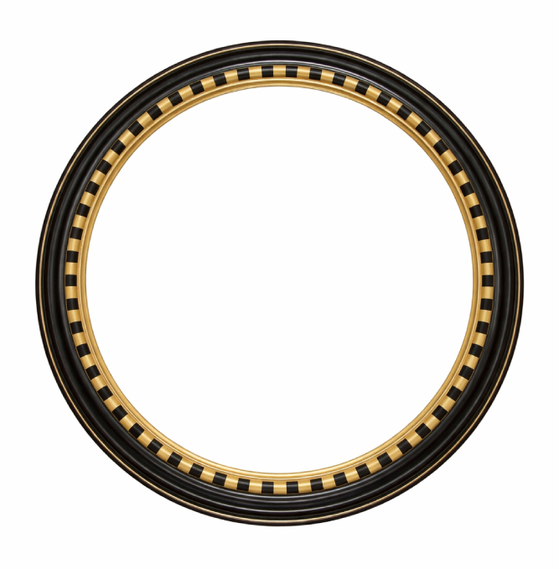
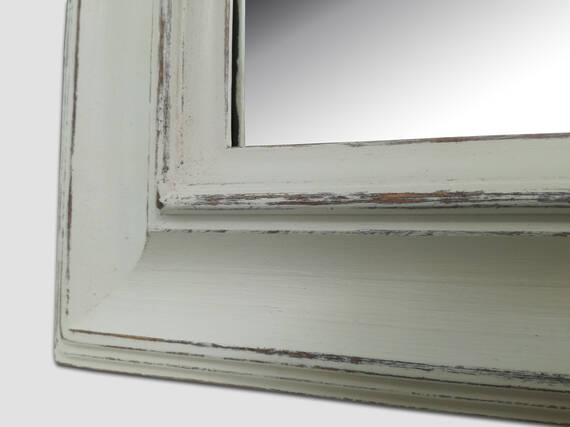
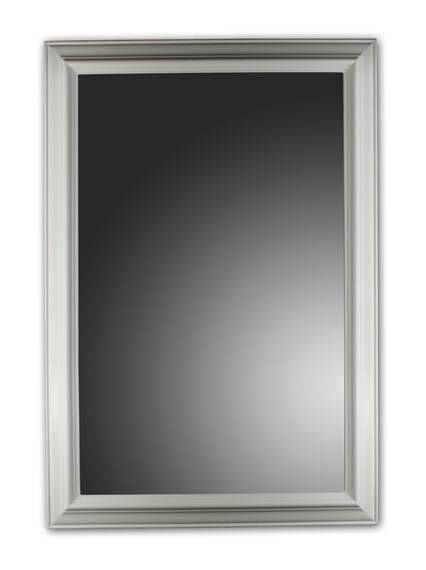
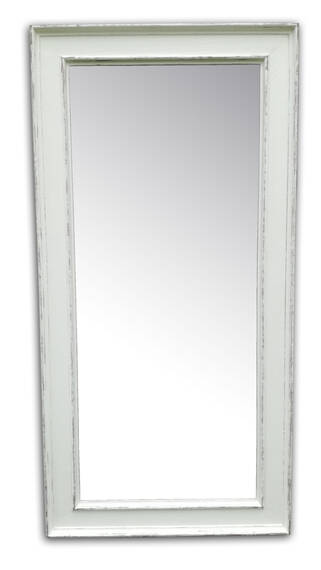
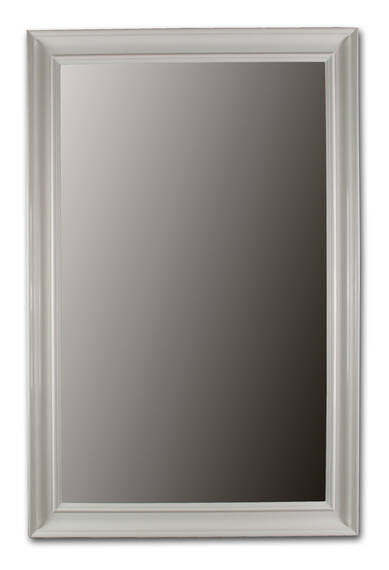
A framed mirror has to do two things at once: fit the wall it hangs on, and sit correctly with the rest of the room. Nothing here is stocked ready-made, so both are settled at the point of order — you give me the two outer dimensions, including the frame, and choose the moulding, the colour and the finish. I build the frame from solid wood, finish it by hand, then fit the glass and the backing myself.
Choosing by style or by room
The section is divided two ways, because people arrive with two different questions.
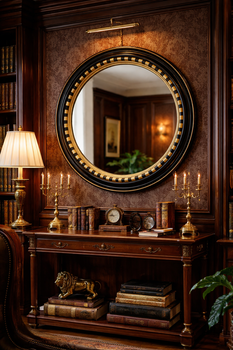
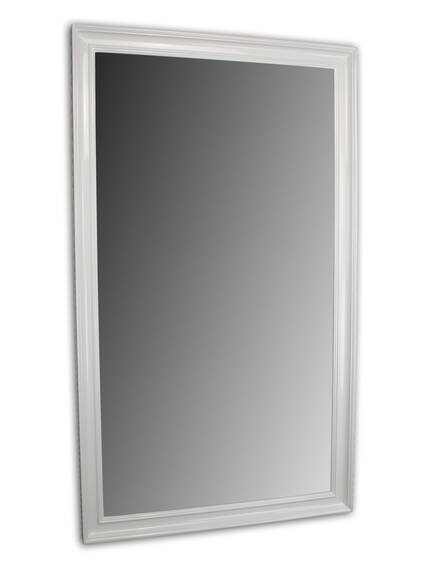
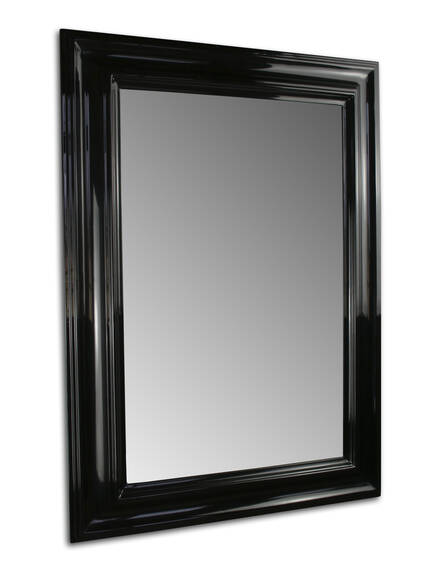
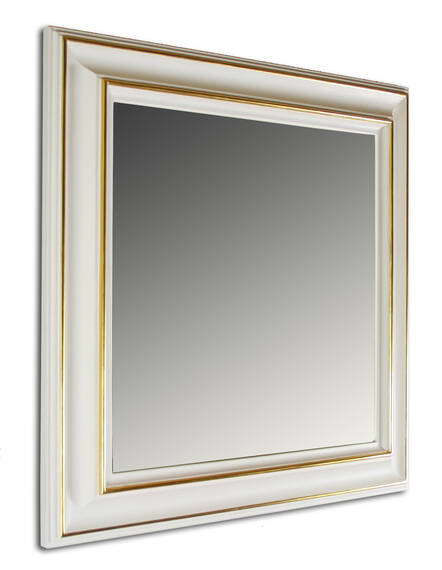
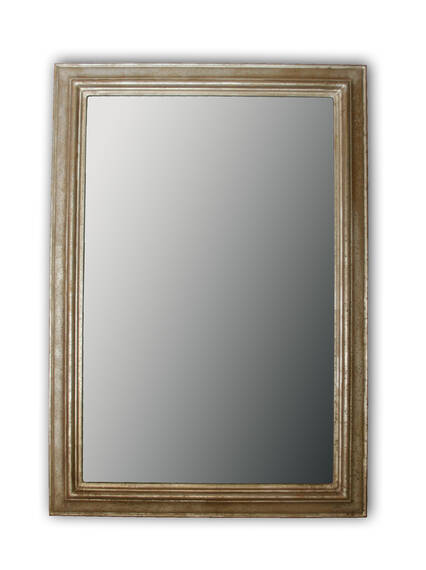
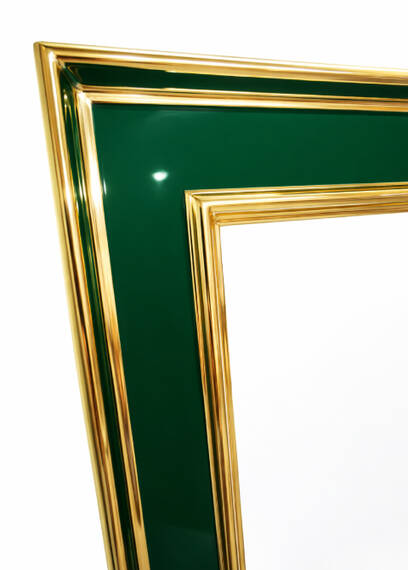
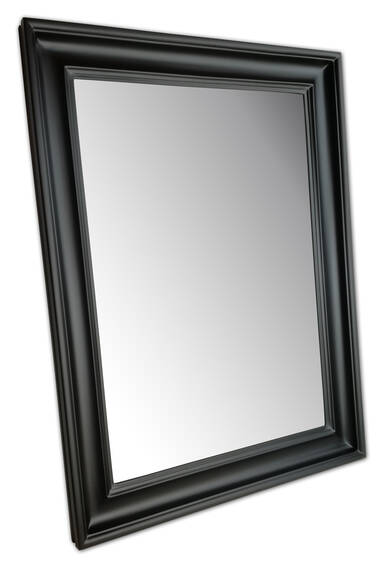
If you already know the look you want, start with style. Decorative mirrors gather the models with a richer, more sculpted moulding, where the frame is meant to be the focal point of the wall. Glamour mirrors concentrate on brilliance — burnished gold leaf, high-gloss lacquer, clean profiles without ornament. Classic mirrors hold the restrained, traditionally profiled frames that settle into a room rather than dominating it.
If you are furnishing a particular space, start there instead. Bathroom mirrors covers models finished for humid rooms, with the demister and bevel options that matter most in a bathroom. Hallway mirrors covers the tall, narrow formats that suit an entrance. Living room mirrors covers the larger pieces made for a fireplace wall, a console or a sofa. Several models appear in more than one section — the same frame can be finished for a bathroom or for a living room.
How the frames are made
Each frame begins as a length of moulding, cut and joined while still raw. The corners are joined with wooden dowels rather than glued edge to edge, which keeps the joint stable as humidity changes through the year and stops it opening up on larger, heavier pieces. Only once the frame is built does it get its surface: several coats of high-pigment paint and lacquer, gold leaf, or a combination of the two.
Gilding is done with genuine leaf, laid one leaf at a time. Depending on the model that means 23-karat yellow gold, 22-karat moon gold with its cooler tone, 6- or 12-karat white gold, genuine silver leaf, or palladium. On water-gilded frames the leaf is laid over prepared bole and can then be burnished, which is what gives gold the deep polish that gold-effect foil and metallic sprays never reach. The method is described on the water gilding page. Not every mirror here is gilded — a large part of the range is painted only, in a satin, semi-matt or high-gloss finish.
The back and the sides of every frame are finished in the same colour as the front, including the edge that faces the wall.
Glass, backing and hanging
The standard pane is SGG Miralite Pure Diamant 4 mm, OptiWhite — low-iron mirror glass without the green cast of ordinary mirror. Colours read correctly in the reflection, which matters when you are dressing or applying make-up in front of it. The coating on the reverse protects the silvering and, where you want it, allows LED backlighting to be fitted behind the glass.
The backing is HDF or MDF, chosen according to the size of the mirror and the room it is going into. Wall brackets are supplied with every mirror, and reinforced brackets are fitted on large formats.
Sizes, shapes and options
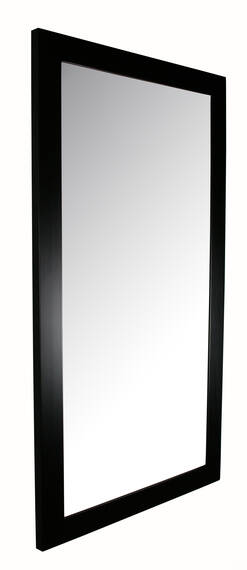
You set the two outer dimensions and the orientation, portrait or landscape. Rectangular formats are the most common, corners can be softly rounded, and round frames are made as well. Both wall-mounted mirrors and free-standing pieces are available.
Two options come up often enough to be worth explaining here:
- Ground bevel — an edge up to 20 mm wide, of which roughly 15 mm stays visible once the glass sits in the rebate. It catches the light along the edge of the glass and reads especially well on narrow mouldings.
- Demister mat — fitted behind the glass before the mirror is assembled, it holds the surface just above dew point so that a bathroom mirror does not fog after a shower.
Frame colour is chosen from a range of more than a hundred high-pigment craft paints, and I can prepare a sample before production starts if you would rather see it against your own wall.
A framed mirror or a frameless one
Frameless mirrors suit interiors meant to read as an uninterrupted surface, and they are the cheaper option. A frame does something different. It gives the mirror an edge, a weight and a colour, so the piece behaves like furniture in the room rather than a gap in the wall, and it protects the most vulnerable part of the glass. Where the mirror is meant to be noticed — above a fireplace, in an entrance, over a dressing table — the frame is usually what makes that work.
Ordering a mirror made to measure
Choose a model, send me the dimensions, and I confirm the details by email before anything is cut. If nothing in the range is quite right — an unusual size, a colour outside the palette, a shape that needs working out — send me a message and I will put together a proposal and a quote. Lead time depends on the size and on how involved the finish is, so I confirm it individually; if your order is tied to a particular date, please tell me before you place it.