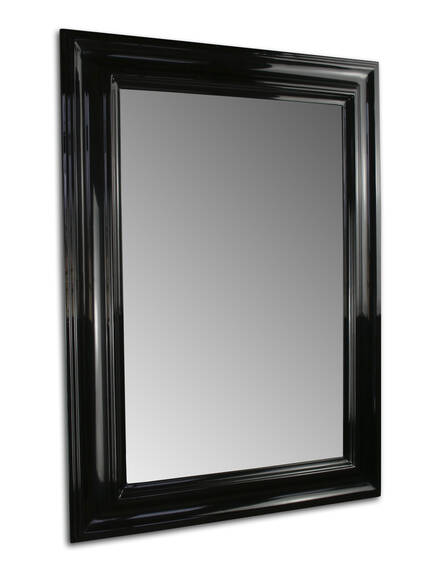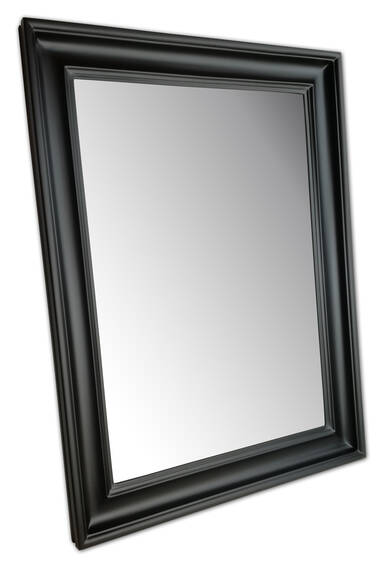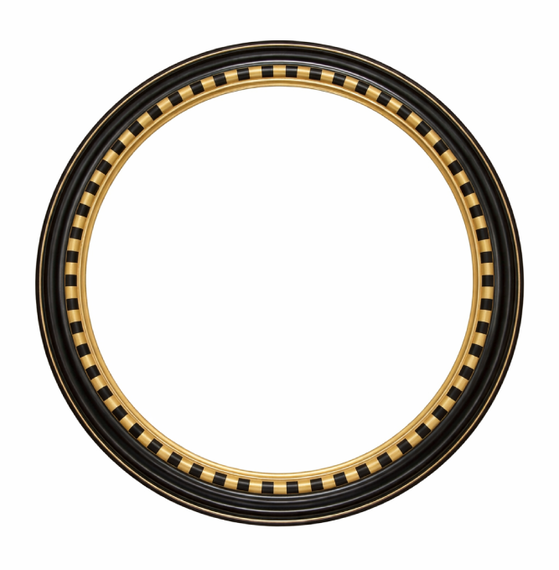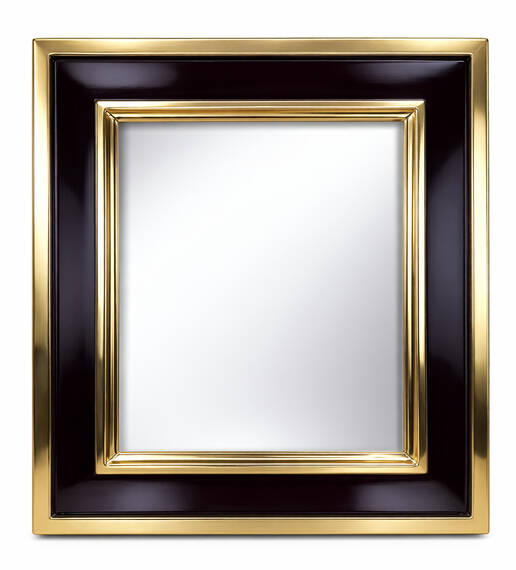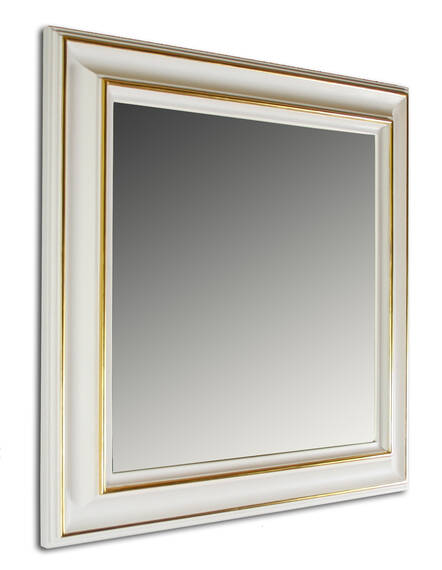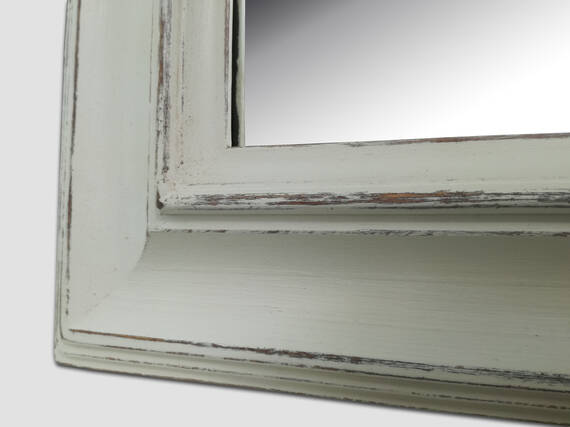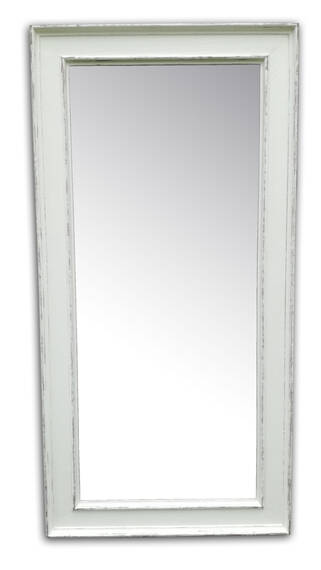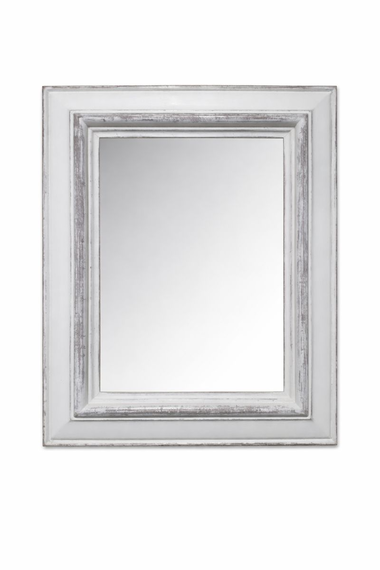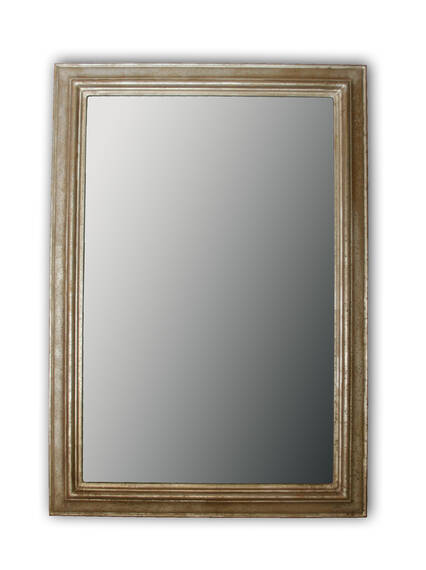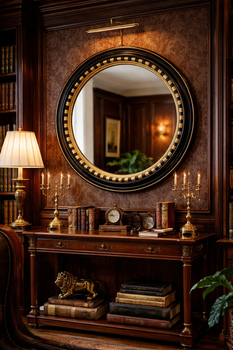
Decorative mirrors are the models where the frame does the work. Instead of a plain border around the glass you get a carved or richly profiled moulding, saturated colour, a hand-distressed surface, or an edge laid with real gold leaf. Everything shown here is made in my workshop, one piece at a time, to the dimensions you choose.
Decorative, classic or glamour — which section to look at
The three mirror sections overlap, and some models would sit happily in more than one. What separates them is where the emphasis falls.
- Decorative mirrors — this section. The frame is the first thing you notice: carving, a wide profiled moulding, rub-through, strong colour or a gilded detail.
- Classic mirrors — quieter, traditional profiles in white, black and gold, chosen to sit with the room rather than dominate it.
- Glamour mirrors — deep black and gold, high gloss, gilded edges along the moulding.
Ornate mirror frames in this category
The decorative character comes from the wood itself and the finish laid over it, not from a printed pattern or applied foil. The models currently in the shop fall into a few groups.
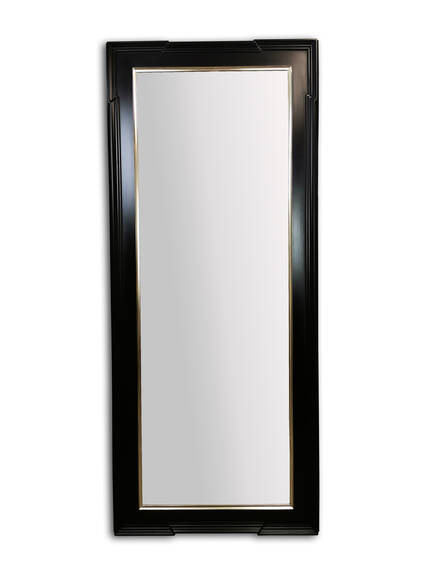
- Carved and heavily profiled frames — Aurea Toscana, hand-carved in limewood and gilded with 23-karat gold leaf, or the black frame with Flemish corners and a hand-gilded inner band.
- Aged finishes — hand distressing and patina: shabby chic frames painted in pastel tones, and Antico Silver, leafed in genuine silver and rubbed back to a vintage surface.
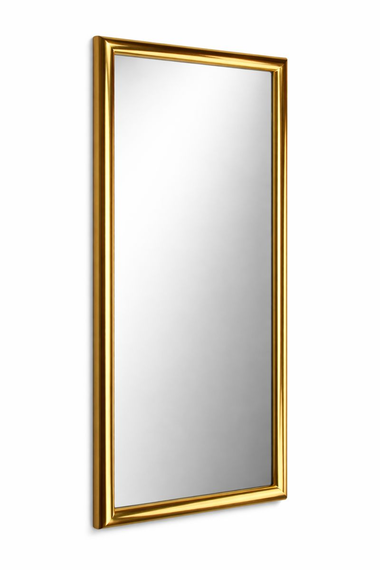
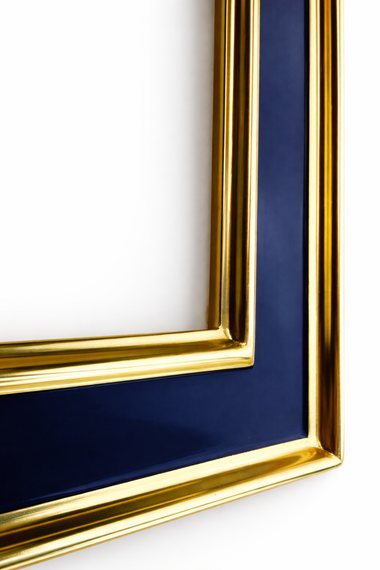
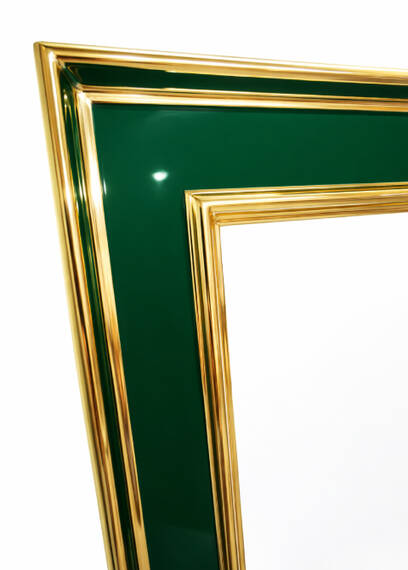
- Colour combined with gilding — black and gold, burgundy, bottle green, turquoise, navy, red or cream, with gold leaf on the edge of the moulding.
- Shapes other than a rectangle — round frames, and frames divided with glazing bars, such as the 80 × 180 cm model in a silver frame.
Gold leaf, silver leaf and colour
I gild with genuine gold leaf: 23-karat yellow gold, 22-karat moon gold with its cooler, subtly silvery tone, and 6-karat white gold, which reads close to chrome. Selected models are leafed in genuine silver and sealed with traditional shellac and wax so the surface does not darken; palladium versions can be made to order. Colours come from my own palette of high-pigmentation paints — chalky white and cream, greys and greens, through to black and burgundy. Gilding most often covers the inner edge or a profiled band of the moulding, but it can cover the whole frame.
How the frame and the glass are made
Frames are built from high-quality wood and the corners are joined with wooden dowels — a joint that holds its angle and does not open up over the years, which matters once the glass gets large and heavy. The panel and the sides are finished together with the front, usually in the same colour, sometimes in deliberate contrast, as with black sides against a gilded face. The standard glass is SGG Miralite Pure Diamant 4 mm OptiWhite, a pane without the greenish cast of cheaper mirrors. The back is closed with HDF or MDF chosen to suit the size, and the fixings let the mirror hang either vertically or horizontally.
Options you can add
On selected models you can add a ground bevel along the edge of the glass, an anti-fog demister mat for a bathroom, and preparation for LED lighting behind the mirror. These depend on the size and construction of the particular frame, so I confirm them individually when the order is placed.
Where a decorative mirror works
Over a fireplace or a console in the living room, a large mirror organises the wall and brings in extra light. In a hallway the frame is the first thing a visitor sees, and in a narrow corridor a slim vertical shape usually works better than a wide one. Above a dressing table or a chest of drawers a richer profile marks out the zone, and in a bathroom an ornamental frame breaks up the purely functional character of the room. In a minimalist interior a single expressive mirror is often the only decoration needed, which is why it is worth setting against a calm background: a matt wall, timber, stone, or fabric in a muted shade.
Size, personalisation and ordering
The dimensions given for each product cover the mirror complete with its frame, and the width of the moulding is stated in the individual description. Every model is made to measure — once the order is placed I get in touch to confirm the final size, so the mirror can be fitted to a particular wall, an alcove, or the width of a chest of drawers. Freestanding versions can be prepared to order.
The frame colour, the type of gilding and the amount of patina or rub-through can all be chosen. If you cannot see a model in the size you need, or you would like a finish other than the ones photographed, write or call and I will put together a proposal for the frame, the gilding and the colour, and send you a quote.