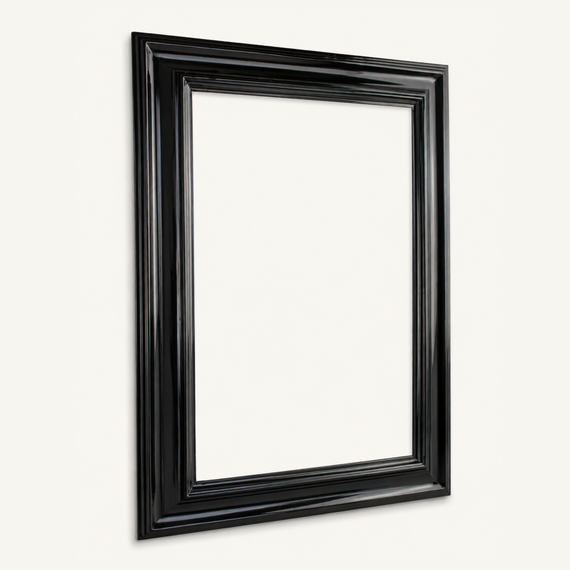
Black Picture Frames – Custom Made to Measure
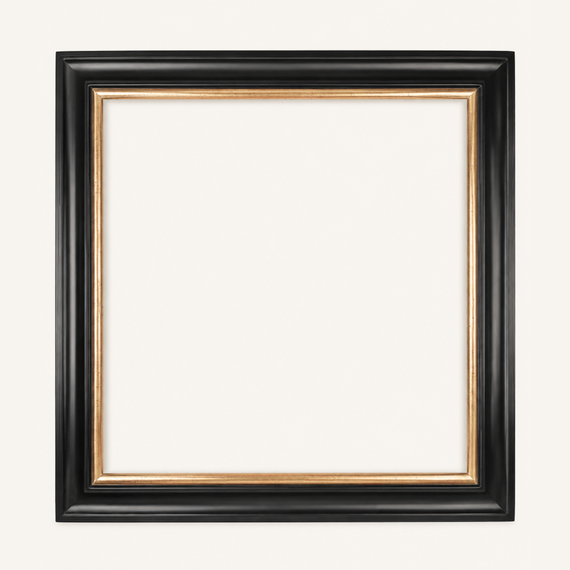
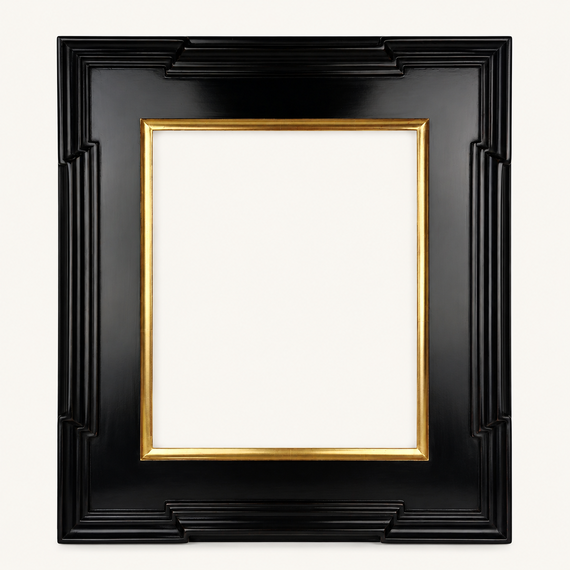
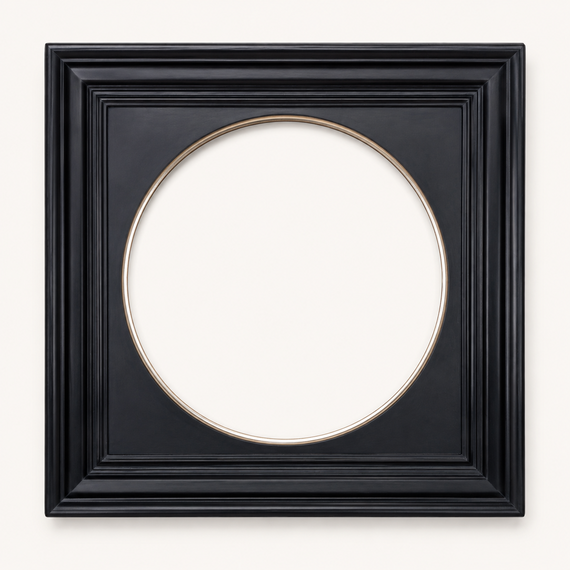
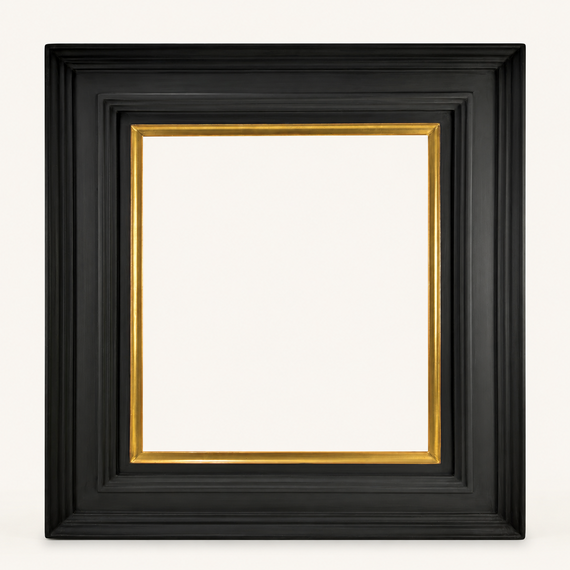
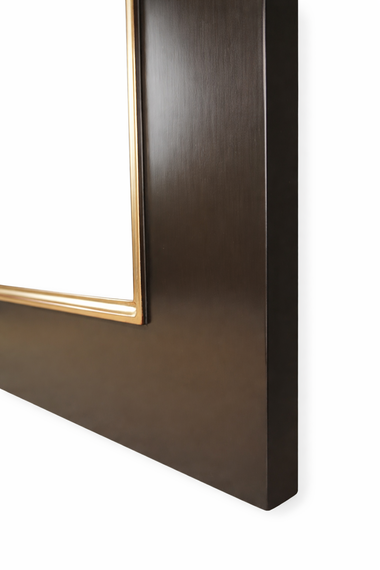
Looking for a black picture frame built to your exact dimensions? In this category you'll find elegant black frames made to measure — solid black finishes as well as frames with subtle, hand-applied gilding accents applied to your preference. Every frame is hand-built around the piece you're framing: a canvas, a print, a photograph or a mirror.
Custom Black Frames for Every Type of Artwork
The internal construction of the frame depends on what's going inside it, so the build is matched to the artwork rather than the other way around:
- Black frames for stretched canvases — fitted with internal spring clips that hold the canvas firmly in place and make mounting straightforward.
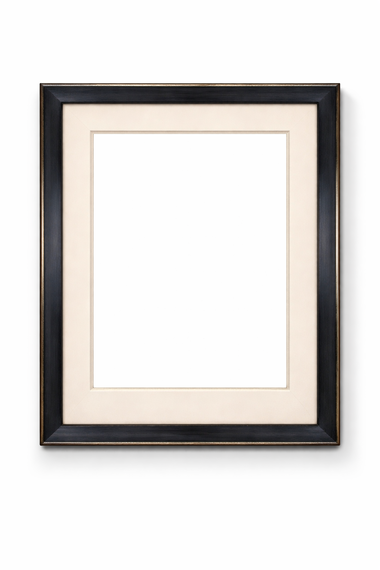
- Black frames for prints and photographs — supplied with glass and a sealed backing on request, protecting the artwork while keeping the front face clean.
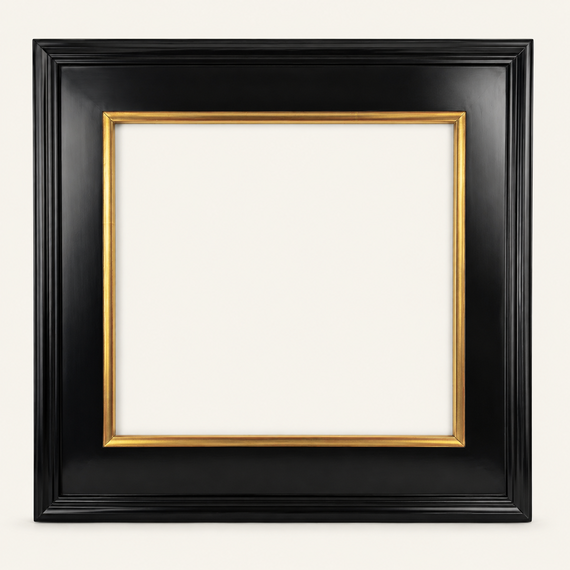
Sizes are made to order, including large square black frames, oversized formats and unusual proportions that aren't available off-the-shelf. If you already know your dimensions, you can request a quote directly; if you don't, send us the artwork measurements and we'll size the frame around it.
Black Floating Frames (Box Frames)
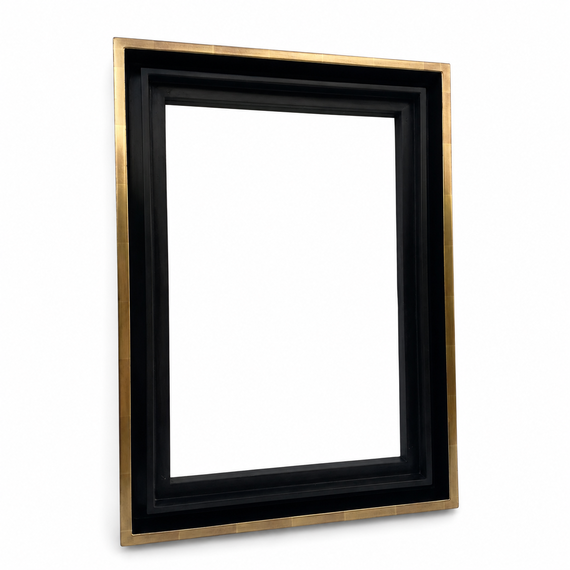
For a more contemporary presentation, we also offer black floating frames — known in the UK as box frames. This is a distinct way of mounting a stretched canvas: a small gap is left between the edge of the painting and the inner edge of the frame, so the artwork appears to hover inside it. The shadow line across all four sides adds depth, and the clean geometry suits minimalist and modern interiors particularly well.
How is the canvas mounted inside a floating frame?
The stretched canvas sits inside the frame without touching the inner edges. It's secured from the back using brackets or hidden screws, which keeps the canvas stable and preserves the characteristic depth gap on every side. The result reads as both more sculptural and more contemporary than a traditional close-fitting frame.
Black Frame Finishes – Gesso, Lacquer and Dutch Profile
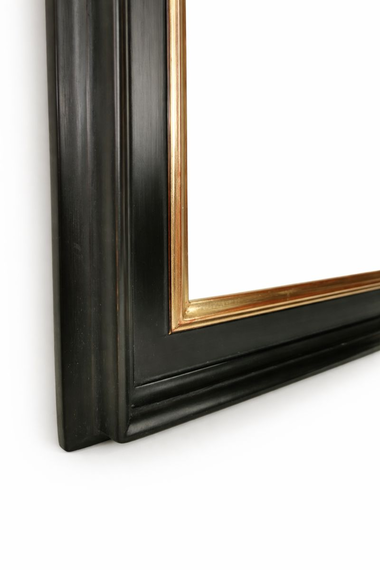
The character of a black frame depends almost entirely on how the surface is finished. The black is built up by hand, in layers, using pigments, paints, waxes and resins — the surface has noticeable depth rather than a flat painted look:
- Black gesso frames — a traditional finish that produces a soft, matte, almost velvety surface with subtle texture from the gesso layers. A natural choice for oil paintings and historically-leaning interiors. See our individual black gesso picture frame for an example.
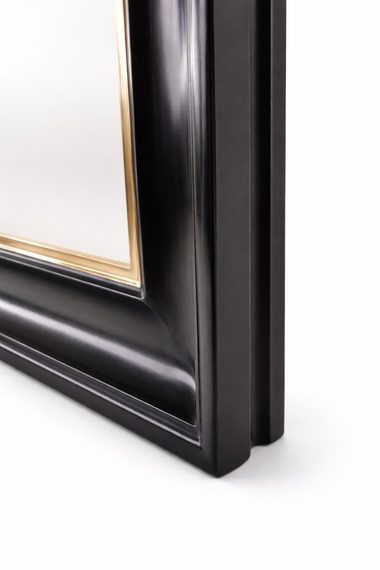
- Black lacquer frames — a deeper, glossier surface with a smoother face, well suited to bold modern paintings, contemporary photography and high-contrast prints.
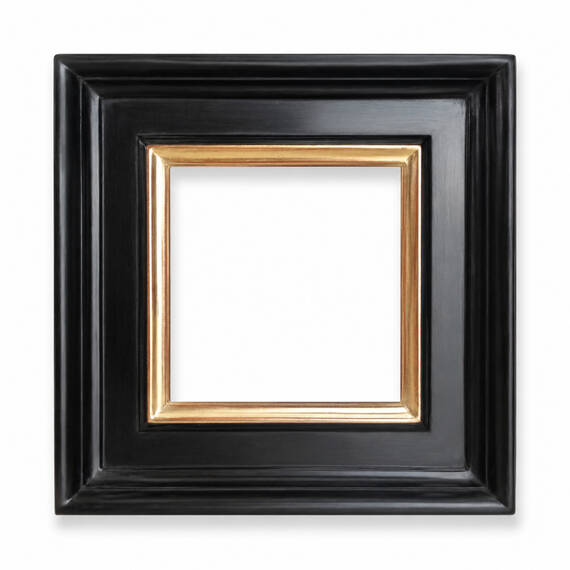
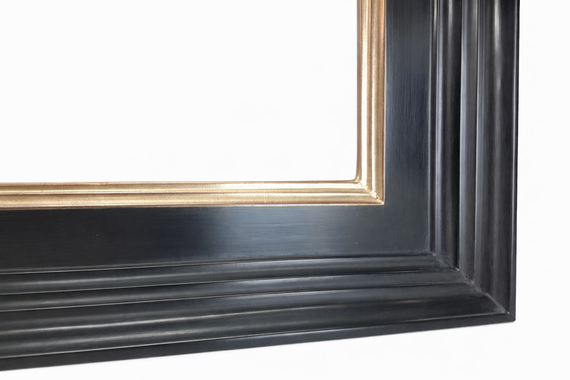
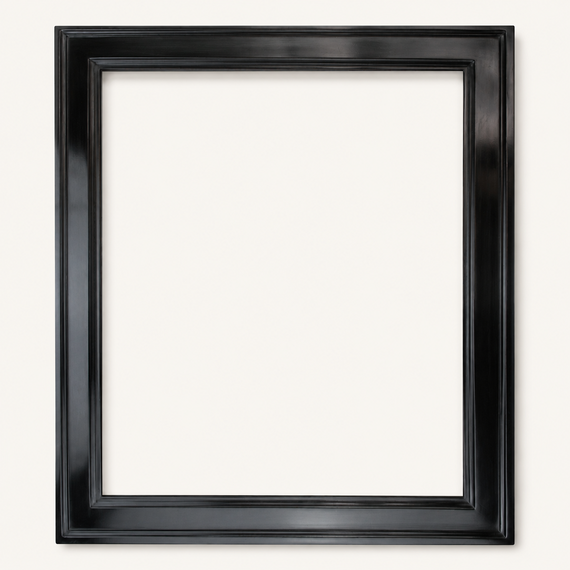
- Dutch black picture frames — based on the classic reverse-profile moulding (wider at the inner edge than at the outer), finished in deep black in the tradition of 17th-century Dutch and Flemish framing. A strong, quiet surround for portraits, still lifes and any artwork that benefits from a weighty edge. The profile and its history are covered in detail in our guide to the Dutch profile moulding.
Traditional Techniques – How Each Black Frame Is Built
Every frame in this category is made in the studio using methods that haven't changed substantially since the seventeenth century — they've simply been refined. Nothing is mass-produced, and nothing is sprayed in a single pass. The depth in a hand-finished black frame comes from layering, time and the right materials:
- Solid wood and mortise-and-tenon joinery. The moulding is cut from properly seasoned hardwood, and the corners are joined with mortise-and-tenon joints rather than simple mitres held together with staples. This is what keeps a large frame square and stable for decades — mitred-and-stapled corners tend to open up with humidity changes; joined corners don't.
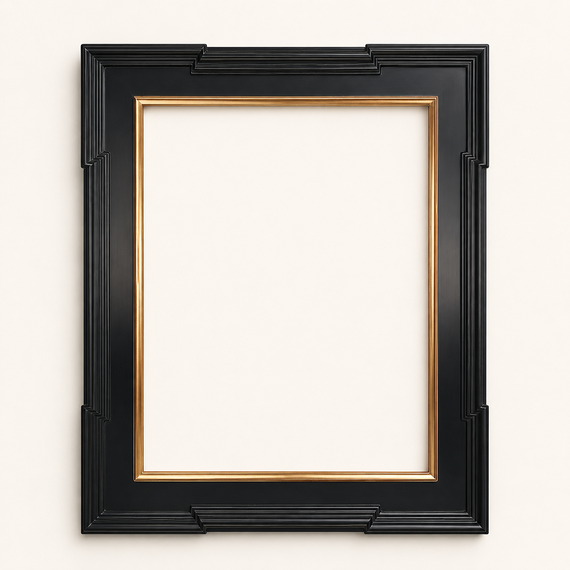
- Hand-carved profiles. Where the design calls for relief — beading, fluting, leaf carving — the detail is cut by hand into the wood before any finishing layers go on. Carving directly into the moulding (rather than applying composition ornament on top) is what allows the black gesso and gilding to sit cleanly into the design.
- Layered gesso ground. The base for every finish is a hand-applied gesso layer — multiple coats of chalk-and-rabbit-skin-glue mixture, each sanded smooth before the next is laid on. The gesso is what gives the final surface its softness and slight texture. For a black gesso finish, the gesso itself is pigmented black and burnished by hand once it has cured.
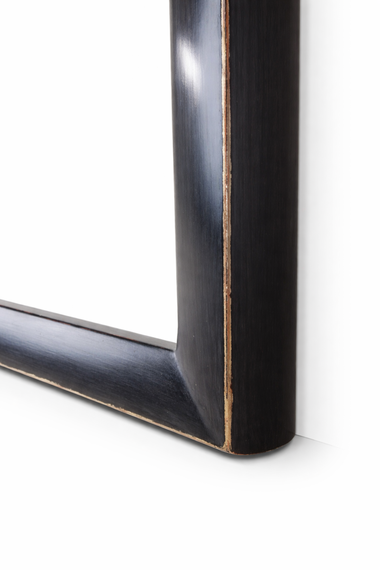
- Hand-applied pigments, waxes and resins. The colour is built up in layers — pigments are blended with waxes and resins and worked into the gesso ground, often with a final wax polish on top. This is why two "black" frames from the studio never read as identical: the surface has movement and warmth instead of a single flat tone.
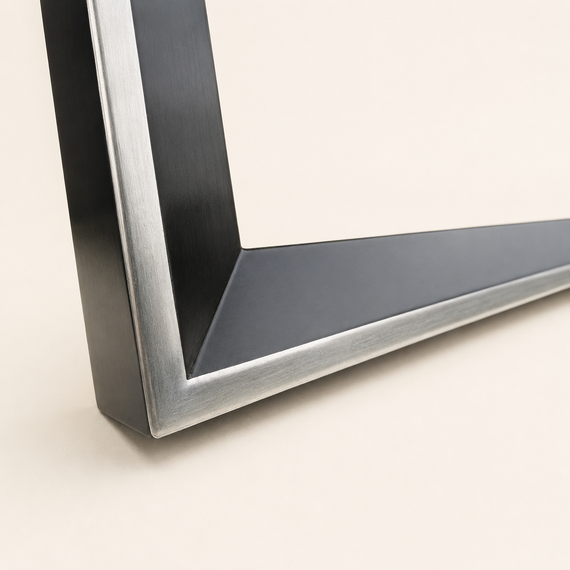
- Water gilding for inner-edge accents. Where a black frame is finished with a gold or silver inner edge, the gilding is applied using water gilding — the traditional method in which loose-leaf gold is laid onto a wet bole layer over the gesso, then burnished with an agate stone. Burnished water-gilded gold has a mirror-bright quality that oil gilding and modern foils can't replicate. We use the same technique with gold leaf and Dutch metal depending on the budget and the look you want.
- Hand-rubbed patination. If you want the frame to read as older than it is — slightly rubbed corners, softened edges, a hint of warm undertone showing through the black — that patina is built by hand at the finishing stage, not printed onto a factory moulding.
Museum-Grade Craftsmanship and Conservation Heritage
The reason these techniques have survived is straightforward: they're what works in the long run. Walk through the Dutch Golden Age rooms at the Rijksmuseum, the Mauritshuis or the National Gallery and you'll see seventeenth-century black ebonised frames and gesso-and-gold mouldings that are still structurally sound and still reading correctly three or four hundred years after they were made. The factory frames being sold today are not built to be there in 2400.
The studio works to the same standard. That means:
- Conservation-grade materials throughout — properly seasoned timber, traditional rabbit-skin glue and chalk gesso, natural pigments and waxes, genuine gold and silver leaf where gilding is specified. No MDF cores, no plastic ornament, no pre-printed foils.
- Reversibility. Traditional finishes can be cleaned, retouched or reworked decades later without destroying the underlying frame. That's the same principle conservation studios rely on when they restore historic frames — and it's why a hand-built black frame can be lived with, repaired and passed on, rather than replaced.
- Structural longevity. Mortise-and-tenon corners, solid wood profiles and hand-applied finishes are what allow museum frames to keep their geometry across centuries of changing humidity. The same construction goes into every frame that leaves the studio, regardless of whether it's destined for a private collection, a gallery wall or a hallway above a console table.
None of this is theoretical: the techniques are the techniques that built the historic frames you see in public collections, and they're the techniques being used on the frames in this category right now.
Ready to Hang on Arrival
Each frame can be supplied with a hanging cord fitted to the back, so the piece can be mounted securely in either landscape or portrait orientation straight out of the packaging — no additional hardware required.
Personalisation – Subtle Gilding Accents on Black
Beyond pure black, most of these frames can be personalised with hand-applied gilding details. A touch of gold or silver leaf on the inner edge, on the outer rim, or worked into the carving can shift the same base moulding from quietly classical to distinctly glamorous, depending on how the gilding is laid. If you're considering combining the two finishes, the gold-gilded frames category shows the gilding techniques applied across the range.
For more general guidance on choosing between profiles and finishes, see our overview of types of frames for canvas paintings and the buyer's guide to custom black picture frames.
Can't Find the Black Frame You Need?
If a particular model isn't currently listed in this category, get in touch by clicking the "Ask about availability" button on any frame — we'll come back with a quote and a lead time for a bespoke order built to your dimensions, in the finish and profile you want.