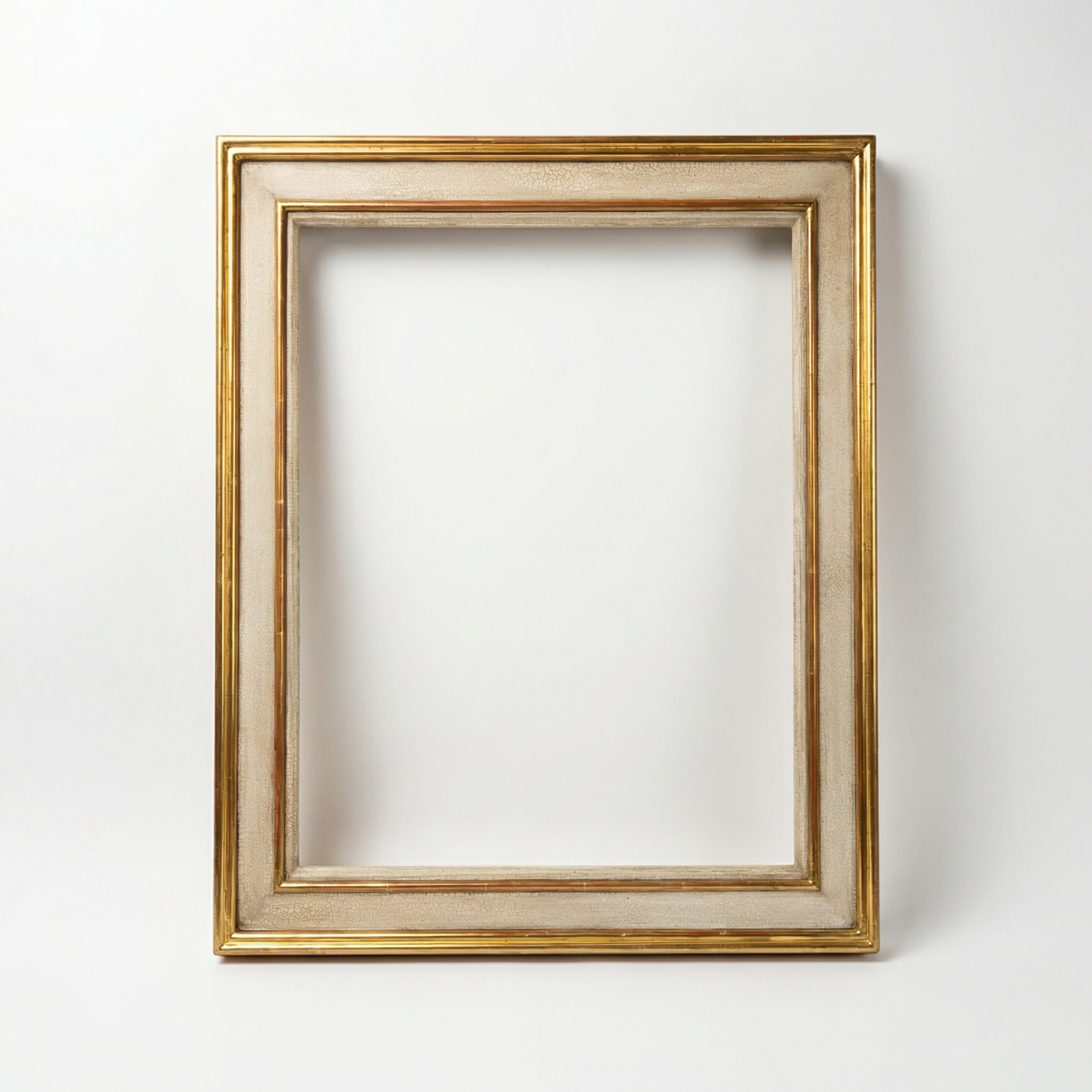
Ready-Made Picture Frames: Types, Materials and Applications
A ready-made picture frame is the fastest route from a bare poster, print or photograph to something finished on the wall. You choose a standard size, drop the artwork in, and hang it the same afternoon. I make frames by hand for a living, so I could pretend ready-made frames never have their place, but that would not be honest. For a great deal of everyday framing they are exactly the right tool. What matters is knowing which jobs suit a ready-made frame, which materials actually last, and where a frame built to measure earns its keep. Below I walk through the types, the materials and the real applications, from the bench rather than from a catalogue.
What "ready-made" actually means
Ready-made means the frame is produced in advance in a run of standard sizes, rather than cut to fit one specific piece. Every frame I sell starts life as raw moulding that I cut, join, prime and finish to a customer's exact measurements, so I see both sides of this clearly. A ready-made frame is a compromise between price and precision: you accept a fixed size and a fixed finish in exchange for speed and a lower price. For a mass-produced poster in a common format, that compromise is easy to live with. For a canvas, an original on paper, or anything with sentimental or financial value, the compromise starts to cost you.
Types of ready-made picture frames
Most ready-made frames fall into a handful of recognisable types, and each one is built around a particular kind of artwork.
- Standard moulding frames. A simple profile with glass, a backing board and often a paper mount. These are the frames you see for prints and posters. They are the everyday workhorse and the reason ready-made frames exist.
- Photo frames. Smaller formats, frequently supplied with a window mount that lifts a photograph off the glass and gives it a little breathing space. If you are framing family pictures in common sizes, my photo frames cover that ground.
- Box and floater frames. A deeper construction that holds the artwork back from the glass, or presents a canvas so that it appears to float inside the frame with a shadow gap around it. This is the American box, and it suits stretched canvases and three-dimensional pieces. I cover how it is built and when to use it in my guide to the American box frame for a painting. Two of mine show the effect: a floater frame for canvas, and a gilded and painted box frame where the border itself becomes part of the display.
- Poster frames. Lightweight and thin, made to display large printed sheets economically. They do the job for a while, but they are rarely built to protect anything for the long term.
If you want to see the full spread of profiles, colours and finishes I make, the custom picture frames range is the place to start, and I break the shapes and styles down further in my picture frame style and aesthetics guide.
Materials used in ready-made frames
The material a frame is made from decides how it looks, how long it lasts and how kindly it treats the artwork inside it. There are three families you will meet most often.
- Wood. Warm, repairable and timeless. Solid wood holds a mitre, takes a hand finish and can be gilded, so it is what I build almost everything from. A well-made wooden frame outlives the trend that inspired it. I go deeper into finishes and colour matching in my picture frame colour and material guide, and you can see the effect on a wall in my notes on elegant wooden picture frames.
- Metal. Slim, modern and resistant to damp, which makes aluminium a sensible choice for posters and graphics in busy or humid rooms. It is light and clean, but it cannot be carved, gilded or reprofiled, so its character is fixed at the factory.
- Composite and plastic. The most affordable option, moulded in a wide range of colours. It is fine for a child's room or a short-lived decoration, but it can warp, and it will never carry the depth of a real timber and gesso surface.
One quiet detail worth knowing: cheaper frames often use ordinary card and backing that are not acid free. Over years, that card can discolour a print from behind. When I frame anything worth keeping, I mount it on acid-free board, which is one of the practical reasons made-to-measure work protects value that ready-made framing does not.
Common applications, and where ready-made frames fall short
Ready-made frames genuinely shine in a few situations. A poster in a standard format, a run of prints for a hallway, a set of certificates, a temporary display for an office: all of these are well served by a frame you can buy off the shelf and hang the same day. If your artwork already matches a standard size and does not need protecting for decades, a ready-made frame is a sensible, economical answer, and my guide to where to buy ready-made picture frames will point you in the right direction.
The difficulty arrives the moment your piece stops being standard. A stretched canvas is too deep for most shelf frames. An oil painting wants a profile with presence and a rebate deep enough to hold it safely. Anything old, signed or valuable needs conservation materials, not a stapled backing board. And a non-standard size simply will not fit a fixed frame without trimming the artwork, which is the one thing you should never do. For those pieces I would always build to measure, and I have written separately on the exact moment to choose a custom picture frame rather than settle.
Can you put a canvas or an oil painting in a ready-made frame?
This is the question I am asked most, so it deserves a plain answer. A shallow ready-made frame is designed for flat work behind glass, and a stretched canvas is neither flat nor glazed. Forcing a canvas into the wrong frame either crushes the stretcher or leaves it proud of the moulding. The right solution is a floater frame that suits the canvas depth, or a made-to-measure profile with the correct rebate. I cover the choices in detail in my guide to the types of picture frames for canvas paintings, and for oils specifically I offer a dedicated oil painting framing service, and a piece like my gold-leaf frame for oil paintings shows the kind of profile an oil deserves. For canvas prints and photographs printed onto canvas, my canvas print framing service is built around exactly that job.
Ready-made or made-to-measure: how I would decide
You do not need a workshop to make this call. I use three quick tests.
- Size. If the artwork matches a standard format, a ready-made frame is viable. If it does not, a fixed frame will fight you, and made to measure is the honest answer.
- Value. If the piece is replaceable and short-lived, off the shelf is fine. If it is an original, a gift, a certificate you cannot reprint or a work you would grieve to lose, it deserves conservation framing and materials that will not harm it.
- Effect. If you want the frame to disappear behind the image, a plain ready-made moulding does that. If you want the frame to lift the whole wall, a hand-finished or gilded profile changes the room. My gold picture frames article shows how much difference the right finish makes.
People often assume a made-to-measure frame must be expensive. It costs more than a factory frame, but the reasons are concrete: real timber, hand-cut joinery, proper mounting and, where you want it, genuine gilding. I set out exactly what you are paying for in my piece on why professional picture framing costs what it does.
When the frame is meant to be the statement: gilded and period profiles
Some pieces are not asking for a neutral border. A traditional oil, a religious work, a mirror for a formal room: these call for a frame with weight and warmth, and that is where hand gilding comes in. I lay real gold leaf over a bole ground and burnish it by hand with an agate stone, in carat grades from soft moon golds through to bright yellow gold. You can read how the process actually works on my page about water gilding. If a gilded profile is what your artwork wants, my gold-gilded picture frames and my gold-gilded and partially painted frames are made entirely this way.
A few individual pieces give a clearer sense of the range: a gold-gilded picture frame in bright yellow gold, a softer 22-karat moon gold frame, a hand carved and gilded frame, and a 23-karat gilded frame with Flemish corners for a period oil. Where you want depth without shine, a black gesso frame gives a rich matte alternative to bright gold. For the finest and most valued works, a fully bespoke frame is the natural choice, and that is what my bespoke picture frame service exists to make, whether that means a period gold profile or something quieter like a bespoke white-gold frame.
Protecting artwork properly: conservation and archival framing
If a ready-made frame is a convenience, conservation framing is an insurance policy. Old paper, watercolours, documents and prints are sensitive to light, acidity and contact with the glass. When I frame these, I hinge them with Japanese tissue and wheat-starch paste, mount them on acid-free board, hold the work off the glazing with spacers, and glaze with UV-filtering glass so the colours do not fade. None of that is possible in a sealed shelf frame. If your piece has any value at all, my archival and museum framing service is built to keep it safe for decades rather than seasons.
Mirrors follow the same logic
Everything above applies just as neatly to mirrors. A ready-made mirror in a common size is convenient, but the moment you need a particular width for an alcove, a specific finish to match a room, or a frame that becomes a feature in its own right, made to measure wins. I build mirrors the same way I build frames, from raw moulding through to a gilded or hand-painted finish. Browse my mirrors in frames, my decorative mirrors or the glamour mirrors range, and if you have an awkward space to fill, my note on made-to-measure mirrors explains how I approach it.
How I build a frame to measure
It helps to know what actually happens once you commission a frame, because the process is the reason the result lasts. I start by choosing a profile that suits the artwork and the room, then cut the moulding to your exact size and join the corners so they stay closed. Where the frame is to be finished by hand, I prime it, lay gesso, apply the bole ground, and gild it with genuine gold or metal leaf before burnishing and finishing the surface. Every frame is mounted with the artwork's protection in mind. I ship internationally, and frames travel to customers abroad without glass so nothing arrives broken. If you would like to see who is behind the bench, my workshop page tells that story, and my guide to mounts, spacers and frame additions covers the finishing details that make a frame sit right.
Frequently asked questions
Are ready-made picture frames good quality?
Quality varies enormously. A solid wood ready-made frame with acid-free backing can be perfectly good for a print in a standard size. A thin composite poster frame with ordinary card is fine for a temporary display but will not protect anything for long. Judge the frame by its material and its mount, not by its price alone.
Can I frame a canvas painting in a ready-made frame?
Usually not well. Most ready-made frames are shallow and glazed, while a canvas is deep and unglazed. A floater frame sized to the canvas, or a made-to-measure profile with the correct rebate, is the proper solution.
What sizes do ready-made frames come in?
They are sold in common standard formats. If your artwork matches one of those sizes, a ready-made frame will fit. If it sits even slightly outside a standard size, you should have a frame made to measure rather than trim the artwork.
Are wooden ready-made frames better than plastic ones?
For anything you want to keep, yes. Wood is stronger, repairable, ages gracefully and can be refinished or gilded. Plastic and composite are cheaper and lighter, but they can warp and they lack the depth of a real timber surface.
When should I choose a made-to-measure frame instead?
Whenever the artwork is a non-standard size, has real value, needs conservation, or when you want the frame itself to be part of the room. In those cases a frame built to your dimensions is the better investment.
Choosing well
Ready-made frames are a good, economical answer for standard-size prints, posters and everyday photographs, and there is no shame in reaching for one when the job suits it. But the moment your artwork is unusual in size, valuable, painted on canvas, or deserving of a frame that lifts the whole wall, a frame made and finished by hand is worth the difference. If you are weighing up an awkward piece, browse my made-to-measure picture frames, take a look at what hand gilding can do, or simply send me the measurements and tell me about the work. I will help you choose a frame that fits both the piece and the room.