Best Frame for Canvas Painting: How to Choose and Frame It Right
Choosing the right frame for a canvas painting is not only a matter of aesthetics, but also of functionality. A well-chosen canvas painting frame can highlight the composition of the artwork, clearly separate it from the wall, and direct the viewer's attention to the central elements of the piece. Many people wonder which is the best frame for a canvas painting — and in practice, it is worth considering several aspects, such as the style of the interior, the colour palette of the painting, and the material the frame is made from.
When choosing a frame, it is essential that it harmonises with the painting — neither overpowering it, nor disappearing into the background, but adding character to the work. The frame selection should take into account both the composition of the painting and the space in which it will be displayed. In practice, the principle of contrast is often applied: if the painting features intense colours, frames in neutral tones tend to work well, allowing the eye to focus on the artwork itself. For paintings with a calmer colour palette, the frame can become a stronger decorative accent.
The functional role of the framing should not be overlooked either. While a frame does not directly protect against UV radiation, the frame protects the painting primarily along its edges and corners. This is particularly important for oil paintings on canvas and works created with acrylic paints that are stretched over a canvas stretcher bar. In such cases, the frame protects the edges of the canvas from accidental knocks or scuffs that can occur during transport or hanging.
The final choice of the right frame for a canvas painting should be a thoughtful decision that takes both aesthetics and practicality into account. A well-matched canvas frame creates a clear visual boundary between the work and the wall, which makes the painting more prominent and easier to read in the interior space.
Why a Properly Chosen Frame Matters So Much
In practice, a properly chosen frame can significantly change the way we perceive a work of art. The frame creates a visual boundary around the composition, allowing the viewer's eye to focus on the painting rather than on its surroundings. This is precisely why people often say that the frame gives the painting its final character.
When planning the framing, remember that the frame should match both the style of the painting and the arrangement of the room. In modern interiors, simple profiles of moderate width are frequently used — they discreetly emphasise the painting without dominating it. In more classical arrangements, by contrast, more decorative frames work well, as they reinforce the traditional character of the artwork.
A well-chosen canvas frame also helps to visually separate the painting from the colour of the wall. Thanks to this, even smaller paintings on canvas can become a distinct decorative element of the interior.
Types of Frames for Canvas Paintings
For paintings stretched on a canvas stretcher bar, several types of canvas frames are typically used. Each of the following canvas frame types suits a slightly different style of work and interior:
- Floating frame (American-style frame) — a small gap remains between the canvas and the frame, creating the impression that the painting is "floating" inside the frame. The artwork looks modern, airy and elegant — a popular choice in contemporary galleries.
- Classic wooden frame — directly surrounds the edges of the painting and works particularly well with traditional oil paintings.
- Deep profile frame — gives thicker canvases a finished, sculptural look without crowding the composition.
- Gilded or partially painted frame — adds visual weight and a decorative accent to a more restrained painting.
It is also worth remembering that not every painting must be framed. Contemporary canvases often have neatly finished sides, which means they can be hung without a frame at all. In such cases, the painting is presented directly on the wall — a popular choice in modern interiors and galleries.
If, however, you decide to frame the work, the canvas frame is most often made to measure for the specific size of the painting. This makes it possible to perfectly match the proportions of the frame to the dimensions of the canvas and the character of the artwork.
For a more detailed breakdown of each option, see our full guide to types of picture frames for canvas paintings.
How to Frame an Oil Painting on Canvas
Framing an oil painting follows slightly different rules than framing a print or a watercolour. Oil paintings on canvas tend to have visible texture, deeper colour saturation and pronounced brushwork — so the frame has to support, rather than compete with, the surface of the work.
When framing oil paintings, three details usually decide the result:
- Profile depth. Oil paintings are stretched on a wooden bar that can be 2 cm or more deep. The frame profile needs to fully cover that depth — otherwise the side of the canvas will be visible from an angle.
- Inner colour of the rebate. A neutral inner edge (matt black, deep cream or a tone picked from the painting itself) provides a clean transition between the canvas and the moulding.
- Finish of the moulding. Matt, hand-finished or gilded surfaces work better with oil paintings than glossy industrial profiles, because they echo the hand-made character of the work.
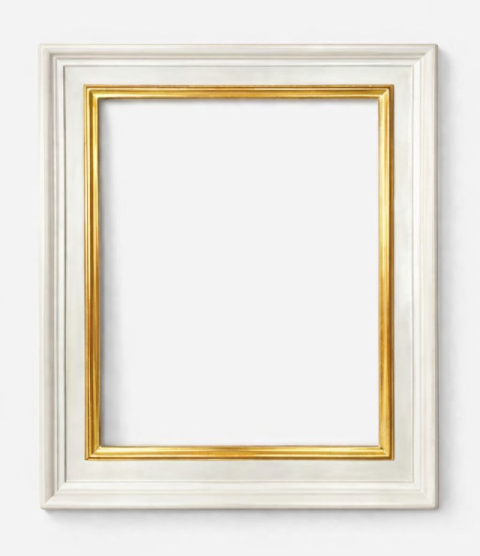
If you are looking for oil painting frame ideas, two directions tend to look strongest. The first is a modern frame for an oil painting — a slim, hand-finished profile in a neutral colour or a floating frame that lets the canvas breathe. The second is a more contemporary framing approach that combines a clean outer line with a subtle gilded slip, which adds depth without turning the frame into the main subject. Both approaches work for framing an oil painting on canvas, regardless of whether the work is figurative or abstract.
Both approaches work for framing an oil painting on canvas, regardless of whether the work is figurative or abstract. If you would like to see how each of these elements looks in practice — including profile depth, inner rebate finish and matching the moulding to the painting itself — take a look at our detailed guide to framing oil paintings, where we walk through real examples from the workshop.
How to Choose a Frame for a Canvas Painting
If you are wondering how to choose a frame for art in general — or specifically for a canvas painting — it is worth analysing several key elements. When picking from the available options and reviewing all the frames that could potentially suit a given piece, you should pay particular attention to:
- the style of the painting (classical, modern, abstract, figurative)
- the dominant colour palette of the composition
- the size and depth of the canvas
- the character of the interior where the painting will hang
- the material the frame is made from
In many cases, it is worth choosing a wooden frame for an oil painting, as the natural material works well with both modern and classical arrangements. Wood brings warmth into the interior and ensures that the canvas frame looks elegant without distracting from the artwork itself. Hand-finished or gilded wooden mouldings are especially well-suited to oil paintings, where the surface of the work already has a strong handcrafted quality.
Ready-Made vs. Made-to-Measure Frames
Both ready-made frames for canvas paintings and made-to-measure frames have their place. Ready-made options are quicker and more affordable, and they make sense for canvases produced in standard sizes. They are also a sensible starting point if you want to test a few different frame styles before committing to a final choice.
Made-to-measure frames are the better choice when the canvas has a non-standard size, when the painting is particularly valuable, or when the framing has to fit precisely into a specific interior. A bespoke canvas frame for a painting allows you to pick the exact moulding, depth, finish and inner edge — so the frame becomes part of the artwork rather than a generic accessory.
Made-to-measure frames are the better choice when the canvas has a non-standard size, when the painting is particularly valuable, or when the framing has to fit precisely into a specific interior. A bespoke canvas frame for a painting allows you to pick the exact moulding, depth, finish and inner edge — so the frame becomes part of the artwork rather than a generic accessory. You can browse the full range of profiles, finishes and gilding options in our custom picture frames collection, where every frame is built to the exact dimensions of the artwork.
What to Pay Attention to When Choosing a Frame
The choice of the right frame should take both appearance and functionality into account. A well-fitted frame ensures that the painting is clearly separated from the wall and that its composition becomes more legible to the viewer.
In addition, the frame protects the painting along its edges and helps to shield the canvas from accidental mechanical damage. As a result, the artwork retains its aesthetic appearance for many years.
Ultimately, the frame selection should be a conscious decision that takes into account both the character of the painting and the style of the interior. When the frame matches the overall arrangement of the room, the canvas becomes a coherent and elegant decorative element of the space — and the difference between an average and a truly best frame for a canvas painting comes down to exactly that kind of attention to detail.