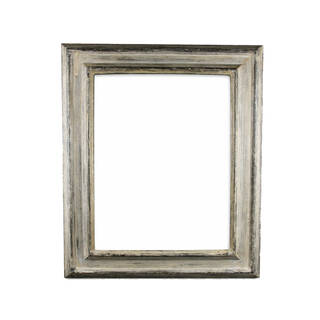
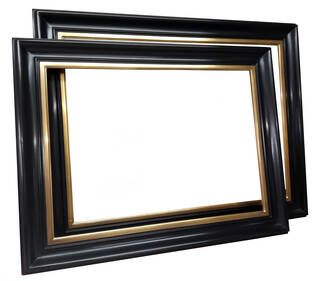
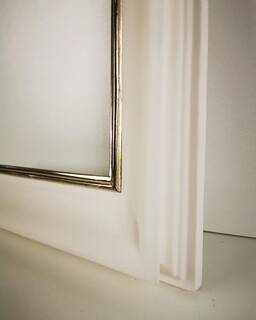
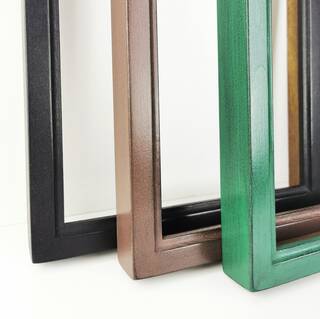
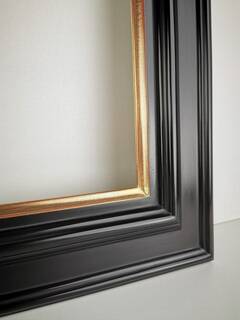
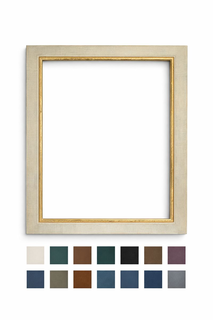
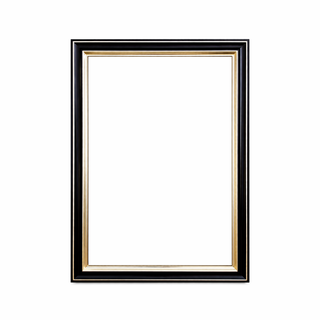
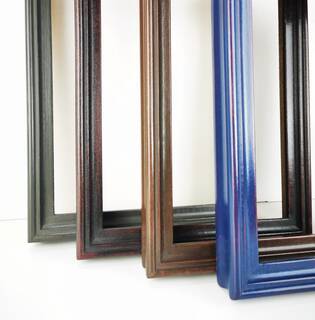
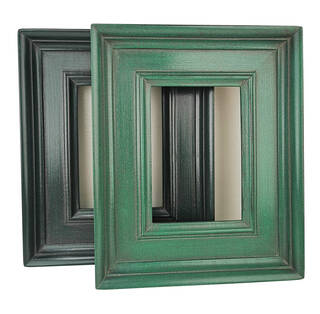
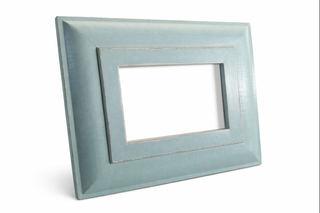
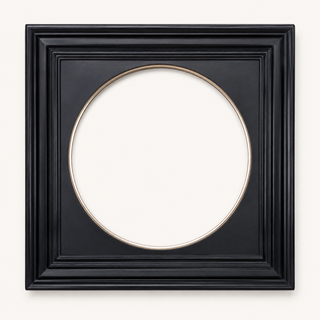
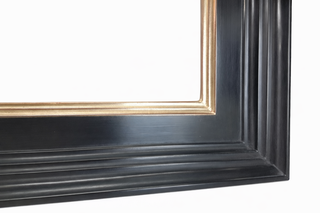
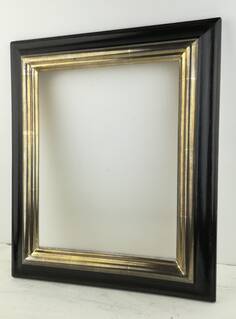
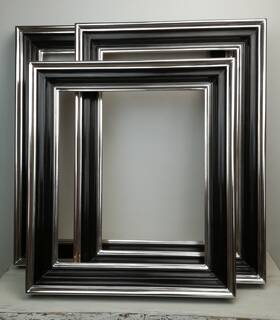
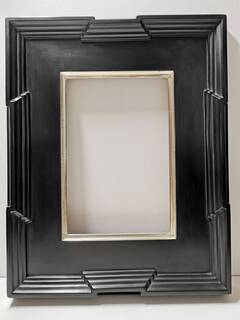
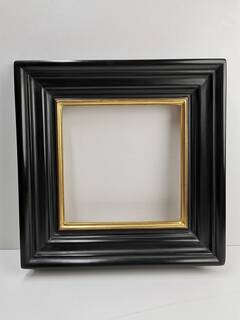
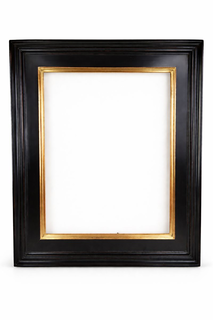
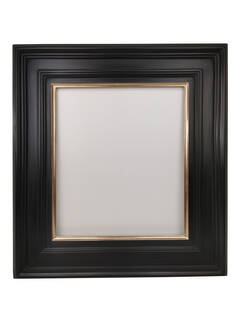
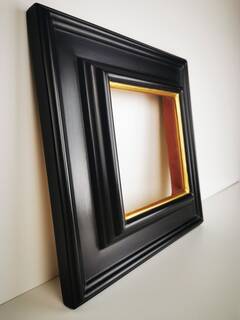
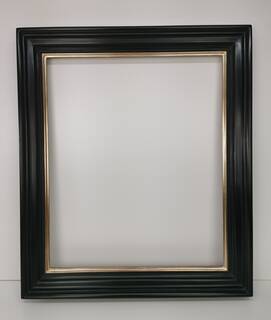
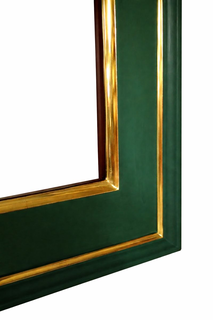
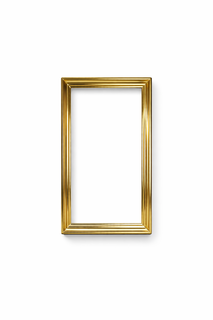
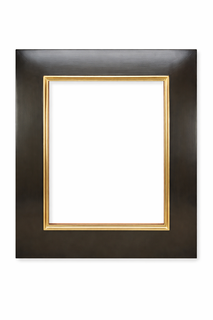
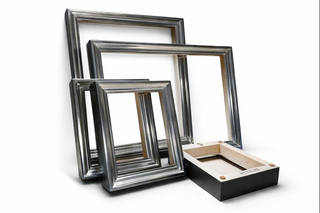
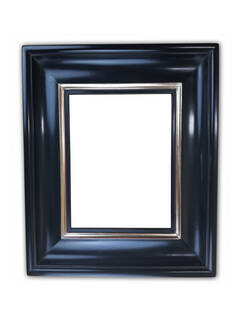
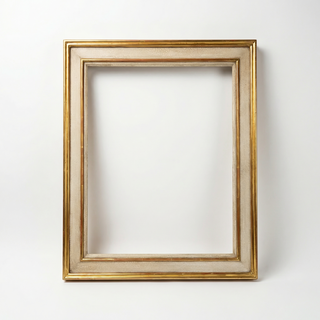
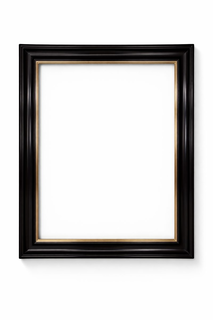
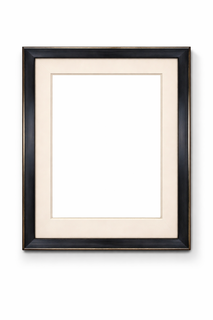
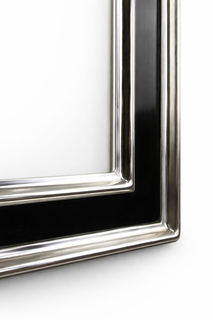
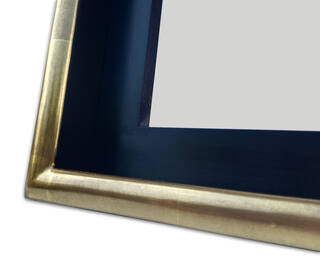
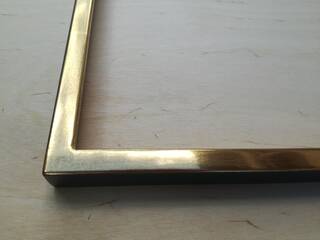
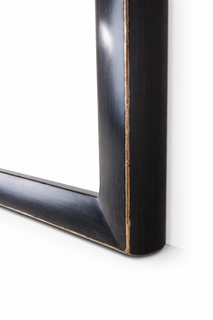
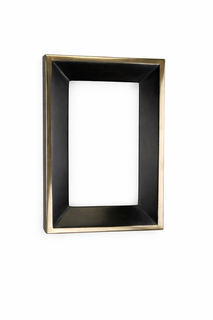
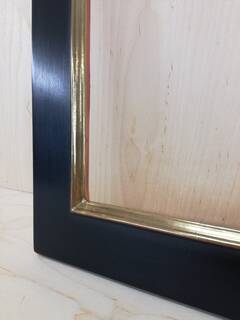
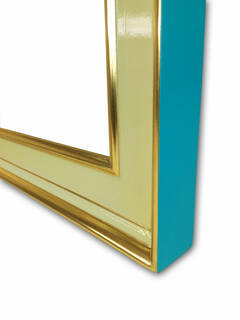
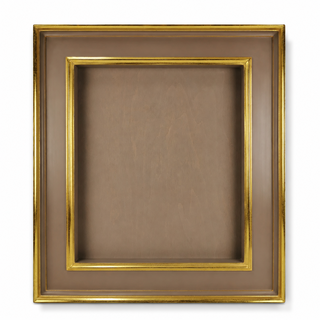
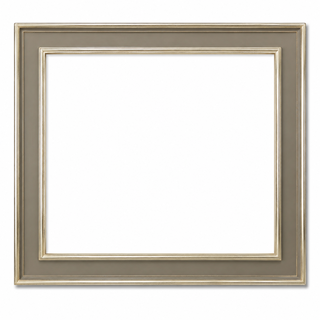
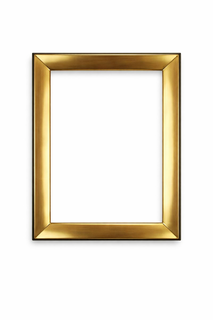
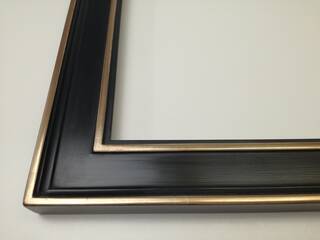
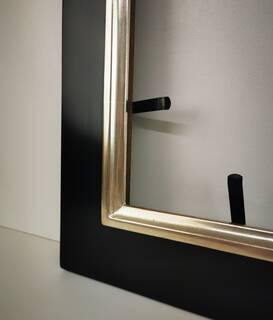
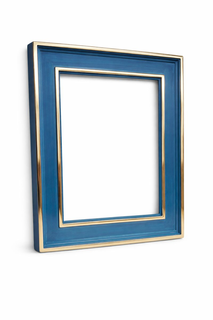
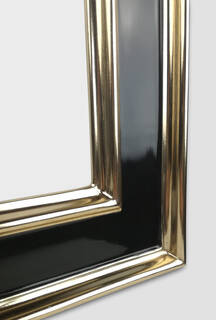
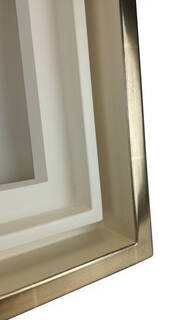
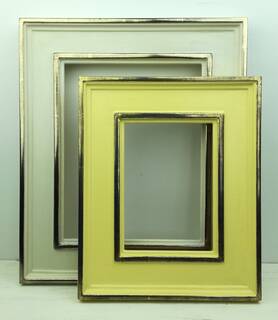
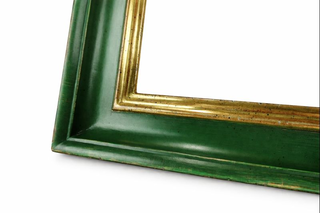
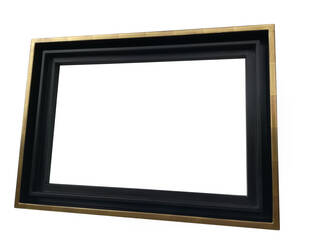
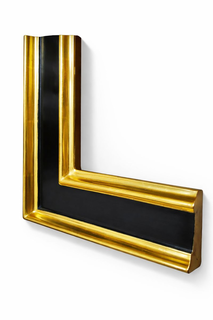
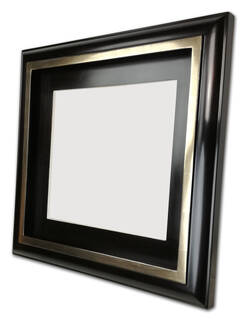
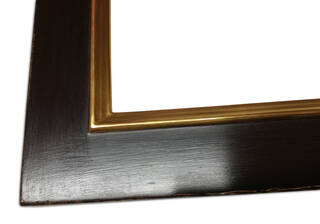
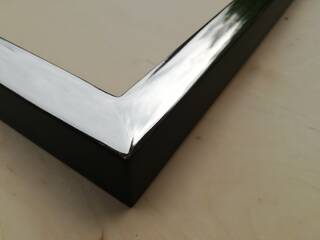
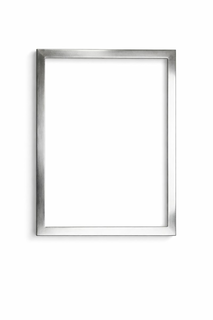
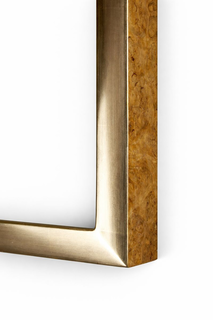
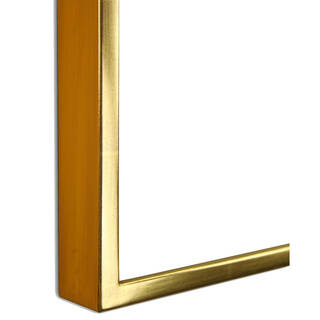
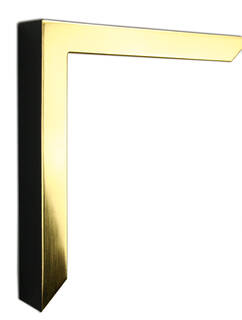
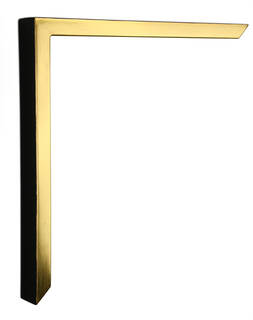
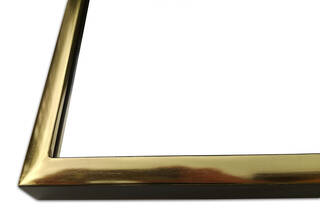
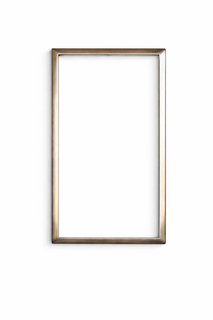
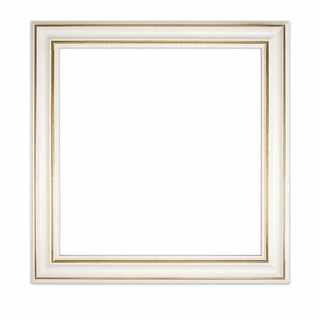
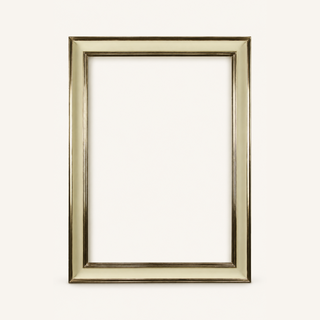
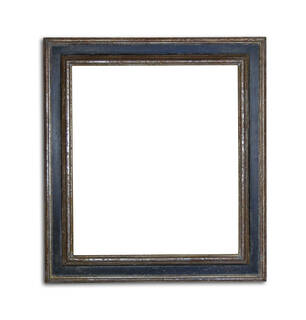
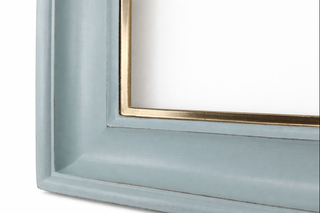
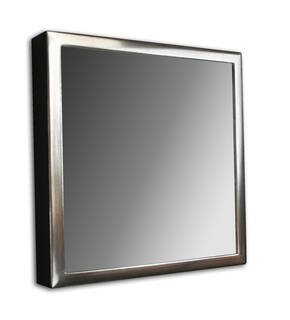
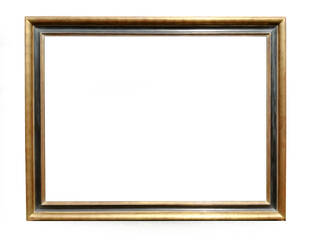
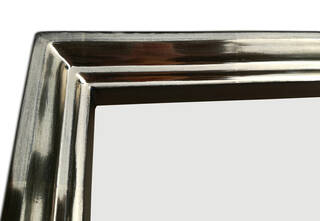
Explore picture frames that bring together two of the oldest crafts in fine art framing: traditional water gilding with genuine gold leaf, and multi-layer hand-painted finishes. Each frame in this collection is built to order in my workshop, combining hand-carved profiles, red bole grounds, and bespoke colour work to produce pieces with the depth, warmth and presence of antique gilded frames — without the compromises of mass production.
This collection brings together hand-crafted frames in which genuine gold leaf and hand-applied colour work are treated as equal partners. Real metal leaf — 22 karat moon gold, 23 karat yellow gold, 12 karat white gold or palladium — is laid by hand using the traditional water gilding method on a coloured bole ground, while the surrounding panels, sides and ornament are finished with successive layers of paint, pigment, wax and shellac. The result is a frame with the optical depth and warmth of a museum piece: light moves across the surface, the gilding glows from within, and the painted areas hold the eye instead of fighting it.
What makes a gilded and painted frame different
A pure gold leaf frame is uniform and bright; a painted frame is matte and quiet. A partially gilded and painted frame deliberately balances the two. Painted bands, recessed panels, sides or carved ornament sit next to burnished or matte gilding, and the contrast lets each surface do its proper job — gold for radiance, paint for grounding. I build these frames using the same materials and joinery that conservation framers and antique restorers use, which is why my work is often specified for oil paintings, icons, watercolours on paper and contemporary fine art that needs more than an off-the-shelf moulding.
Practically, this kind of finish is achieved through:
- Water gilding on red bole for the metal-leaf areas, allowing burnishing to a high polish or a soft matte finish.
- Multi-layer paint and pigment work on selected panels and sides — wiped back between coats to build tone and translucency.
- Hand-rubbed wax, shellac and toner finishes that age the surface and harmonise the gilded and painted zones.
Choose the frame for the artwork, not the wall
A frame should be chosen for the painting first and the interior second. The artwork is the subject; the frame supports it. Colour, texture and the choice of gilding all have to respond to the picture — its palette, its period, its scale — so the frame reads as part of the work rather than a decorative border. A well-chosen gilded picture frame for a painting will look correct in almost any room, because the harmony is between frame and image, not frame and sofa. Where you hang it is background.
Types of gold leaf I use
Different leafs produce very different light. I work with all of the standard fine-art options:
- White gold and 6 karat gold leaf — cool, silvery tone with a delicate sheen. Suits contemporary work and cool-palette paintings.
- 12 karat gold leaf — sits between gold and silver; a calm, slightly green-toned finish often used on modernist and early-20th-century work.
- 22 karat moon gold leaf — soft, warm glow without the intensity of pure yellow gold. A favourite for icons, portraits and 17th–19th century pieces.
- 23 karat yellow gold leaf — the deepest, most saturated gold; the classic finish for traditional gilded picture frames, Old Master oil paintings and museum-grade presentation.
For clients looking for a custom gold leaf frame in a specific tone, I will sample two or three leafs against the actual artwork before committing.
Bole — the colour under the gold
The clay bole applied beneath the leaf is not a hidden detail — it shapes the final colour of the gilding. Where the leaf is later worn back, the bole shows through, and that is exactly what produces the depth associated with antique gilded picture frames. I work with:
- Red bole — the traditional choice; warms the gold and gives the classic antique gilded frame look.
- Victorian grey, black, blue, green and plum bole — used to cool, sharpen or unusually tint the gold; particularly useful for contemporary and museum-conservation work.
On request, every frame in this collection can be specified with a bespoke combination of leaf and bole.
Hand-carved, mortise-and-tenon construction
Every frame here is built to last. I use traditional mortise-and-tenon (tongued and grooved) corner joinery rather than simple mitres held with v-nails, because the joint has to remain stable under the moisture cycling and weight of a gessoed and gilded surface. Profiles are hand-carved or hand-shaped before gesso is applied; the result is a frame that holds its line for decades and that, structurally, belongs to the same family as the historical pieces it references. This is what handmade gold leaf framing actually means — not a printed finish on a factory moulding, but a frame built the way a conservation studio would build it.
Best suited for
- Oil paintings on canvas and panel
- Icons, religious and sacred art
- Old Master and 17th–19th century works
- Watercolours and works on paper that need traditional presentation
- Contemporary fine art commissioned to museum framing standards
- High-value photography, prints and limited editions
Bespoke and made to measure
Every piece in this category can be ordered as a custom gilded picture frame in any size, with the profile, leaf, bole and painted finish chosen for the artwork. If you already have a painting and need the frame built around it, send dimensions and an image — I will return a specification and a price. If you are looking for inspiration first, browse the category below; each model can be reworked in a different colour, scale or gilding combination.
Looking for a different style? If you want a pure metal-leaf finish without painted elements, see my category of fully gilded picture frames. For a deeper look at how the technique itself works in the workshop, read my technical guide to the water gilding process.