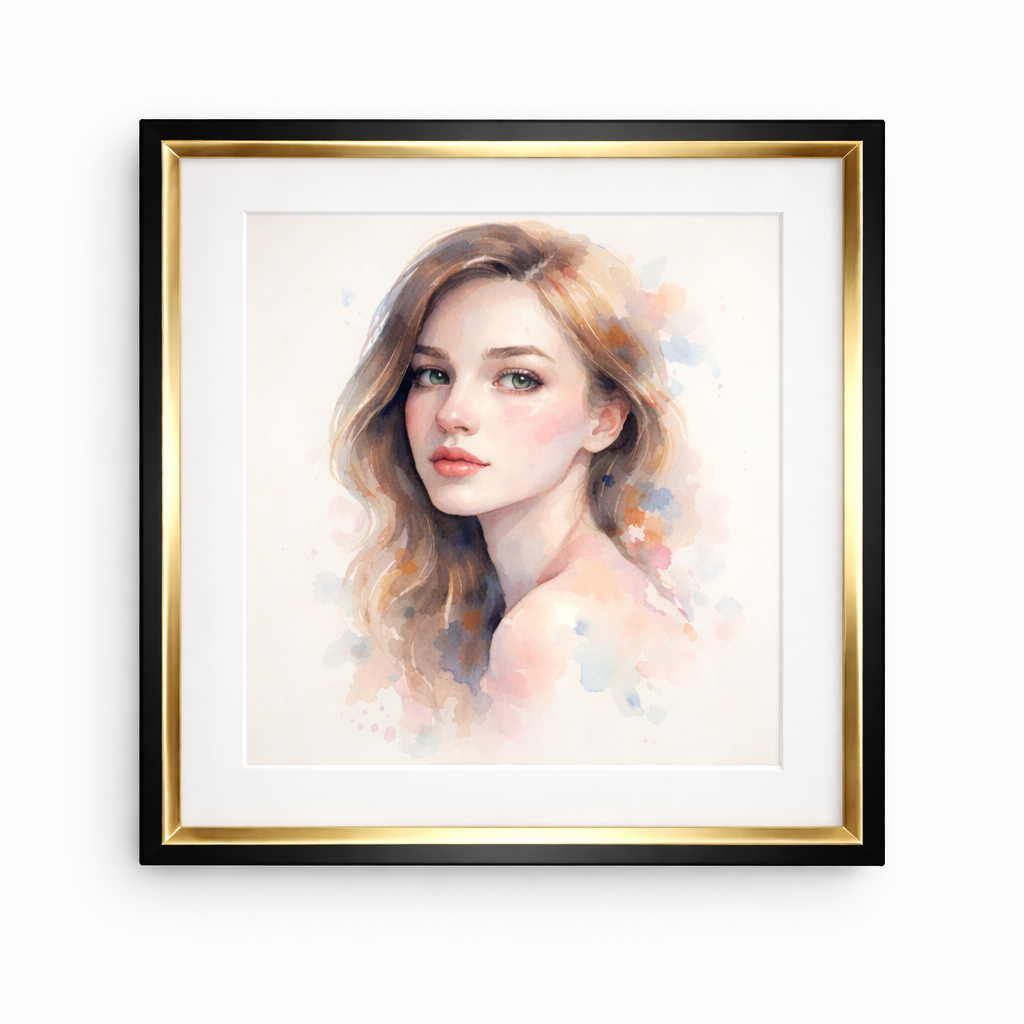
Picture Frame Mounts and Spacers: A Framer's Guide to Passe-Partout and Mats
The frame usually gets the attention, but the mount and the spacer decide whether a picture looks finished or cramped. They are small parts, a bevelled card border and a few slim strips of timber, yet they control the proportions, the depth and the safety of the artwork inside the frame. In this guide I explain what a mount (passe-partout) and a spacer actually do, when I reach for one over the other, and how the right choice protects a piece while showing it at its best.
What a mount (passe-partout) does
A mount, also called a passe-partout, is the card border that sits between the artwork and the frame. In the United States the same part is usually called a mat or matboard. It does two things at once. First, it protects: it lifts the surface of the work away from the glass, which matters most for anything on paper, because paper reacts to moisture and temperature and can stick to glazing or develop foxing where it touches. Second, it composes: the open border gives the eye somewhere to rest, so the picture reads clearly instead of fighting the frame for space.
I recommend a mount most often for works on paper: prints, drawings, watercolours, photographs, posters, certificates and signed memorabilia. On a watercolour or a fine print the mount is doing conservation work as much as decoration, and for a photograph the same border gives it the clean, gallery look you see in my photo frames.
Window mounts, double mounts and the board itself
The most common type I cut is a window mount: a sheet of mountboard with an aperture cut through it, bevelled at the edge so the cut shows a clean angled line rather than a blunt one. A single mount suits most pieces. A double mount, where a second board sits behind the first and shows as a thin reveal around the window, adds a little depth and a line of accent colour, which works well on prints and photographs.
Colour matters more than people expect. A soft white or off-white keeps the focus on the work and reads as a gallery would hang it. A deeper tone, or a coloured reveal on a double mount, can pick up a colour from the image itself. I tend to keep mounts neutral and let the artwork lead, but I cut whatever suits the piece.
For anything valuable or old I use conservation-grade, acid-free board. Ordinary board can yellow over time and leave an acid burn, a brown line, where it touches the paper. That is the kind of detail that belongs to proper archival and museum framing, and it stays invisible until years later, which is exactly why it matters. The backing board behind the work does the same job from the other side, so the whole package is acid-free, not just the front.
On width: a mount that is too narrow looks mean, and one that is too wide can swamp a small image. As a rule I give the mount generous breathing room, often a little wider at the bottom edge, which the eye reads as balanced.
Spacers: depth without a card border
A spacer does the same protective job as a mount but in a different way. Instead of a card border it is a slim strip, usually timber, fitted inside the frame around the edge of the glass. It holds the glazing off the surface of the work without showing a visible border. I paint spacers to suit the frame, most often black or white, so they stay quiet.
I reach for spacers when a client wants a clean, modern look with no card around the image, or when the piece simply should not have a mount: a canvas, a panel, or a photograph printed to the edge. The picture keeps its full size right up to the frame, and the air gap still does its protective work.
Box frames and shadow boxes: when depth is the point
Sometimes the depth is not a side effect, it is the whole idea. When I build a box frame, a deep frame often called an American box or a floating frame, the spacing is set deep so the artwork or object sits well back from the glass with visible space around it. This is how I frame stretched canvases so the edges float, three-dimensional objects, medals, textiles and keepsakes, and any piece where the shadow inside the frame is part of the effect.
A box frame is really a spacer taken to its conclusion: enough depth to hold the object, glazed and sealed, with the frame profile carrying the weight. If you are framing a canvas and want it to sit proud inside the moulding rather than flush, this is the construction I would suggest. My floating American Box frame is built exactly this way: a double frame around 60 mm deep with a 20 mm channel, so a stretched canvas sits proud and floats clear of the edges. You can see more deep, made-to-measure profiles in my range of custom picture frames, including a deep-profile frame for canvas.
Mounts and spacers for prints, posters and photographs
Most of the questions I get about mounts come from people framing prints, posters and photographs. The honest answer to why framing a poster costs what it does is usually in these hidden parts: a properly cut mount, conservation board, the right glazing and a sealed fit all take time and material. I go into that in more detail in my piece on why professional framing costs what it does.
For a print or poster, a window mount gives it the finished, gallery look and keeps it off the glass. For a canvas print, or a photo printed on canvas, I would usually fit it without a mount and sometimes in a box frame, which I cover under framing canvas prints and photo on canvas. If the piece is genuinely valuable, hinged with acid-free materials and glazed to protect it, that is conservation work, and you can read how I approach it on my archival and museum framing page.
Should the artwork touch the glass?
No. I keep artwork off the glass as a rule, and a mount or a spacer is how I do it. Where paper touches glazing, condensation can form against the cold surface, the work can stick, and over time you get foxing or a faint transferred image on the glass. A few millimetres of air, held by a mount or a spacer, prevents all of it. For pieces that matter I also use UV-filtering or museum glass, so light does not fade the work.
Matching the mount and frame to the artwork
A common worry is whether frames in a room have to match. They do not have to be identical, but they should agree. I aim for a family resemblance: a shared wood or metal tone, or a consistent mount colour across a group, so a wall of pictures reads as a collection rather than a clash. For a single piece I match the mount and frame to the work first and the room second, because the framing should serve the picture. Every frame I make is made to measure, so the mount, the spacer and the moulding are decided together for each piece.
How I cut mounts and fit spacers in my workshop
I work alone, and I cut every mount and fit every spacer by hand. I choose the board, set the aperture to the artwork rather than to a standard size, and cut the bevel so the reveal is crisp. For spacers I cut timber strips, prime and paint them, and fit them so the gap is even all the way round. When a frame is gilded, the inner edge that shows against the mount is laid with real gold leaf by the traditional water-gilding method, which is the same care I give the rest of the build. You can see a hand-finished example in my hand-rubbed frame for canvas. Because I make each frame to order, I can match the mount, the spacer and the moulding to one specific piece, which is the part you cannot get from a ready-made frame off a shelf.
Frequently asked questions
What is a passe-partout in picture framing?
A passe-partout is a card border, also called a mount in the UK or a mat in the US, that sits between the artwork and the frame. It holds the work off the glass and gives the picture visual space around it.
Do I need a mount or a spacer?
Use a mount when you want a visible card border, usually for prints, photographs and works on paper. Use a spacer when you want no border but still need to keep the artwork off the glass, for example with a canvas or a print framed to the edge.
Should artwork touch the glass?
No. Artwork, especially on paper, should never touch the glass. A mount or a spacer holds it away so it cannot stick, foxing cannot form, and condensation cannot transfer the image to the glazing.
What is an American box frame?
An American box frame, or box frame, is a deep frame that holds the artwork or object well back from the glass with visible space around it. I use it for canvases that float, three-dimensional objects and memorabilia.
How wide should a picture mount be?
Wide enough to give the image room to breathe. For most pieces I cut a generous mount, often slightly wider at the bottom edge, so the proportions read as balanced rather than cramped.
Can you frame a canvas in a box frame?
Yes. A box frame is one of my favourite ways to frame a stretched canvas, because the canvas sits proud inside the moulding with a clean shadow around the edge instead of being pressed flush.
The two decisions I make first
A mount and a spacer look like afterthoughts, but they are the parts I think about first, because they decide whether a piece is protected and whether it looks right. If you have a print, a photograph, a watercolour or a canvas you want framed properly, I make every frame to measure and choose the mount and spacer for the piece in front of me. You are welcome to look through my custom picture frames or get in touch about a made-to-measure project.