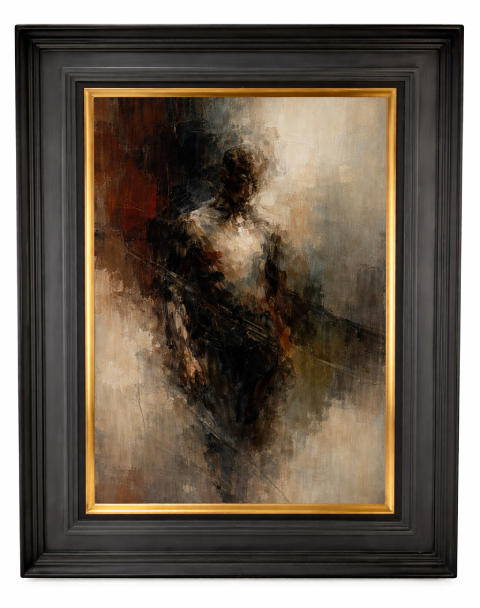
Current Trends in Picture Framing: A Working Framer’s Guide to 2026
The line between fine art and interior design is thinner than it has ever been, and that has changed what people expect from a frame. A frame is no longer a quiet border that keeps the dust off. It is a deliberate design decision, made at the same level as the wall colour, the lighting and the furniture around it. After years of making frames by hand in my workshop, the clearest of the current picture framing trends is simple: the frame has become part of the artwork, not just the thing that surrounds it.
Below I have set out the directions I am asked for most in 2026, why they have taken hold, and how each one works in practice. Where a topic deserves a full guide of its own, I have linked to it so you can go deeper. If you want to see the range first, my custom picture frames give a good sense of the profiles, colours and finishes I build to order.
From protection to composition: how framing has changed
For a long time the brief was protective first and decorative second. A frame held the work, kept it flat and kept it safe. That job has not gone away, and I still treat it as the foundation of everything I make, which is why I write separately about what a good frame actually protects against. What has changed is the second half of the brief. Clients now expect the frame to do compositional work: to set the rhythm of a wall, to carry a colour through a room, and to tell the viewer how to look at the piece.
This is why I spend as much time on a frame as I do. The proportions of the moulding, the depth of the rebate, the colour temperature of a gilded edge: these are the things that decide whether a frame supports the work or fights it. If you are choosing a style for the first time, my guide to picture frame style and aesthetics is the most useful place to start.
The picture framing trends I see most in 2026
Modern frames that do not disappear
The strongest demand I see is for frames that read as modern without vanishing into the wall. A few years ago “contemporary” usually meant the thinnest possible black or white profile. That is still a valid choice, but the mood has shifted towards modern frames with presence: a clean profile, but with a finish that has depth, a hand-painted surface, or a single gilded line that catches the light. The aim is restraint with character, rather than absence. I work through these contemporary directions in more detail in my notes on frame style and aesthetics, and a plain white picture frame or black picture frame is often the quiet anchor people start from before adding a detail.
Real materials, honestly finished
There is a clear move back towards honest materials. People want to know what a frame is made from, and they want that material to show. In my workshop every frame starts as solid wood, cut and joined in the traditional way, then finished by hand. Aluminium and other metals have their place in very minimal, gallery-style settings, and composites keep weight down on large formats, but for most of the work I am asked to do, wood is what gives a frame its warmth and its longevity.
Material is too big a subject to cover in a paragraph, so I have written a separate guide to frame colour and material that explains how each option behaves and where it suits the artwork. The short version: choose the material for how it serves the picture and the room, not for novelty.
Gilded frames, in warmer and more varied tones
Gilding is firmly back, and it is one of the most common questions I am asked: are gold frames out of style? They are not. What has changed is the tone. The cold, uniform brassy gold of mass-produced frames has given way to genuine gold leaf in a range of warmths. In my workshop I gild by hand using traditional water gilding, with options from soft 6-carat through to deep 22 and 23-carat ducat gold, as well as moon gold, white gold, palladium and silver leaf. Each one sits differently against a painting, and against a wall.
If gold is the direction you are drawn to, my gold gilded picture frames show the range, and I also make frames that are gilded and partially painted, where a gilded slip or edge is combined with a painted face. For the thinking behind choosing gold for a specific piece, I have written about gold picture frames in detail.
Float and box framing for canvas and contemporary work
For paintings on canvas and for modern work in general, float and box framing has become the default request rather than the exception. Instead of covering the edges, the frame holds the canvas with a visible gap, so the work appears to sit just inside its border with air around it. It suits contemporary painting because it keeps the form clean and lets the piece breathe. I explain the options in my guide to frame types for canvas paintings and, more practically, in how to choose the best frame for a canvas painting. For printed canvases specifically, I offer dedicated framing for canvas prints.
Frames chosen for the room, not only the picture
More clients now brief me on the room before they brief me on the artwork. They arrive with a wall colour, a sofa, a sense of the light, and they want the frame to belong to that scheme. This is healthy, because a frame really does sit at the meeting point of art and interior design. I have written separately about framing for interior design, which covers how a frame can either tie a room together or quietly disrupt it. A common version of this question is which decor a gold frame pairs with: the honest answer is that the right gold and the right width matter far more than the rule of thumb you may have read.
Classic or contemporary? Why the line matters less than it used to
One of the most useful shifts of recent years is that people have stopped treating classic and contemporary as opposites. A carved, gilded profile can sit beautifully on a modern painting; a clean, minimal frame can flatter an old master print. The frame does not have to match the period of the artwork, it has to serve it. If you want the case for traditional profiles, my piece on classic picture framing explains why a well-made classic frame gains value over time rather than dating. The decision is less about old versus new and more about weight, colour and proportion, which is exactly what I help clients work through.
Bespoke and made-to-measure: the biggest shift of all
If I had to name the single defining trend, it would not be a colour or a profile. It would be the move to bespoke. Personalised framing used to be treated as a luxury; now it is what most thoughtful clients expect, because a made-to-measure frame is the only way to get the proportion, the finish and the fit exactly right. I build each frame from scratch to the millimetre, which means the moulding width is chosen for your piece, the rebate is cut to your work, and the finish is mixed for your room.
There is a simple test for when this matters. If your artwork is a non-standard size, if the piece is valuable or sentimental, or if you want the frame to become part of the composition, a custom frame is worth it. I have set out exactly when to choose a custom frame over a ready-made one, and for collectors and fine art I offer dedicated bespoke picture frames for paintings and collections. You can also browse my full range of custom picture frames to see where to begin.
Conservation-grade framing is no longer just for galleries
A quieter but important trend is that conservation standards have moved into the home. Clients who are framing a watercolour, a print, a photograph or a piece with any value now ask the questions that used to come only from galleries: is the mount acid-free, is the glass protecting against light, is the work held away from the glazing. These are the right questions, and they are the standard I frame to as a matter of course. For pieces that need it, I offer archival and museum framing, and for oil paintings specifically I have a separate approach to framing oil paintings.
This is also where the cost of good framing becomes clear, and it is a fair thing to ask about. I have broken down why professional framing costs what it does, from the moulding and glass to the hours of hand work. And if you have inherited an old gilded frame, it is worth knowing what is and is not worth doing before you touch it: I cover that in my guide to restoring an antique gilt frame.
The same thinking applies to mirrors
Everything above holds true for mirrors as well, because a mirror in a frame is, to me, the same craft. The glass is neutral; the frame gives the piece its character. The trend towards genuine gold leaf, considered proportion and made-to-measure sizing is, if anything, even stronger in mirrors, where the frame is the whole design. I make every mirror the same way I make a frame, in solid wood and finished by hand.
If a statement mirror is what your room needs, my mirrors in frames and glamour mirrors show the range, and my decorative mirrors cover the more ornate end. For where mirror design is heading this year I have written about glamour mirror trends in 2026, and to choose a finish there is my guide to mirror frame colours and finishes.
How I help clients choose a frame that still looks right in five years
Trends are useful as a starting point, not as a rule to obey. The frames I make that please people years later are the ones chosen for the work and the room rather than for the moment. In practice that means I take time over the consultation, show real corner samples against the actual piece, and talk through proportion and finish before anything is cut. Because I work alone and make everything by hand, the person you discuss the piece with is the person who builds it.
If you are weighing up a frame or a mirror and want a considered recommendation rather than a stock answer, you are welcome to tell me about the piece. You can also read more about my workshop and how I work.
Frequently asked questions
Are gold picture frames out of style?
No. Gold frames are very much in demand, but the tone has moved away from cold, uniform brass towards genuine gold leaf in warmer and more varied carats. A hand-gilded frame in the right tone suits both classic and contemporary work, which is why I gild by hand rather than using a printed gold effect.
What picture frame style is most popular right now?
Two directions dominate in 2026: clean, modern profiles with a finish that has real depth, and hand-gilded frames in warm gold tones. The common thread is that both are chosen to suit the artwork and the room rather than to follow a single fashion.
What materials are used for modern picture frames?
Solid wood remains the core material because of its warmth and longevity. Aluminium and other metals suit very minimal, gallery-style settings, and composites are useful for keeping weight down on large formats. I make my frames from solid wood and finish them by hand.
Should I choose a modern or a classic frame?
It depends on the artwork and the room, not on the age of the piece. A classic profile can flatter a modern painting and a minimal frame can suit an old print. The decision comes down to proportion, colour and weight, which is what I help clients work through before anything is made.
Is a custom frame worth it?
For non-standard sizes, valuable or sentimental pieces, and any work where the frame should be part of the composition, yes. A made-to-measure frame lets the moulding width, rebate and finish be chosen for your piece exactly, rather than approximated to a stock size.
Do framing trends apply to mirrors too?
Yes, and often more so. A framed mirror is the same craft as a picture frame, and the move towards genuine gilding, considered proportion and made-to-measure sizing is especially strong in mirrors, where the frame is the entire design.
If you have a piece in mind, the best next step is to look through my custom picture frames or framed mirrors, then get in touch so I can recommend a frame made for your work and your space.