How to Frame Diplomas, Wedding Photos and Precious Keepsakes
Why a keepsake needs a real frame, not just a display
A diploma, a wedding photograph or a medal is not like a poster you can reprint. It exists once, and everything that damages paper and fabric is working against it from the day you bring it home. In my workshop I see the results all the time: certificates gone yellow along one edge where daylight reached them, photographs stuck to the inside of cheap glass, ribbons faded to a colour the owner no longer recognises. A properly built frame is the barrier that stops all of this. The moulding holds everything square and rigid, the right glazing and protection screen out ultraviolet light, and an acid-free mount keeps the paper from ever touching the glass. Display is the part you see. Protection is the part that decides whether your keepsake still looks like itself in twenty years.
That is also why I treat framing a personal keepsake differently from framing a print bought for decoration. The materials that sit against the item, the glass in front of it and the depth of the rebate all have to suit that specific object. Below I go through the pieces people most often bring me, and how I frame each one so it survives.
Framing diplomas and certificates
A diploma is a flat paper document, usually a standard A4 or A3, and it looks best when it is given a little room to breathe. I almost always set a diploma behind a mount, also called a passe-partout, which lifts the glass off the surface of the paper and adds a calm margin around the printing. Beyond looking more considered, that gap matters physically: paper and glass in direct contact will eventually stick, and a mount prevents it.
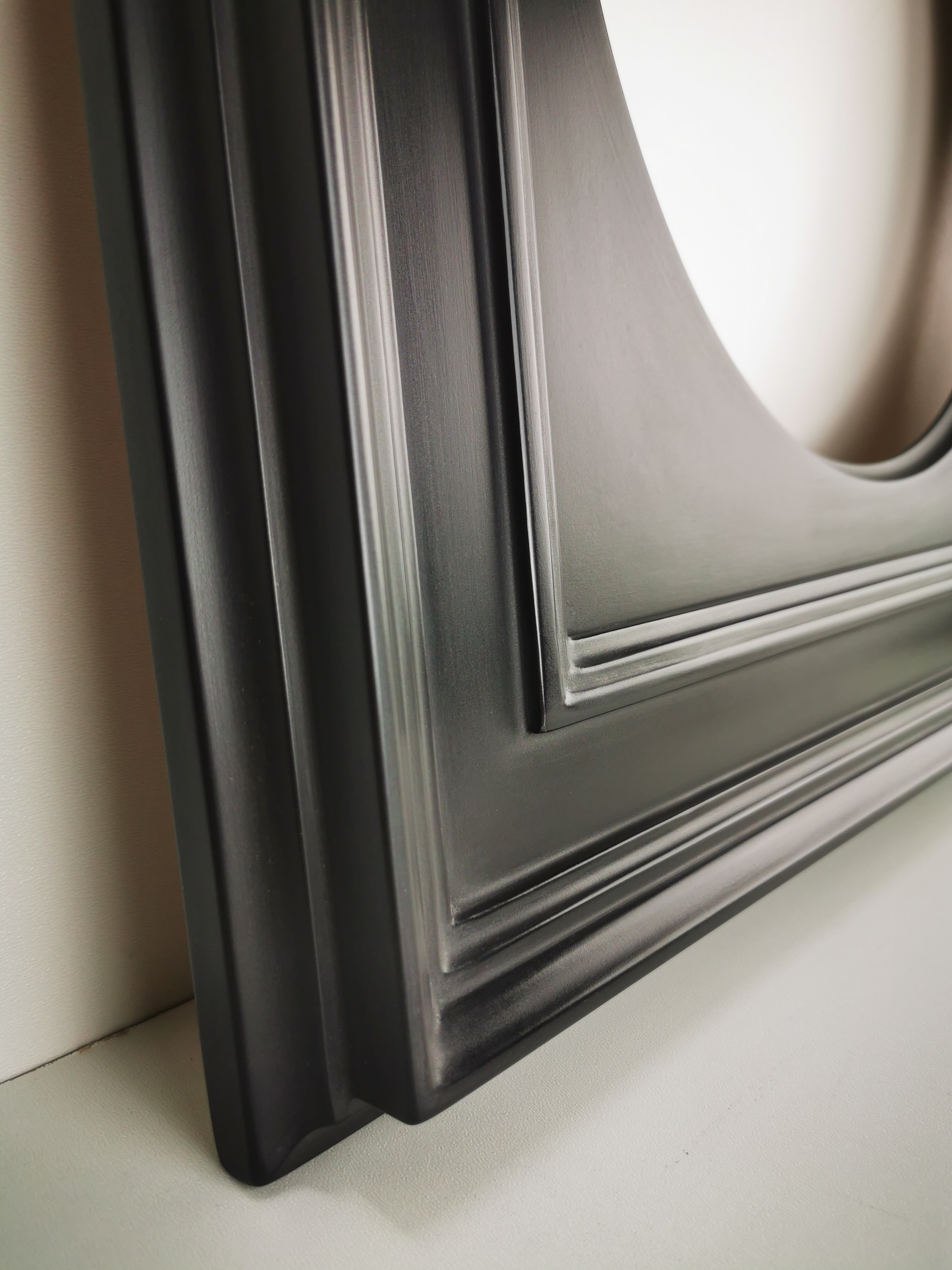
For the moulding itself, a neutral, confident profile works better than anything fussy. Black, off-white and hand-gilded gold are the three finishes I make most often for framed certificates, because they read as formal without competing with the document. If the diploma marks something you are proud to display in an office or study, a slim gilded profile is worth considering; you can see the range of tones in my gold gilded picture frames, and a piece like my hand-carved and gilded frame shows how much presence real gold leaf gives a formal document. I explain how genuine gold differs from imitation in my guide to gold and gilded frames. Whatever the finish, ask for UV-filtering glass. A certificate that hangs on a wall for years will fade under ordinary daylight, and the glazing is the only thing standing between the ink and the sun.
Framing wedding photographs and other prints
Wedding photographs are among the most common keepsakes I frame, and the decisions are more about harmony than protection, though protection still applies. The frame should agree with the photograph rather than shout over it. Warm images tend to sit well in cream, soft gold or natural timber, and a profile such as my moon gold and cream frame flatters a warm portrait without overwhelming it; cooler, more modern photography suits black, white or a plain wooden profile. A mount again earns its place here, giving the image breathing space and a gallery-like finish.
If you are framing several photographs from the same day, keep the profile consistent across all of them so a wall or a shelf reads as one set rather than a collection of odds and ends. For everyday photographs in ready sizes my photo frames are the simplest route, while an important portrait often deserves the same handmade moulding I build for artwork. When a print is an unusual size, which wedding and travel photographs frequently are, a made-to-measure frame is the honest answer, and I cover that further down.
Framing medals, dried flowers and other three-dimensional keepsakes
This is where a flat frame stops working. A medal on its ribbon, a christening gown, a bouquet dried after the wedding, a baby's first shoes, a signed football shirt: none of these will sit under glass that rests directly on the moulding. They need depth, and that means a deep box frame, often called a shadow box. The rebate is built tall enough to hold the object clear of the glass, so nothing is crushed and the item casts a soft shadow that makes it look mounted rather than pressed flat. My floating American box frame and my gilded and painted box frame show two ends of that range, from clean and contemporary to fully hand-finished.
In a box frame the keepsake is secured discreetly to an acid-free backing board, positioned exactly where you want it, and sealed behind glazing that keeps out dust. It is one of the most rewarding kinds of framing I do, because a three-dimensional object gains real presence once it is given proper space. If you want to see how a deep profile is constructed, my article on the American box frame walks through the same principle I use for memorabilia. For anything with genuine sentimental or collectable value, pair the box construction with the conservation materials in the next section.
Family heirlooms and old documents: the conservation approach
Old photographs, letters, hand-written records and antique prints carry history as well as feeling, and they call for more care than a recent keepsake. Here I use archival materials throughout. The mount and backing are acid-free, so the board itself never accelerates the yellowing of the paper it is meant to protect. The glazing is conservation or so-called museum glass, which combines a high level of UV protection with very low reflection, so the piece stays legible and does not fade. For the most fragile or valuable items I build a sealed frame that also resists moisture and dust.
This kind of work sits closer to conservation than everyday framing. My guide to specialist and conservation framing covers when this level of protection is worth it, and if you have something genuinely irreplaceable it is worth asking me about a full conservation build before you frame it. The short version: if losing the item would be a real loss, frame it to conservation standards the first time.
When ready-made will not fit: made-to-measure keepsake frames
Keepsakes rarely come in tidy standard sizes. Certificates from older institutions, panoramic wedding photographs, a group of items arranged together, an object with awkward depth: these are the moments a shop-bought frame lets you down. A made-to-measure frame is built to the exact dimensions of what you are framing, so the item sits correctly rather than being trimmed or floated in a frame that is nearly right.
Everything I make is built to order from solid timber, so the size is set by your keepsake rather than by a catalogue. You can browse profiles and finishes in my custom picture frames, order a bespoke frame to your own measurements, and for fine art, collections and the more demanding commissions my bespoke picture frames service covers the full process. If you are weighing up the cost of handmade framing against a ready alternative, I set out exactly where the time and money go in my article on why professional framing costs what it does. Because the finish is agreed before I start, from photographs of comparable frames I have already made, you know what you are getting before a single length of moulding is cut.
How I finish a keepsake frame in my workshop
The reason a handmade frame feels different in the hand comes down to how it is built. I mill the profile from solid timber, then build up layers of gesso to create a smooth, even ground. For a gilded finish I lay coloured bole over the gesso, apply genuine gold or white gold leaf by hand, and burnish the high points with an agate stone until they take on a deep, liquid shine that imitation finishes never reach. A frame like my 22-karat moon gold leaf frame is finished this way from start to finish. It is slow work, and every frame carries small marks of the hand that made it.
This is the same craft I bring to my framed mirrors, so a gilded keepsake frame and a bespoke mirror in the same room can be finished to match. If you are curious about the traditional technique behind the gold, I describe the full process on my water gilding page. For a keepsake that marks a genuine milestone, that hand-applied finish is what turns a protective object into something worth passing on.
Caring for framed keepsakes
Once a keepsake is framed well, keeping it that way is simple. Dust the frame and glass with a soft, dry cloth, and reach for a proper glass cleaner only for stubborn marks, spraying the cloth rather than the glass so nothing runs behind it. Keep the frame off walls that get direct sun, since even UV glass slows fading rather than stopping it entirely. Avoid hanging framed paper in a bathroom or kitchen, where humidity works against paper and timber alike. Treated sensibly, a well-made frame will protect what is inside it for a lifetime.
Frequently asked questions
How do I frame a diploma or certificate? Set the document behind an acid-free mount to lift the glass off the paper, choose a neutral profile in black, off-white or gold, and specify UV-filtering glass so daylight does not fade the printing over time.
What glass stops a photo or document from fading? Conservation or museum glass gives a high level of UV protection and very low reflection. For anything you intend to keep permanently it is the glazing worth asking for, because ordinary glass offers little protection against light.
Can you frame medals, dried flowers or a shirt? Yes. Three-dimensional keepsakes need a deep box frame, or shadow box, built tall enough to hold the object clear of the glass and mounted on an acid-free backing so nothing is crushed.
What is a shadow box or box frame? It is a frame with a deep rebate that creates space between the backing and the glass, allowing a three-dimensional object to be displayed and protected without being pressed flat.
Do you make frames for non-standard sizes? Every frame I make is built to order from solid timber, so it is cut to the exact size of your keepsake rather than to a fixed catalogue dimension.
If you have a diploma, a wedding photograph, an heirloom or a three-dimensional keepsake you want framed properly, tell me the size and what it is, and I will help you choose the right mount, glazing and profile to protect it for years.