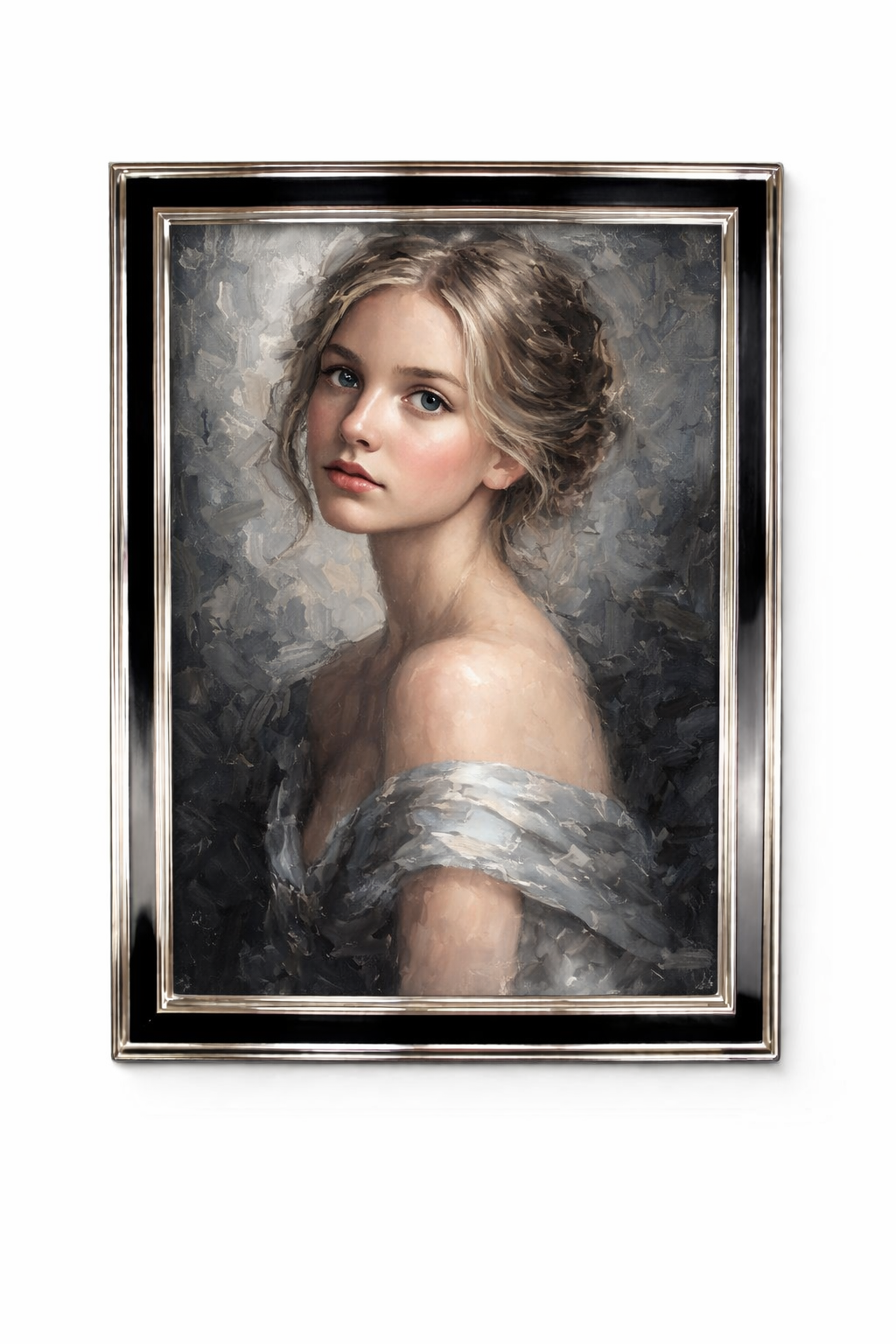
Professional Picture Framing: Techniques, Materials and How I Frame Fine Art
Professional picture framing is a great deal more than choosing an attractive moulding and sliding the artwork inside. It is a complete process that protects a painting, supports it correctly and presents it so that colour, light and proportion read the way the artist intended. In my workshop I treat every commission as a structural problem first and a decorative one second, because a frame that looks beautiful but warps, fades the artwork or traps acid against the paper has failed at the only job that really matters. On this page I explain what professional picture framing actually involves, the materials I use, and how I build and gild each frame by hand for fine art, photography, works on paper and family pieces.
I am a single craftsman, not a production line. I cut my own mouldings in my own joinery, I gild with real gold leaf, and I size every frame to one specific piece. That control over the whole chain, from raw timber to the final agate burnish, is what separates bespoke framing from the off-the-shelf alternative, and it is the reason a well-made frame can outlast the person who commissioned it.
What professional picture framing actually means
When people search for professional framing they are usually weighing two things at once: will this protect my artwork, and will it look right on my wall. Both depend on decisions that are invisible in the finished piece. Professional framing means a sealed, stable package: a rigid frame that will not twist, glazing that filters ultraviolet light, an acid-free environment around the artwork, and a backing that resists damp and knocks. It also means proportion, the relationship between the moulding width, the mount and the image, judged for the particular work rather than guessed from a standard size.
The difference shows up over years rather than weeks. A cheap frame can look almost identical on the day it is hung. Five years later the moulding has opened at the corners, the print has cockled against the glass, and the paper has browned where it touched a non-archival backing. None of that is visible at the point of sale, which is exactly why it is worth understanding what you are paying for. If you want the cost side in detail, I have written a full breakdown of why professional picture framing costs what it does.
How I build a frame from scratch in my own workshop
Every frame I make begins as raw moulding, not as a pre-finished length bought in from a wholesaler. I run my own joinery, which means I have full control over how the timber is cut, joined and prepared before any finish goes near it. The mouldings I work from are made in the workshop and joined while still raw, before gessoing or gilding. I use traditional wooden joints at the corners, a method from older cabinetmaking, which adds considerable strength compared with a frame simply pinned and glued from ready-made sections.
This matters because a frame built from scratch behaves differently over time. It is not assembled from mass-produced parts, so it does not dry out, open at the mitres or change shape after a few seasons of central heating. I cut the timber from solid wood with naturally low tannin levels, the same kind of wood used in conservation and museum framing, because high-tannin timber can react with paint and discolour gilding over the years. Building this way is slower and it is the foundation of everything else, since no amount of beautiful gilding rescues a frame that is structurally weak. You can see the range of profiles and finishes I work from in my custom picture frames, all of which are made to order rather than held in stock.
Framing oil paintings, canvas and works on paper
Different artworks need fundamentally different framing, and one of the most common questions I am asked is how to frame an oil painting properly. An oil on stretched canvas does not usually sit behind glass. It needs air, so it is framed either with a traditional rabbet that overlaps the canvas edge, or as a floater frame that leaves a narrow shadow gap around the painting and lets the edges remain visible. For oils I most often build a deeper profile and finish it to suit the work, frequently in hand-laid gold. I cover the specifics of this on my dedicated page about framing oil paintings.
Canvas prints and works on paper are a different problem again. A canvas print can take a floater or a box frame for a clean contemporary edge, while a watercolour, drawing or photograph needs glazing, a mount and an acid-free build to survive. If you are framing a stretched piece, it is worth reading how I approach the best frame for a canvas painting and the practical guide on how to choose a frame for a canvas painting, which walk through proportion, depth and finish. For printed canvases specifically I also offer framing for canvas prints and photo on canvas.
Hand gilding with real gold leaf
Gilding is the heart of my work, and it is where professional framing crosses into something closer to art. I gild by hand using genuine gold leaf and the water gilding technique, which is the only method that lets me burnish the gold to a deep, mirror-like sheen. Metallic paint and imitation foil cannot do this: they look gold in a photograph and then go flat, yellow and lifeless within a few years. A hand-laid sheet of real gold does not oxidise. It holds its depth for decades, and if it ages at all it does so evenly, which reads as patina rather than wear.
I work across a full palette of leaf, from cooler 6-karat and 12-karat white golds, through 22-karat moon gold with its faintly silvery tone, up to the richest 23-karat. Beneath the leaf lies a coloured clay ground called bole, and I keep six bole colours in the workshop: red, black, yellow, green, blue and grey. Because I rub the gold back by hand after laying it, the bole shows through subtly at the edges, so the finish stops being a flat metallic sheet and gains real depth. Red bole warms a 23-karat frame towards an aged ochre; black sharpens the cool look of white gold. The final stage is burnishing with an agate stone, the moment the metal comes alive, like a stone wetted with water. To understand the process properly, I explain water gilding step by step, and you can browse finished pieces in my gold gilded picture frames. For the decorative thinking behind gold specifically, I have also written about gold picture frames and how to choose them.
Conservation and museum-grade materials
The materials inside a frame decide whether an artwork survives. For anything of value, especially works on paper, photography and collectible pieces, I build a complete archival environment. I use anti-reflective glass with a UV filter, which cuts out most of the ultraviolet light that fades pigment and paper while keeping the glass almost invisible. In my own builds I work with high-clarity UV glazing that filters roughly seventy per cent of ultraviolet radiation, so colours hold far longer without the dull grey cast that cheaper non-reflective glass adds.
Behind the artwork I use acid-free mount board, acid-free backing and conservation tapes, so nothing acidic ever touches the piece. For larger formats and added rigidity I use composite backing boards built from two layers of aluminium around a plastic core, which stay flat and resist knocks from behind. This is the standard I apply when a piece deserves to be treated as something to keep, and it is the core of my archival and museum framing service. It is also where conservation framing differs most sharply from ordinary framing: the protection is engineered, not decorative.
Mounts, glazing and the details that finish a frame
A frame is only the beginning. The details around the artwork, the mount, the glazing choice and the spacing, are what lift a piece from framed to properly presented. A mount, what some call a mat, sets a margin of breathing space between the image and the moulding and physically holds the artwork off the glass, which prevents the paper sticking or cockling against it. The width and colour of the mount change the whole composition, and I cut each one to the specific work rather than to a standard window. For canvas and certain contemporary pieces I use spacers instead, holding the glass off the surface without a visible mount. I go through these finishing choices in detail in my piece on passe-partout and decorative elements, and I cover the protective side in frame functionality and protection.
When you need a bespoke frame rather than a ready-made one
Ready-made frames make sense for standard formats and low-value prints, where the cost of a custom build is hard to justify. The moment the artwork is non-standard in size, valuable, irregular, or simply important to you, a bespoke frame becomes the sensible choice. Made to measure means the rabbet fits the painting exactly, the proportions are judged for that piece, and the materials match its needs rather than approximating them. I design every bespoke frame in conversation with the client, drawing from dozens of profiles, over a hundred paint colours and the full range of gold leaf, so the result is built for one artwork and one wall. If that is what your piece calls for, my bespoke picture frames service explains how I work, and for photographs and family pictures specifically I make photo frames to measure as well.
Framing mirrors and decorative pieces
The same craft that frames a painting also frames a mirror, and a large part of my workshop is given over to mirrors made to measure. A mirror in a hand-gilded or hand-finished frame is framing in the truest sense: the construction, the gilding and the conservation-grade backing are identical to my picture work, only the artwork is replaced by glass. If you are considering a statement piece, my framed mirrors and decorative mirrors are all built the same way I build a frame for fine art. For an idea of how a classic gilded profile works on a mirror, see my black and gold framed mirror and how a bevelled mirror in a frame catches the light.
How to commission a frame from my workshop
Commissioning a frame is straightforward. Tell me the exact dimensions of the artwork, whether it is a painting, a stretched canvas or a sheet to be mounted, and what you want the frame to do, protect, complement or make a statement. From there I prepare an individual quote, choosing the profile, the paint colour, the gold tone, the glazing and the backing with you rather than for you. For anything non-standard, an arched frame, a custom bole, a particular historic colour or a full museum-grade build, I quote each one individually. Production usually takes four to eight weeks depending on the complexity of the build and the current workshop schedule, and you are welcome to visit and see frames in person before you decide. If you would like to start, please get in touch through my contact page with the size and a photograph of the piece.
Frequently asked questions about professional picture framing
How do you frame an oil painting?
An oil on stretched canvas is framed without glass so the surface can breathe. I use either a traditional profile with a rabbet that overlaps the canvas edge, or a floater frame that leaves a small shadow gap around the painting and keeps the edges visible. The depth of the moulding is chosen to suit the depth of the stretcher, which is why I build oil-painting frames to measure rather than to a standard size.
What is conservation or museum framing?
Conservation framing is a build designed to protect the artwork for the long term. It uses acid-free mount board, acid-free backing and conservation tapes so nothing acidic touches the piece, together with UV-filtering glass that slows fading. It keeps the artwork off the glass with a mount or spacers and seals the whole package against damp and dust. It is the standard I recommend for original works on paper, photography and anything collectible.
Why is professional picture framing more expensive than a shop frame?
The cost reflects materials and hours that are invisible in the finished piece: solid low-tannin moulding cut and joined by hand, UV glass, acid-free mounts and backing, and in many of my frames real gold leaf laid and burnished by hand. A made-to-measure frame is built for one artwork from raw timber, which takes far longer than assembling a frame from pre-cut parts. I break the figures down fully in a separate article on the cost of custom framing.
What is the difference between real gold leaf and a gold-coloured frame?
Most gold frames on the market are painted with metallic paint or covered in foil. They look gold in a photograph but go matte and yellow within a few years and lose their depth. Genuine gold leaf, laid by hand over a bole ground and burnished with agate, does not oxidise, holds its sheen for decades and ages evenly into a patina. The difference is comparable to that between an oil painting and a printed reproduction.
Can you frame a mirror as well as a painting?
Yes. I build mirror frames to measure using exactly the same construction, gilding and conservation-grade backing as my picture frames. The only difference is that the artwork is replaced by glass, so a framed mirror can be hand-gilded with real gold leaf in the same way as a fine art frame.
How long does a bespoke frame take to make?
Production usually takes four to eight weeks, depending on how complex the build is and the current schedule in the workshop. Hand-gilded and museum-grade frames sit at the longer end of that range because of the number of stages involved, from gessoing and laying the bole through to gilding, burnishing and finishing.