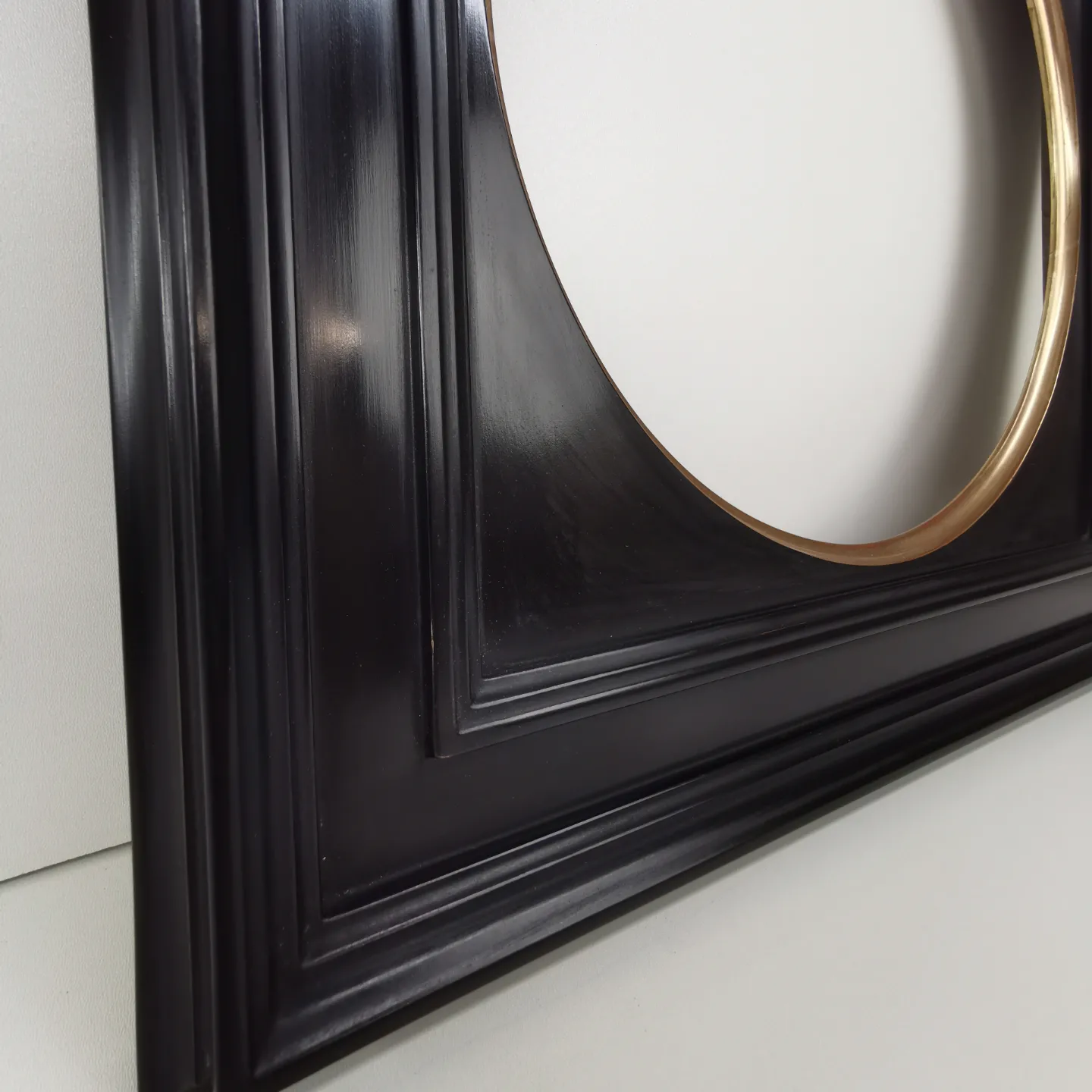
How to Display Paintings in Frames: Expert Tips from a Framemaker
A well made frame does two jobs at once: it protects the painting and it presents it. Yet even the finest frame can be let down by the wall it hangs on. Knowing how to display paintings in frames properly, at the right height, in the right light and on the right wall, is what turns a framed picture into the focal point of a room instead of an afterthought. In this guide I share the expert tips I give my own clients, drawn from years of building, gilding and hanging frames in my workshop.
Everything below applies whether you own a single oil painting, a collection of works on paper or a framed mirror that anchors a hallway. The principles are the same: respect the artwork, control the light and let the frame do its work.
Why the Way You Display a Framed Painting Matters
People often treat hanging a picture as the last, least important step. In my experience it is the step that decides whether everything before it was worth doing. A painting hung too high reads like wallpaper. A painting hung opposite a bright window disappears behind glare. A painting hung above a radiator slowly dries out, and no frame can fully protect it from that.
Display decisions are also conservation decisions. Light, heat and humidity act on a painting every single day it hangs on your wall, which is far longer than it ever spends in my workshop. A frame gives the work its first line of defence, and I have written separately about how a picture frame protects the artwork inside it, but the wall you choose finishes the job the frame begins.
Hanging Height: Bring the Centre of the Painting to Eye Level
The single most useful rule I can give you is the one galleries use: hang the painting so that its centre sits 145 to 152 cm (57 to 60 inches) from the floor. That is average standing eye level. Most pictures in private homes hang 20 or 30 cm too high, usually because people centre them on the empty wall rather than on the viewer.
The rule bends in furnished rooms. Above a sofa or a sideboard, I aim for the bottom edge of the frame to sit 15 to 25 cm above the furniture, so the painting and the furniture read as one composition rather than two strangers. In rooms where you mostly sit, such as a dining room, it is worth dropping the centre a little lower, because your eye level drops with you.
When you hang a group of paintings, treat the whole arrangement as a single picture and apply the eye level rule to the centre of the group, not to each frame individually.
Light: The Difference Between Showing a Painting and Slowly Fading It
Light is where display either flatters the work or quietly damages it. The two questions I always ask a client are: what kind of light falls on this wall during the day, and what kind of light will you switch on in the evening?
How I Light Gilded Frames
Gold leaf is not a flat colour, it is a reflective metal surface, and it behaves like one. A frame finished with traditional water gilding and burnished to a mirror shine comes alive under warm, angled light and goes dull under flat overhead lighting. If you own a gilded frame, give it a warm white source (2700 to 3000 K) placed so the light rakes across the frame at roughly 30 degrees. A picture light mounted on the wall or a ceiling spotlight angled at the work both do this well. You will see the burnished highlights and the softer matt passages of the gilding separate, which is exactly the effect the gilder intended.
Sunlight, UV and Fading
Direct sunlight is the fastest way to age a painting. Ultraviolet light breaks down pigments, yellows varnish and embrittles paper. Watercolours, prints, photographs and anything else on paper fade first; oil paint is tougher but not immune, and the timber and gesso of the frame itself suffer too. The practical rules are simple: never hang a valued work on a wall that receives direct sun, and be cautious about the wall directly opposite a large unshaded south-facing window. For works on paper, UV-filtering glazing inside the frame adds real protection, but placement always comes first, because no glass filters everything.
Choosing the Right Wall and Room
Heat and damp are the other two enemies, and both are about where you hang, not what you hang.
Avoid the wall above a radiator or a working fireplace. Rising heat puts the painting through a cycle of drying and cooling every day in winter. Timber moves, gesso can crack, canvas slackens on its stretcher. If a chimney breast is the natural focal point of the room, hang there only if the fireplace is decorative, or accept that the work above it should not be irreplaceable.
Damp matters just as much. Bathrooms and the wall beside a kitchen hob are hostile places for original art. In older houses, exterior walls run colder and damper than internal ones; if you must use one, small felt bumpers on the lower back corners of the frame create an air gap that lets the wall breathe behind the picture. Oil paintings tolerate more than works on paper, but they are not indestructible, and how a canvas is framed affects how well it copes. I cover the structural side of this in my framing oil paintings service page, because good framing and good placement work together.
Hanging Hardware for Heavy Handmade Frames
A frame built from solid timber, coated in gesso and finished with gold leaf weighs far more than a factory moulding. A large gilded frame with glazing can easily reach several kilograms, and this is where I see the most avoidable accidents: a heavy frame on a single nail.
For anything of real weight, use two fixings. Two D-rings on the back of the frame hung on two separate wall hooks keep the frame level and share the load. For very large frames and heavy framed mirrors, a French cleat (a pair of interlocking angled battens, one on the wall, one on the frame) is the most secure method I know and holds the work perfectly flat. I am not a fan of hanging wire for heavy pieces; wire stretches over the years and lets the frame tip forward. Before a large frame leaves my workshop I fit hangers matched to its finished weight, so that the hard thinking is already done when the frame reaches your wall.
Arranging More Than One Painting
A gallery wall succeeds or fails on spacing and unity. Keep the gaps between frames consistent, somewhere between 5 and 8 cm, and place the largest or strongest work at the visual centre of the arrangement, building outwards from it. Lay the whole composition out on the floor first, or cut paper templates and tape them to the wall, and only reach for the drill when the layout convinces you.
Frames in a group do not have to match, but they should agree. A wall of mixed artworks becomes coherent when the frames share a tone: all warm gold, all dark timber, all painted in muted colours. This is where the frame choice you made earlier pays off, and if you are still at that stage, I have written a full guide on how to match a frame to the style of your interior and artwork. Gold works particularly well as the unifying thread, because gold picture frames read as a family even when their profiles differ.
Displaying Paintings and Mirrors Together
I build both frames and mirrors, and I often recommend using them on the same wall or in the same room. A framed mirror placed on the wall adjacent to your paintings doubles the daylight in the room and gives the art better ambient light for most of the day. A large mirror can also act as the anchor of a wall, with smaller framed works arranged around it in the same way you would build a gallery wall around a dominant painting.
One caution from practice: check what the mirror reflects. A mirror that bounces direct sun onto a delicate work on paper undoes every other precaution you have taken. Walk the room at different times of day before you commit. If you are looking for a mirror that holds its own beside gilded frames, my decorative mirrors are built and finished with exactly the same techniques as my picture frames, so the two sit naturally together. A good example is my modern gold framed mirror in 23 karat gold leaf, gilded on the same gesso grounds as the picture frames it will hang beside.
Room by Room: Picture Frame Ideas for Every Wall
In the living room, the classic position is above the sofa. Choose a work, or a group, about two thirds the width of the sofa, with the bottom edge 15 to 25 cm above the backrest. This is usually the best lit and most viewed wall in the house, so it deserves the strongest piece you own.
In the dining room, gold comes into its own. Gilded frames respond beautifully to candlelight and warm evening lighting, which is why they have hung in dining rooms for centuries. Hang slightly lower than standard, because everyone is seated. If you are wondering which finish suits a dining room best, warm gold gilded picture frames against deep wall colours such as green, navy or burgundy are the pairing I am asked for most often, and the one that photographs best in my clients' homes. If you want the leaf tuned to the wall colour, a custom made gold picture frame gives you that control, because the shade of the gold and the colour of the bole beneath it can both be chosen to suit the room.
Hallways suit vertical formats, pairs and runs of smaller works, because the viewer is always moving. A mirror at the end of a hallway paired with framed works along its length makes a narrow space feel considered rather than cramped. A slim profile earns its place there; my Linea slim mirror with a narrow gold frame takes up almost no visual space while still catching the light. In the bedroom, choose calmer works and check that bedside lamps do not throw glare across glazed pictures; matt, unglazed oil paintings are often the more restful choice there.
Common Display Mistakes I See
After years of delivering frames to clients' homes, the same handful of mistakes comes up again and again. Pictures hung too high, centred on the wall instead of the viewer. Glazed works hung facing a window, so that all you see is the reflection of the glass. Heavy frames on a single small hook. Groups hung with wildly uneven spacing, so the wall feels accidental. Valuable works parked above radiators because that wall happened to be empty. Every one of these is free to fix, which is what makes them worth listing.
Good Display Starts at the Framing Stage
Half of the display problems I am asked to solve are really framing problems. A canvas that sits in a frame with no depth cannot be lit without harsh shadows. A work on paper mounted without a proper window mount touches the glazing and cannot breathe. A heavy frame that left the framer without adequate hangers is an accident waiting for a wall.
This is why I build every frame around the specific work and the place it will hang. In my workshop I mill each profile from solid timber, join the corners by hand and finish the frame to suit both the artwork and the room, with the finish agreed from photographs of my previous work. For a modern canvas whose painted edges deserve to stay visible, an American box frame presents the work floating inside the frame with a shadow gap all round; you can see how this looks in practice in the floating picture frame I build to order. The wider family of options is covered in my guide to picture frames for canvas paintings. And when the work calls for something built entirely around it, from profile to finish to hanging hardware, that is exactly what my custom picture frames are for.
Frequently Asked Questions
At what height should a framed painting be hung?
Hang the painting so its centre sits 145 to 152 cm (57 to 60 inches) from the floor, which is average standing eye level. Above furniture, place the bottom edge of the frame 15 to 25 cm above the sofa or sideboard. In seated rooms such as dining rooms, hang slightly lower.
Can I hang a framed painting in a bathroom?
I advise against hanging original paintings or valuable works on paper in bathrooms. Humidity swings damage paper, canvas, timber and gesso. If you want something on a bathroom wall, a well built framed mirror is the safer and more practical choice, and inexpensive reproductions can fill the decorative role.
How do I hang a heavy framed painting or mirror safely?
Use two fixings, never one. Fit two D-rings to the back of the frame and hang them on two separate wall hooks rated for the weight, or use a French cleat for very large frames and mirrors. Avoid hanging wire for heavy pieces, as it stretches and lets the frame tip forward.
Should all the frames on a gallery wall match?
No, but they should share something: a tone, a material or a finish. All gold, all dark timber or all muted painted frames will read as a deliberate collection even when the profiles differ. Keep spacing between frames consistent, around 5 to 8 cm, and build the arrangement out from the largest work.
How should I light a gilded picture frame?
Use a warm white light source (2700 to 3000 K) angled so the light rakes across the frame at about 30 degrees, from a picture light or a ceiling spot. Angled warm light brings out the contrast between burnished and matt gilding. Avoid direct sunlight, which fades the artwork and ages the frame.
If you are planning where a new painting or mirror will hang and want the frame built for that exact spot, its light and its wall, get in touch. Tell me about the work, the room and the wall, and I will build the frame to suit all three.