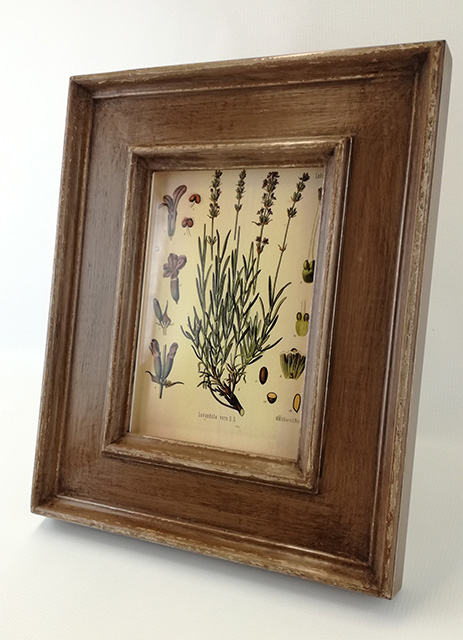
Rustic and Vintage Picture Frames: Distressed, Aged and Made by Hand
What Makes a Picture Frame Rustic
Rustic picture frames start with the timber. I build them from solid wood with a visible, open grain, and instead of hiding knots, pores and small irregularities under filler and lacquer, I let them show. The surface is often brushed or scrubbed so the softer growth rings sink back and the texture of the wood comes forward. The result is a frame that feels warm and natural on the wall, closer to a piece of joinery than to a factory moulding. My rustic picture frame made to measure is built on exactly this principle.
Texture is the defining feature. A rustic frame can be waxed bare wood, limewashed, or painted and then worn back so the grain reads through the colour. Every one I make is a custom picture frame cut to the exact size of the artwork, so the proportions always suit the piece rather than the other way round. If you want a broader overview of how different styles behave in an interior, my guide to picture frame style and aesthetics covers the full spectrum.
Vintage Picture Frames: The Look of Age, Made by Hand
Vintage picture frames are new frames finished to look as though they have lived a little. The charm is in the wear: softened edges, colour rubbed through at the corners, a patina that flattens the shine and warms the tone. None of that happens by accident in my workshop. It is built up deliberately, layer by layer, following the same logic as genuine age, which always shows first on the high points a hand would touch.
Colour does a lot of the work. Chalky whites and soft greys are the classic vintage palette, and most of my white picture frames can be ordered with a rubbed, distressed finish rather than a clean one. A good example is my light grey vintage frame, a 67 mm moulding painted and softly worn by hand. Deep colours age beautifully too: a vintage black picture frame with worn edges has real presence with portraits and still life, and sits comfortably alongside the black picture frames I make with gesso and lacquer finishes. Muted greens, dusty blues and warm greys all take patina well.
How I Age a Frame in the Workshop
The process usually runs like this. I mill the profile in solid wood, saw the mitres and joint the corners, then build the ground in several layers of gesso or paint. Once the colour is on, I cut the finish back by hand, concentrating on the inner lip, the outer corners and the high points of the profile, exactly where a frame wears naturally over decades. Tinted waxes and glazes then settle into the recesses and give the surface depth. Where the design calls for it, I add fine craquelure or expose an undercoat in a contrasting tone, so the frame looks as though it has been repainted once or twice in its lifetime.
Rustic, Vintage or Antique: What Is the Difference
A rustic frame emphasises natural wood, texture and simple, honest construction. A vintage style frame is a newly made frame finished by hand to look pleasantly aged. An antique frame is a genuinely old original, often a century or more old. Rustic and vintage frames are made new to your size, while antiques are conserved and restored rather than copied.
The distinction matters when you are choosing. If you own a genuinely old frame with worn gilding, the right route is careful conservation, which I cover in my guide to restoring antique and gilt picture frames. If you want the character of age without the fragility, a made-to-measure vintage finish gives you the look with sound joinery, stable timber and a rebate milled exactly for your artwork.
Which Artworks Suit Rustic and Vintage Frames
These finishes flatter anything with warmth in it. Landscapes and still life gain a great deal from a rustic surround, because the texture of the wood echoes the subject. Portraits, botanical prints and old family photographs sit naturally in softly distressed mouldings, and a vintage white or grey frame is one of the safest choices for a gallery wall of mixed photographs. For textiles, embroidery and sentimental pieces, the slightly imperfect surface takes the formality out of the presentation.
Oil paintings deserve a special mention. A traditional canvas in a rustic or patinated frame looks settled and intentional, and the deeper profiles I use leave room for the stretcher. I describe the technical side on my page about framing oil paintings. For smaller prints and snapshots, the same finishes are available across my photo frames.
Aged Gilding: Patinated Gold and Silver Leaf
Some of the most convincing vintage frames I make are gilded. Genuine gold leaf, laid by water gilding on a coloured bole, can be burnished and then gently rubbed through so the clay glows at the edges, exactly as it does on frames that have hung for a hundred years. A shellac or wax patina knocks back the brightness and shifts the gold towards a deep, antique warmth. Silver leaf on a dark bole gives a cooler, shabby chic character that works beautifully in pale interiors.
This is slow work, but it is what separates a hand-aged gilt frame from a moulding sprayed with gold paint. If gilding is the direction you are leaning, my article on gold picture frames explains the leaf types and finishes I offer, from pale 6 carat to deep 23 carat gold.
Shabby Chic Mirrors and Distressed Mirror Frames
Everything above applies to mirrors as well. A white shabby chic mirror, with a solid wood frame painted and rubbed back by hand, brightens a hallway or bedroom without the hard gleam of a modern finish. My white vintage mirror is exactly this kind of piece, hand-painted in broken white and distressed individually, so no two frames wear the same way. Distressed mirror frames in grey, silver or soft black bring the same lived-in character to a bathroom or living room. At the cooler end of that palette sits my silver vintage mirror, Antico Silver, leafed with genuine silver and gently aged by hand. And because I make every framed mirror to measure, the proportions can be matched exactly to the wall.
In practice this is one of the most popular ways clients bring the vintage look home. A distressed mirror is easier to place than a large artwork, it works in rooms where paintings would struggle, and the frame itself becomes the decoration.
Reclaimed Wood and Sustainable Framing
Where the structure allows it, I like working with reclaimed timber and wood from certified sources. Old boards carry their history in the surface, and reusing them suits the whole spirit of rustic framing. I am honest about the limits, though: reclaimed wood has to be dry, stable and free of old fixings before it goes anywhere near a mitre saw, and not every salvaged board earns its place. When it does, the frame has a depth of character that no artificial distressing quite matches, and nothing new is felled to make it.
How I Build a Rustic or Vintage Frame to Order
Every frame starts as raw, solid timber in my workshop. I mill the profile, saw the mitres, join the corners properly, and build the finish in layers, then age it by hand as described above. Because each piece is individual, you choose the level of distressing, the base colour, the patina and the exact dimensions, down to the millimetre. I agree the finish with you before I start, working from photographs of my previous frames and colour variants, so you know exactly how the distressing and patina will look.
This is the same process behind all my bespoke picture frames, whether the brief is rustic, vintage, classic or something in between. And if your interior leans the other way entirely, towards clean lines and quiet profiles, my guide to modern picture frames shows the opposite end of what I make. I ship internationally, and frames travel to the US without glass.
Frequently Asked Questions
What is the difference between rustic and vintage picture frames?
A rustic frame celebrates natural wood: visible grain, texture and simple construction. A vintage frame imitates age through distressed paint, worn edges and patina. Many of my frames combine both, with a textured timber base under a hand-aged finish.
How do you make a new frame look old?
I layer paint or gesso over solid wood, cut the finish back on the edges and high points where real wear appears, then tone the surface with tinted waxes and glazes. Craquelure and exposed undercoats can be added for a stronger effect.
What colours work best for a vintage picture frame?
Chalky white, soft grey, muted green and worn black are the most reliable. Aged gold and silver leaf give a richer result. The best choice depends on the artwork and the wall colour, so I ask for photographs of both and help you decide.
Do rustic and vintage frames suit modern interiors?
Yes, in moderation. One or two aged frames in a clean, contemporary room create a deliberate contrast and stop the space feeling flat. The key is repetition of tone, so the frame picks up a colour that already exists in the interior.
Can I order a mirror in a rustic or vintage frame?
Yes. Any finish I make for pictures can be built as a mirror frame, in any size. Distressed white and silver finishes are the most requested for hallway and bathroom mirrors.
If you have an artwork, a photograph or a wall that needs this kind of character, send me the dimensions through the contact page and I will suggest profiles, finishes and a price.