Which Artworks Don't Suit Moulded Picture Frames?
What makes a picture frame moulded (or profiled)?
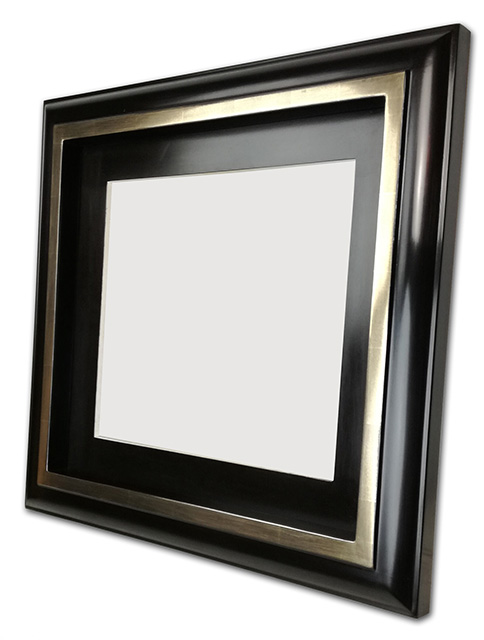
When I talk about a moulded picture frame, I mean a frame with a shaped profile milled into solid wood, rather than a flat strip of timber. That profile is the whole character of the frame: a bevelled face that slopes towards the artwork, a coved or arched hollow that draws the eye inward, or a stepped, stacked section that builds depth in layers. These are what a framer calls the moulding, and in my workshop I mill each one from solid timber. A moulded profile can be quiet and simple, or it can carry hand-carved corners and a gilded lip that turn it into a decorative object in its own right. Either way, the shaped profile gives the frame a presence a flat strip never has.
That presence is exactly why a moulded frame is not right for every work. A shaped profile competes for attention, adds visual weight and casts its own shadows. For the right painting that is a gift. For the wrong one it overwhelms the artwork, distorts the proportions or simply looks out of place in the room. If you want to understand how a profile changes the way a work reads before you commit, my note on reverse and coved profiles covers the mechanics in more detail. Below I set out the cases where I steer a client away from a moulded profile, and the ones where I encourage it.
Modern and minimalist artworks
Contemporary graphics, photography and abstract work rarely benefit from a shaped, decorated profile. The whole language of a minimalist piece is restraint, and a prominent moulding argues with that restraint. The eye keeps drifting to the profiled edge instead of resting on the image. For work like this I build a slim, quiet frame that lets the piece breathe: a narrow section, a clean line and a neutral finish in white, black or a soft grey. I offer these in both matte and gloss, because a matte surface reads as calm and natural while a subtle sheen adds a modern accent without any ornament at all.
If your work sits in this territory, my white picture frames and black picture frames are the natural starting point, and my guide to modern picture frames explains how I keep a contemporary frame simple without letting it look cheap. For a whole wall of pared-back pieces, the thinking in my article on frames for minimalist interiors applies to the room as well as the single work.
Small, delicate works on paper
Watercolours, pencil drawings, etchings and small prints are the works I most often rescue from a frame that is too heavy for them. A broad, moulded profile sits around a delicate image like a stone wall around a sketch. The fix is almost always the opposite of a heavy profile: a light wooden frame paired with a generous mount, so a wide border of card gives the image room and the frame stays modest. That band of space is what lets a small work hold its own on a large wall.
Works on paper also need protecting, not just framing. Genuine watercolour and print pigments fade, and cheap backing can acidify and stain them over years. This is where I use conservation methods as a matter of course: acid-free mounts, proper spacing off the glass and materials chosen to last. If your piece has any value to you, sentimental or financial, my archival and museum framing is built for exactly this, and my article on wooden picture frames shows how a simple timber moulding can still feel considered.
Deep-edge and gallery-wrapped canvases
Modern canvases are often painted right around the sides, so the edge of the work is part of the work. A moulded profile is the wrong answer here for a simple reason: its rebate and sloping face would cover the very edges the artist meant you to see. Force a deep, gallery-wrapped canvas into a shaped profile and you either hide part of the painting or leave it looking cramped.
The right solution is a frame that holds the canvas without touching its face, with a clean reveal of space around it. That is the American Box, also called a floating frame, where the canvas appears to hover inside the frame with a shadow gap on every side. It suits contemporary canvas work far better than any moulded profile. I explain the construction and the effect in my guide to the American Box frame, and for printed and stretched canvas specifically my framing for canvas prints covers how I mount the piece so it stays flat and secure. If you are still weighing your options, my overview of frames for canvas paintings lays the choices side by side.
Industrial and loft interiors
Sometimes the artwork would take a moulded frame happily, but the room will not. In a loft or industrial space built from steel, exposed brick and concrete, a carved, gilded profile introduces a note of formality that fights everything around it. The frame stops feeling elegant and starts feeling misplaced. In those settings I keep the moulding simple and architectural: a clean black or dark timber section, a flat or gently squared profile, nothing that reads as decorative. The frame then belongs to the space instead of interrupting it. My black picture frames are usually where this conversation starts, and if you are matching several pieces to one interior it is worth thinking about the whole scheme rather than each frame in isolation.
Heavily textured paintings and thick impasto
Paintings with a heavy, raised surface are a practical problem as much as an aesthetic one. Thick impasto, palette-knife work and an uneven paint layer need depth, and the shallow rebate typical of a decorative moulding often cannot take the canvas cleanly. Worse, a tight rebate can press against a proud paint surface and damage it. This is a case where the answer is not an off-the-shelf profile at all but a frame milled to the right depth for that specific piece.
When I build a made-to-measure frame I set the rebate to suit the work in hand, so a deep or textured canvas is held properly with room to spare and nothing bears on the paint. Oil paintings in particular repay this care, and my page on framing oil paintings explains how I approach depth, support and presentation for them. If your piece needs a frame made around it rather than adapted to it, that is the whole purpose of my custom picture frames.
When a moulded frame is exactly right
None of this is an argument against moulded frames. It is an argument for using them where they sing. A shaped, decorated profile is the natural home for classical paintings, portraits, landscapes and any composition with real depth of perspective. On work like this the profile does not compete; it frames the world inside the picture and gives it gravity. This is also where hand-gilding earns its place, because real gold leaf laid over a coloured clay ground has a warmth and a depth that no printed finish reproduces.
People often ask whether ornate and gold frames are out of style. In my experience they are not; they are simply specific. Used on the right work and in the right room, a richly moulded frame looks timeless rather than dated. If this is the direction your piece calls for, my gold gilded picture frames and my partially gilded and painted frames show the range I make, my article on gold picture frames covers where they work best, and if you are curious about the craft itself, my page on water gilding walks through how the finish is built by hand. For the classical end of the spectrum more broadly, my note on classic picture frames is a good companion.
The moulded profile that suits a mirror, not a painting
Here is a turn that surprises people. The very profile that would overwhelm a small painting can be perfect around a mirror. A mirror has no image to compete with, so an elaborate, carved, gilded moulding has nothing to fight; it simply becomes the decoration. That is why a heavily moulded frame that I would talk a client out of using on a modest watercolour is often exactly what I would recommend for a hallway or living-room mirror meant to make an impression.
If you love an ornate profile but your artwork will not carry it, consider giving that profile to a mirror instead. My decorative mirrors and glamour mirrors are built around exactly this idea, and every one is made to measure so the frame suits the wall it will hang on. It is one of the most common ways I help someone keep the look they want without forcing it onto a piece it does not suit.
How I match a frame to the work in my workshop
Every commission starts with the work, not the moulding. Before I mill anything I look at the composition, the scale, the way light sits on the surface and whether the edges are part of the piece. Those things decide the profile, the depth of the rebate and the finish, long before colour or gilding come into it. Because I work alone and build each frame from solid timber, I can shape the moulding and set the rebate to the exact piece rather than fitting your painting to a stock length.
I do not work from corner samples or finish swatches. Instead I agree the finish with you from photographs of frames I have already made, so you see the real colour and the real gilding on real work before I begin. From there I mill the profile, build up the gesso ground, gild or paint to the finish you have chosen, and burnish the surface by hand. If you would like a frame made around your artwork this way, the simplest place to start is my bespoke picture frame service or the full range of custom picture frames. If you are still deciding on a direction, my broader guide to matching a frame to your interior and artwork is the natural next read.
Frequently asked questions
Are moulded, ornate or gold picture frames out of style?
No, but they are specific rather than universal. A moulded or gilded frame looks timeless on classical work, portraits and landscapes, and in a room that can carry a little formality. It looks dated only when it is forced onto minimalist or contemporary work that wants restraint. Matched to the right piece, it does not go out of fashion.
What kind of frame suits a watercolour or a small drawing?
A light, modest frame with a generous mount. The band of card around the image gives a delicate work the space it needs, and a slim wooden moulding keeps the frame from overpowering it. Conservation-grade, acid-free materials matter here too, because works on paper are vulnerable to fading and staining over time.
Do my picture frames all have to match?
Not exactly, but they should relate. Frames on one wall or in one room work best when something connects them, whether that is a shared finish, a common profile or a consistent tone, even if the sizes differ. The link between them is what makes a group read as intentional rather than accidental.
What frame works for a canvas with painted edges?
An American Box, or floating, frame. It holds the canvas with a gap of space around it so the painted sides stay visible and the work appears to hover inside the frame. A moulded profile would cover those edges, which is the opposite of what a gallery-wrapped canvas needs.
Can I still use a moulded profile if my artwork will not carry it?
Yes, by putting it on a mirror instead of a painting. A mirror has no image to compete with an elaborate frame, so a carved or gilded profile you love can become a decorative statement above a console or in a hallway without overwhelming anything.