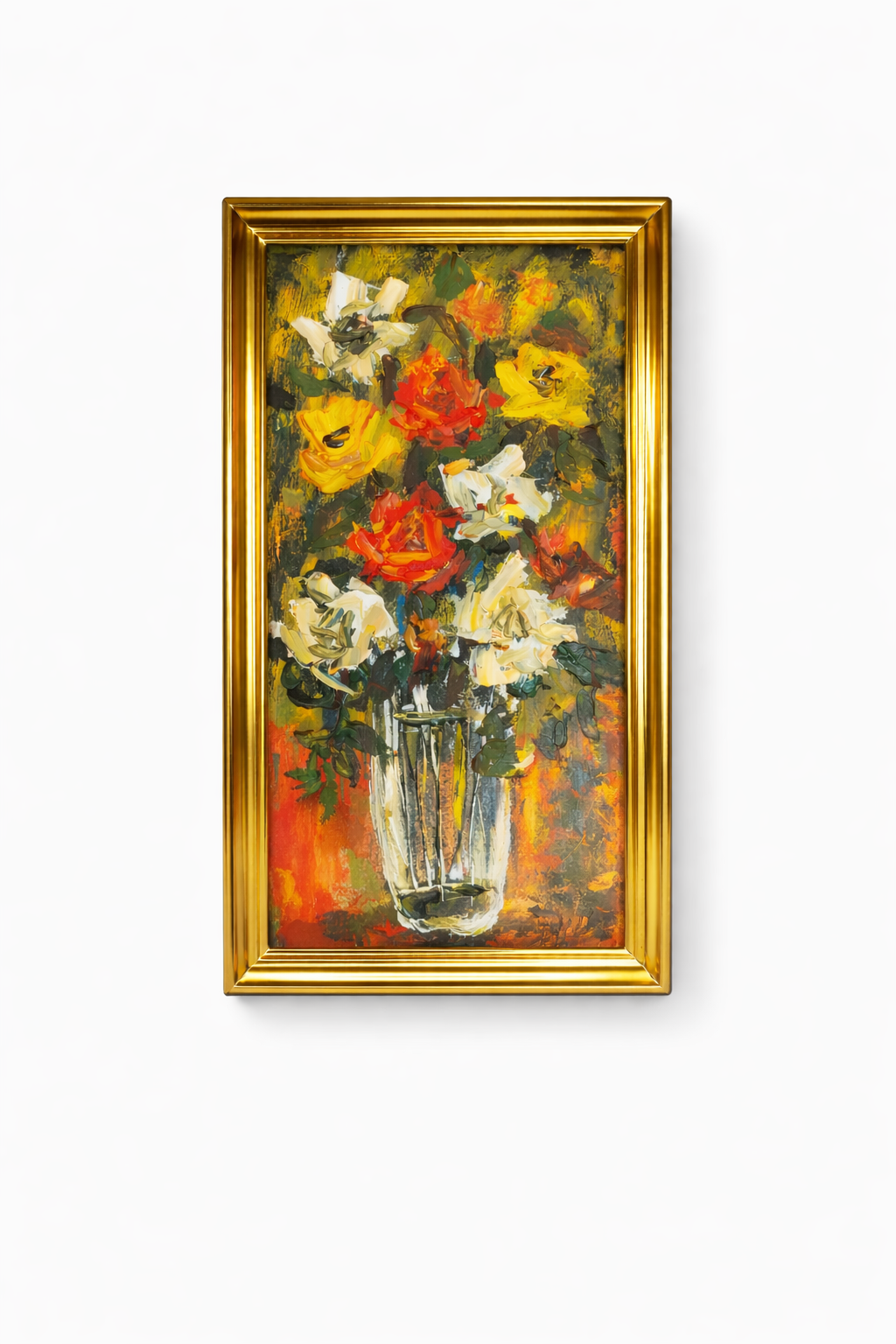
Where to Buy Ready-Made Picture Frames
If you are looking for ready-made picture frames, the place of purchase should never be accidental. Frames are widely available — in home improvement stores, interior shops, and online marketplaces — yet the real difference begins where mass production ends and conscious craftsmanship begins.
In our workshop, structural integrity is the foundation of every frame. Each frame is joined using traditional mortise and tenon techniques, significantly increasing corner strength and long-term stability. Importantly, frames are assembled before the finishing process begins. This sequence ensures a uniform surface finish and precisely aligned joints across the entire perimeter.
This is a quality standard rarely achieved in large-scale, assembly-line production.
Materials Worth Comparing
Aluminium, plastic, and MDF represent the most common market categories. However, the true distinction lies in precision, material selection, and construction method.
In the case of wooden frames, quality depends on:
-
careful timber selection
-
profile stability
-
precision cutting and joint reinforcement
-
finishing process integrity
We work exclusively with carefully selected wood, controlled for structural stability and straightness. Profiles are precisely cut, mortise-joined, and bonded under controlled pressure. Only after the structure is permanently secured does the finishing process begin — including multi-stage sanding, staining, and surface protection.
This order of operations guarantees coating durability and structural consistency over time.
A frame is not merely decorative — it is a structural component of artwork presentation.
Online Shopping: Access to Craftsmanship
Online purchasing offers access to a wider selection of profiles and finishes, but real value lies in knowing who stands behind the product.
We also produce frames using traditional hand-applied gold leaf gilding. The gold tone depends on karat content — higher karat gold provides deeper, warmer, and more refined hues. The final character of the gilding is further influenced by the color of the clay bole applied beneath the gold leaf:
-
Red bole enhances warmth and depth
-
Yellow bole increases brightness and luminosity
-
Dark bole builds contrast and dramatic definition
This is not a superficial decorative layer — it is a classical technique used in art conservation and gallery-grade framing.
In-Store Purchase: Evaluating Real Quality
Buying in person allows direct evaluation of construction precision.
A high-end frame should be:
-
rigid and structurally stable
-
perfectly aligned at the corners
-
evenly finished across the surface
-
proportionally balanced to the artwork
Mortise joinery provides a level of structural integrity that cannot be achieved with simple staples or unreinforced glued joints.
Quality reveals itself in the details — in the accuracy of the angle, the consistency of the finish, and the solidity of the structure under pressure.
Frames Beyond Paintings
Frames for posters, mirrors, and certificates also require proper structural support. Particularly in the case of mirrors, corner strength and profile rigidity directly affect user safety.
A premium frame performs a load-bearing function — not merely a decorative one.
Wood: Warmth and Timeless Value
Natural wood remains a premium material. Our wooden frames are produced using traditional joinery methods combined with meticulous finishing processes.
Each frame is assembled prior to staining or gilding, ensuring complete surface continuity. In gilded models, gold leaf is applied by hand over a carefully prepared bole base. The tone of the gold is selected intentionally to complement the character and color palette of the artwork.
In distressed models, controlled brushing techniques reveal the natural grain structure, followed by layered finishing to build depth and refinement.
This is a process that requires time, precision, and expertise — resulting in frames designed for long-term durability and gallery-level presentation.
Glass and Artwork Protection
Frames equipped with anti-reflective glass significantly improve viewing comfort in bright interiors. Structural integrity — reinforced corners, stable backing systems, and secure hanging mechanisms — ensures protection regardless of artwork weight.
Artwork protection is not only about glass — it is about the entire structural system of the frame.
Unconventional Formats and Custom Depth
Three-dimensional works and layered compositions require frames with appropriate depth and structural stability. In such projects, there is no room for compromise — precision, rigidity, and durable joinery are essential.
How to Recognize the Right Frame
To evaluate quality:
-
Examine the profile proportion relative to the artwork size
-
Check corner rigidity and joint precision
-
Inspect finish consistency across the surface
-
Apply light pressure — the frame should not flex or shift
If the retailer operates directly as a manufacturer, you gain better control over quality consistency, color repeatability, and long-term availability of matching profiles.
A frame should enhance the beauty of the artwork — never overpower it. Premium framing is present but discreet. Its value lies in structural integrity, refinement of detail, and enduring performance.