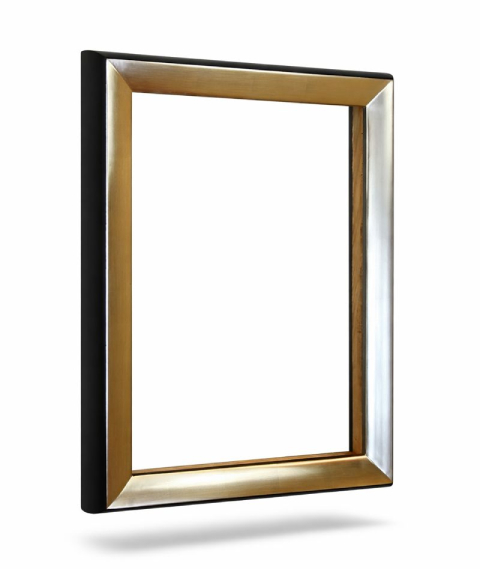
Functionality and Protection
Choosing a frame for a canvas painting is not just a matter of aesthetics — it's also a question of functionality and protection. A well-chosen frame doesn't simply enhance the beauty of the work; it also shields it from a range of external factors.
If you'd like to learn the basics of selecting a frame, read our guide: What Frame to Choose for a Canvas Painting.
In practice, the level of protection depends on the frame's construction and the materials used. It's worth distinguishing between mechanical protection and protection against light or moisture.
Let's take a closer look at how different elements of a frame can affect the protection and functionality of your artwork.
Frames with Anti-Reflective Glass and UV Protection
Choosing a frame with anti-reflective glass and UV protection gives your artwork the highest level of defence against light-related damage.
In reality, anti-reflective glass and UV filters primarily limit the effects of light — they do not protect the painting from all environmental factors, such as moisture or temperature changes.
This type of glass effectively reduces light reflections, which is particularly important in bright rooms where glare can interfere with how the artwork is perceived. As a result, the piece is more visible and can be appreciated in its full detail.
A UV-protective frame shields the painting from the harmful effects of sunlight, which can cause colours to fade over time.
For canvas paintings, this protection matters most when the work is displayed in highly sunlit locations — for example, near windows or in gallery spaces. This is especially significant if the painting is exposed to direct sunlight.
The combination of anti-reflective glass and UV protection means the frame not only safeguards the artwork but also enhances its visual qualities. It's worth noting, however, that for canvas paintings, the use of glass is optional and depends on the nature of the display.
Opting for a frame with these features is a worthwhile investment — it ensures your artwork not only looks its best but also remains protected and long-lasting.
Mounting and Stability: Hanging Cables and Spring Clips
Stability and ease of mounting are key factors to consider when choosing a frame for a canvas painting. A frame with a hanging cable is a practical solution that makes it straightforward to display your artwork on the wall.
For larger formats, however, additional fixing points — such as hooks or dedicated mounting systems — are recommended to ensure a secure installation.
Hanging cables allow the painting to be positioned easily and safely wherever you choose, which is particularly important for larger and heavier works.
In addition, frames fitted with spring clips hold the canvas securely within the frame. Their effectiveness depends on the precision fit between the frame and the stretcher bar, as well as the overall build quality.
These clips act as an additional safeguard, preventing the artwork from shifting or falling out of the frame — a solution that is especially useful for deep frames, which require extra support to ensure stability and safety.
Choosing a frame with these features gives you confidence that your painting will not only look great, but will also be mounted securely. The final level of security, however, depends on correct installation and the conditions of display.
How to Mount a Painting in a Frame
Frames purchased in my shop are designed for easy self-assembly and come fitted with spring clips that simplify the process of inserting and securing the canvas.
This type of solution is standard in modern framing systems and allows for quick mounting without the need for specialist tools.
Frame Functionality in Practice – What Really Matters
In practice, choosing the right frame should take into account not only appearance, but also how the painting will be used and displayed. Every picture frame provides a degree of protection, but its effectiveness depends on the construction and materials used.
The best results are achieved when the frame is matched both to the type of artwork and the conditions in which it will be displayed.
A wide range of frames is available on the market, differing not only in style but also in functionality. Deep frames, for example, offer better protection for the edges of the canvas, while glazed frames provide additional surface protection — primarily for prints and graphic works.
Not all frames offer the same level of protection, so it's worth paying close attention to how they are constructed in terms of durability and stability.
For canvas paintings, canvas frames are commonly used — they protect the edges of the canvas and help it maintain its shape. Canvas frames are particularly recommended for contemporary works where preserving the three-dimensional character of the piece is important.
These solutions are especially practical for everyday use, as they reduce the risk of mechanical damage.
The choice of material also plays a significant role. Wooden frames provide solidity and stability, which is particularly important for larger formats. In such cases, selecting the right frame directly affects the safety of the entire composition.
It's worth keeping in mind that not all frames share the same properties — so before purchasing, it's a good idea to check what features are offered across the frames available in a given category.
Ultimately, the right frame is one that combines aesthetics with functionality, giving the artwork both proper presentation and lasting protection.