Decorative Elements and Additions
Decorative elements and additions are, one might say, the finishing touch in the presentation of a work of art. One of the most important of these is the decorative frame itself. Choosing the right accessories can genuinely change the way we experience a painting — enhancing its artistic qualities and protecting it from damage.
If you'd like to learn the basics of choosing a frame, see our guide: What Frame to Choose for a Canvas Painting.
In practice, the framing primarily protects the edges of the canvas and the stretcher bar — the frame itself does not shield the surface of the painting from light or moisture. Let's take a look at how various decorative elements can enrich the presentation of an artwork, making it more visually compelling and longer-lasting.
A well-chosen frame should suit both the style of the artwork and the space in which it will be displayed. In many cases, it's worth selecting a frame that doesn't dominate the composition, but instead subtly enhances it.
Passe-Partout: Showcasing the Artwork
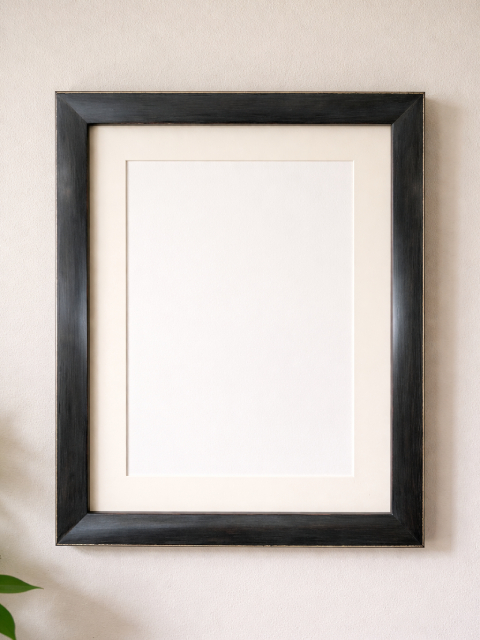
A passe-partout is not merely a decorative addition — it's also a practical solution that helps to showcase the artwork. This cardboard mount separates the image from the frame, drawing attention to its beauty while offering an additional layer of protection. With a passe-partout, the work gains visual depth and its colours appear more vivid.
In professional framing, a passe-partout also serves to create an exhibition space — it establishes distance between the artwork and the frame, which improves the readability of the composition.
It's worth noting, however, that passe-partouts are primarily used with prints, photographs, and works on paper. For canvas paintings, they are less common and are generally only used when the painting is framed behind glass or has a more decorative character.
Frequently used alongside anti-reflective glass, a passe-partout also helps reduce light reflections — which is particularly important in bright rooms. In an art gallery, for example, where lighting plays a central role, a well-chosen passe-partout can significantly improve how the work is perceived.
Custom Frames: Personalisation and Precision Fit
Personalisation and precision fit are the defining advantages of a custom-made frame. This type of frame is the ideal solution for those who want their artwork presented in a way that is both unique and perfectly tailored to individual needs. A custom frame ensures an exact fit — something that is especially important for non-standard dimensions.
When choosing a frame, the dimensions of the painting and the proportions of the composition are also key considerations. The right frame size should harmonise with the scale of the work and its overall character.
In gallery practice, the principle of proportion is frequently applied: the larger the painting, the wider the frame profile, in order to maintain visual balance between the frame and the composition. For large canvases, wide frames are often used to clearly separate the artwork from the wall behind it.
In the case of traditional painting — landscapes, portraits, and similar works — a more elegant frame is typically called for. These are classic works that benefit from framing that reinforces their character. In some instances, a larger frame is also a strong choice, lending the piece a more formal, representative quality.
Frame Colour as a Compositional Element
The choice of frame colour also carries significant weight. When selecting a colour, it's worth paying attention to the dominant tones of the composition and the character of the interior. In practice, frame colour should be chosen to harmonise with the painting without drawing attention away from the work itself.
For traditional compositions, muted tones are the most common choice — gold, patinated bronze, or natural wood shades. These options help to underline the elegance of the painting and give the overall framing a more timeless quality.
With the right frame, a painting can become a cohesive element of the interior arrangement while retaining its full artistic character.