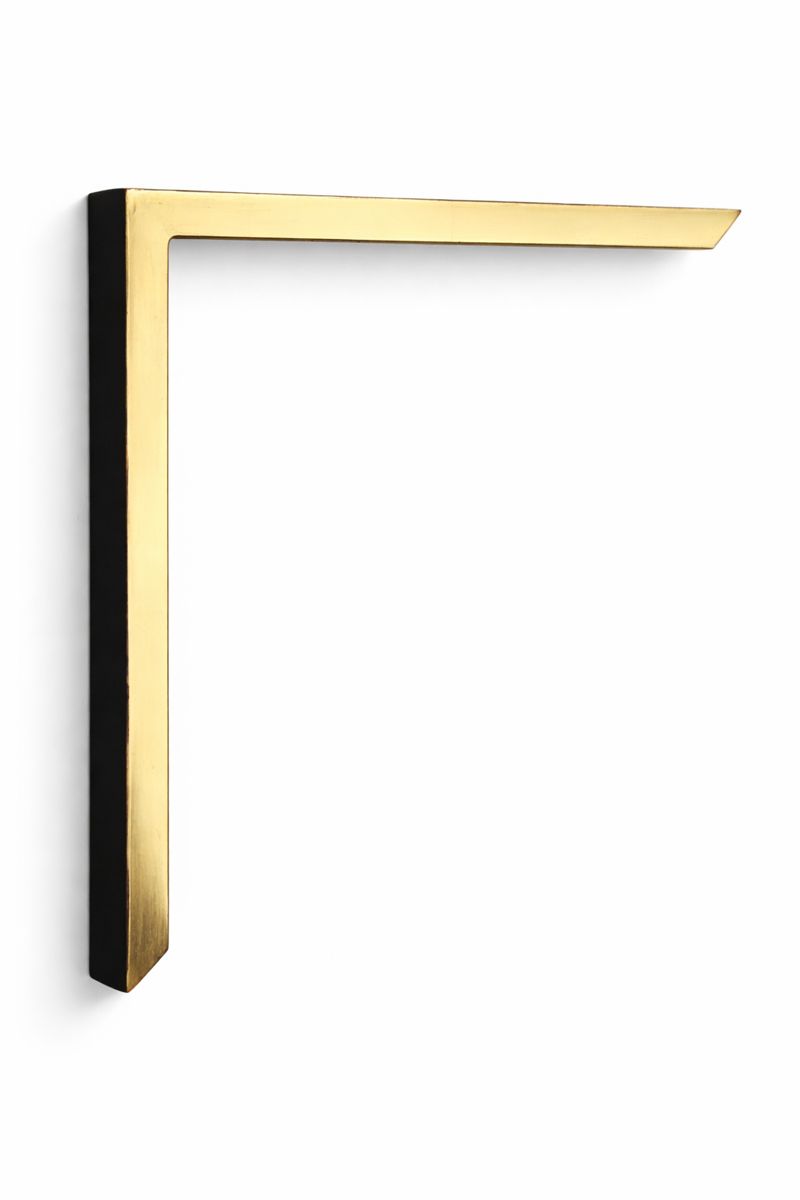
American Box Frame: A Practical Guide to Modern Box Framing for Canvas Art
What box framing actually is
An American Box frame is a deep, open frame that holds a canvas slightly inside its profile, with a small gap left between the edge of the painting and the surrounding moulding. Instead of the rebate sitting on top of the artwork and covering its border, the work sits back from the front face, so the eye reads a clean channel of shadow all the way round. That gap is the whole point of box framing: it makes a stretched canvas appear to float inside the frame rather than being pinned behind it.
Box framing, then, is less a single product than a method. The painting is mounted from behind or fixed into an inner support, the sides of the canvas stay visible, and the front is left open without glass. In my workshop I build these frames from scratch around the exact depth of the stretcher, which is why the term American Box is often used interchangeably with deep box frames and gallery frames. The construction is what defines it, not a fixed look.
American Box, floater, shadow box and flat frames: clearing up the terms
These names overlap in everyday use, and it causes a lot of confusion when clients describe what they want. Here is how I separate them in practice.
A flat or flush frame sits directly against the edge of the canvas. The moulding meets the painting with no gap, so the work fills the opening completely. It is the most traditional approach and the closest to how a print behind glass is framed.
A floater frame is the family that the American Box belongs to. The canvas is set into a wider, deeper channel so a visible margin of shadow runs between the artwork and the moulding, and the painting reads as suspended. American Box is essentially a floater frame built with a squared, box-like profile and enough depth to take a chunky stretcher.
A shadow box is deeper still and usually enclosed at the front with glass or acrylic. It is built for objects with real depth, such as textiles, medals or three-dimensional pieces, where you need space between the item and the glazing. People often search for a shadow box frame when what they actually want for a painting is an open American Box, because both create that recessed, floating effect.
So if you have a stretched canvas and you like the floating look without glass, an American Box frame is almost always the right description. If your piece is an object that needs protecting under glazing, a shadow box is the closer fit. For flatter works on paper, a traditional frame with a mount tends to suit better, and I cover that choice in my guide to the best frame for a canvas painting.
When an American Box frame is the right choice for your canvas
I reach for box framing most often with contemporary work: abstracts, large-format pieces, heavily textured oil and acrylic paintings, and anything painted around the sides of the stretcher so the edges are part of the composition. In all of these, a conventional rebate would crop the work or hide brushwork that the artist clearly meant to be seen.
A box frame also earns its place when a room would feel heavy with a wide decorative moulding. Because the eye reads the shadow gap rather than a broad ornamental border, the frame stays quiet and the painting holds the attention. That is why galleries and collectors lean on this style, and why it sits so naturally in modern interiors. If you want to see how frame style changes the feel of a room, I walk through that in my piece on choosing a frame for your interior.
For a fuller description of how the style behaves on different paintings, including profile and colour options, I keep a companion article on the American Box frame for a painting that goes deeper on the look itself. If you are weighing it against a more classical, period-appropriate option, a reverse-profile Dutch frame is the usual alternative for oil paintings, and I make those to order as well.
Materials and finishes I use for box frames
Every box frame I make starts as solid wood, cut and jointed to the size of the individual canvas. The species sets the character. Oak gives a firm, close grain and takes wax and lacquer beautifully; ash is pale and clean for lighter rooms; pine is honest and economical for posters and studies; and American walnut brings a deep, warm tone for higher-end pieces. Solid timber also lets the frame be reworked or refinished years later, which matters for work you intend to keep.
For the surface I most often use matte, satin or gloss painted finishes, mixed and applied by hand in layers so the colour has depth rather than sitting flat. The colour of the frame is a real decision, not an afterthought: a deep black or charcoal can sharpen a contemporary canvas, a soft off-white can lift a pale composition, and a natural oiled wood can warm the whole arrangement. I build these as fully bespoke picture frames, so the profile width, depth and finish are all chosen for your specific painting.
Gilded and painted edges: a hand-finished option
A box frame does not have to be plain. One of the things I am asked for most is a fine gilded line on the inner or outer edge, which catches the light and frames the floating canvas without adding visual weight. I lay genuine metal leaf by hand using traditional water gilding over a coloured clay bole, the same method used on antique and museum frames. Depending on the tone you want, that can be 23-carat yellow gold, 22-carat moon or white gold, or palladium for a cooler, silvery line.
For a finished example, my hand-gilded American Box floating frame is built on exactly this principle, with the front face laid in 23-carat gold leaf over red bole and crisp black outer edges that open up the space around the canvas. Pieces like this sit in my collection of gilded and partially painted frames, where genuine leaf and hand-applied colour are treated as equal partners, and in my range of fully gilded picture frames for a richer effect. If you would like to understand how the technique itself works, I explain the full process on my water gilding page.
How I build a box frame to order
Every commission begins with the canvas itself. I work to the real measurements of the stretcher, to a tenth of a centimetre, because the gap that makes a box frame work only looks right when it is even on all four sides. The mouldings are cut and joined with dowelled, mortise-and-tenon corners rather than simple pins, so the frame stays square under the weight and movement of a deep canvas. Where a gessoed and gilded surface is involved, that joint has to hold for decades, and a mitre fixed with v-nails will not.
The canvas is then fixed into an inner support and mounted from behind, usually with screws through the stretcher into the frame, so nothing shows from the front and the work can be removed or swapped later. The frame arrives ready to hang, with cord fitted for the orientation you have chosen. If you prefer, I pre-drill the mounting points and talk you through fitting the painting yourself. For canvas prints and photographs on canvas specifically, I keep a dedicated canvas framing service, and for original oils my framing oil paintings page covers the finishing choices in more detail. You can commission any box frame directly through my made-to-measure picture frames.
Looking after a canvas in an open box frame
Because the front is open, an American Box frame asks for a little ordinary care. Dust the surface and the inner channel gently with a soft, dry brush rather than a cloth, and keep the painting out of direct sunlight and away from radiators and damp walls, as you would with any oil or acrylic on canvas. For valuable or fragile work where you want the protection of glazing as well as the floating look, I can build a glazed shadow box or recommend archival and museum framing, which is designed to protect art for the long term.
The same made-to-measure, hand-finished approach runs through everything I build, including my framed mirrors, so a box-framed canvas can sit comfortably alongside the rest of a considered interior.
Frequently asked questions
What is box framing?
Box framing is a way of mounting a stretched canvas inside a deep, open frame with a small gap left between the artwork and the moulding, so the painting appears to float. The sides of the canvas stay visible and the front is left open, without glass.
Is an American Box frame the same as a floater frame?
Yes, in practice. American Box is a type of floater frame, built with a squared, box-like profile and enough depth to take a chunky stretcher. Both create the same floating, recessed effect.
Does an American Box frame need glass?
No. The front is left open, which is part of the appeal for oil and acrylic paintings on canvas. If you want glazing as well, for protection or for delicate work, a glazed shadow box or museum framing is the better route.
What size of canvas suits a box frame?
Box framing works on almost any size, but it is especially effective on larger and deeper canvases where the floating gap reads clearly. I build each frame around the exact depth of your stretcher.
Can a box frame be gilded?
Yes. I often add a hand-gilded line in 22 or 23-carat gold leaf along the inner or outer edge, applied by traditional water gilding over a clay bole, so the frame catches the light without adding bulk.