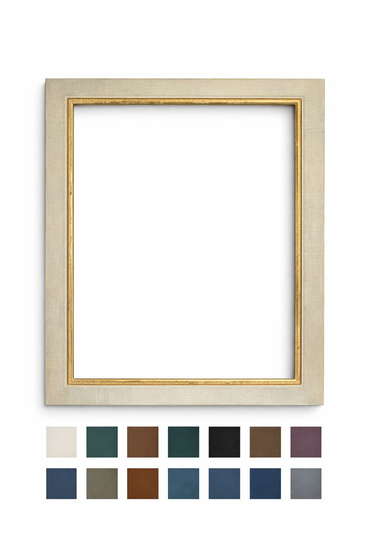
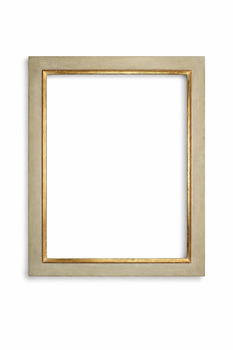
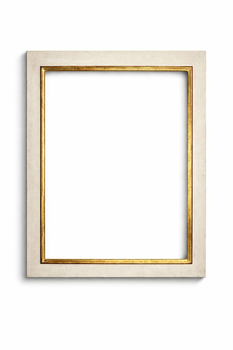
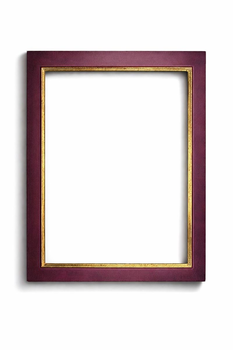
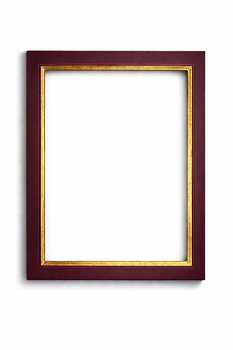
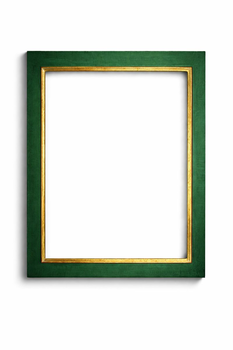
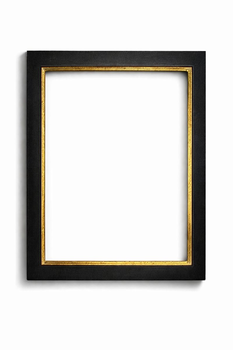
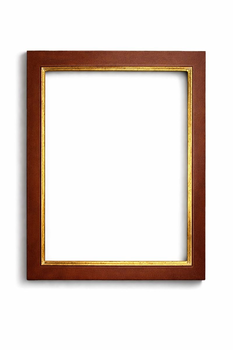
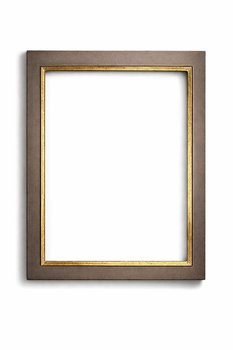
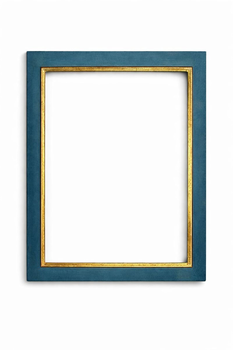
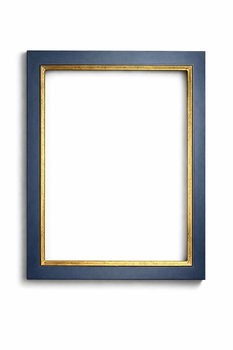
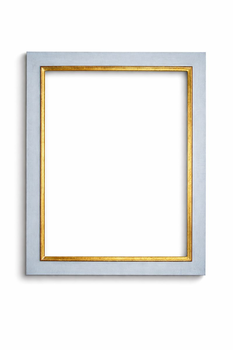
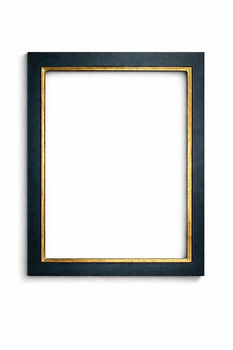
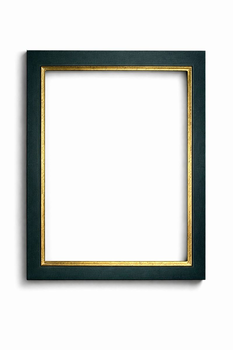
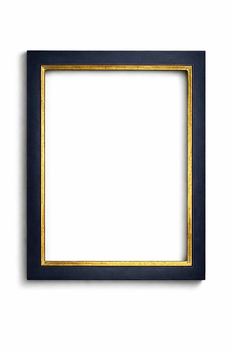
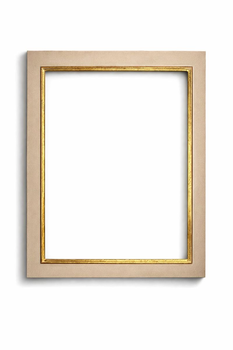
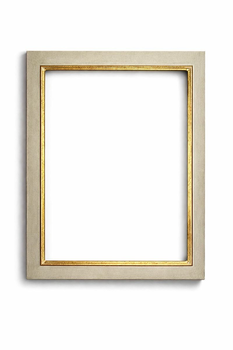
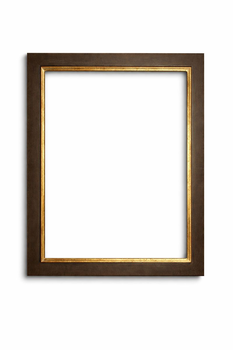
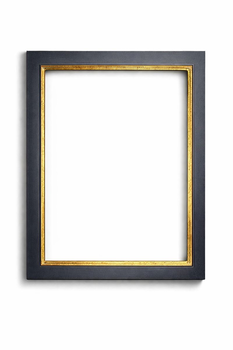
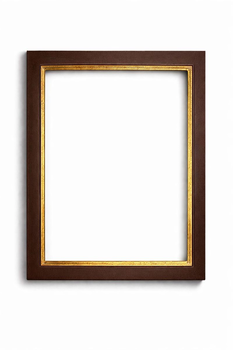
Hand-painted picture frame with a 23-karat gold leaf edge
- Add feedback:
- Code: 145GG
- Manufacturer: Karol Milewski
-
Availability:
 Exists
Delivery time: 20 - 30 working days
- pcs.
- €191.67
A flat picture frame, hand-painted in one of eighteen colours and closed at the artwork side with a narrow band of genuine 23-karat gold leaf. The moulding is 50 mm wide, mitred and reinforced with wooden splines, and I cut every frame to the size of your painting. Made for oil and acrylic on canvas, prints, drawings and photographs.
A flat, hand-painted moulding closed at the artwork side by a single narrow band of genuine 23-karat gold leaf. That band is the only raised element in the whole profile and the only gilded one: it draws a fine line of real metal around the painting, while the rest of the frame stays quiet in a colour you choose from eighteen hand-painted finishes. It belongs to my gilded and partially painted picture frames, and it is the one I reach for when a painting needs a gold edge without an ornate frame around it.
The moulding profile
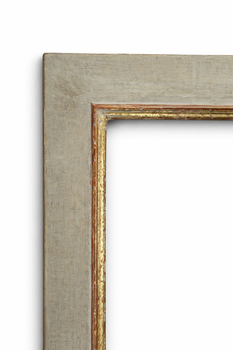
Read from the artwork side outwards, the profile opens with the rabbet, 7 mm wide, with a depth of 10 or 20 mm chosen at checkout, into which the work is seated. Immediately beside it runs a small ogee finishing in a bead, lifted slightly above the plane of the rest of the moulding. This is the only element that stands proud of the face, and the only one that carries gold leaf.
Beyond it, towards the outside, the profile opens into a flat frieze that takes up most of the width. The frieze is smooth, with no divisions or mouldings cut into it, and it finishes in a plain outer edge that drops back towards the wall. One clear accent at the painting and one broad calm plane behind it: the eye goes to the gold, then returns to the picture.
The frieze can be made wider to order, keeping the same ogee and bead at the artwork side. Changing that proportion changes the character of the frame: the wider the frieze, the more firmly the painting is separated from the wall, which is what large formats usually need.
Specification
- Style: flat profile, hand-painted, with a gold leaf edge at the artwork side
- Moulding width: 50 mm
- Moulding thickness: 27 mm
- Rabbet: 7 mm wide, 10 mm or 20 mm deep, chosen at checkout
- Maximum thickness of the work: 20 mm
- Timber: low-tannin timber of the kind used in museum and conservation work
- Corner joinery: mitred at 45 degrees, reinforced with wooden splines
- Gilding: genuine 23-karat gold leaf, water gilded over red bole, burnished with an agate stone
- Painted finish: hand-painted in layers, satin sheen
- Character of the finish: light, controlled patination on the gilded edge
- Colours: eighteen painted finishes from the order menu
- Glass, mount and backing: available as add-ons, individual quote on request
- Fixing: sprung retaining clips as standard
- Hanging: picture wire as standard, portrait or landscape chosen at checkout
- Lead time: 20 to 30 working days
The dimensions you give are the dimensions of the painting, not of the frame. I build the frame around the format you enter, so the outside measurement is larger by twice the width of the moulding, while the inside opening is cut with a technical clearance of 2 – 3 mm and covers the edge of the work by roughly 4 – 5 mm.
Which artworks and interiors it suits
A flat profile with a gilded edge is for work that should speak for itself. It does its best job on oil and acrylic paintings on canvas, where the narrow band of gold closes the composition without adding ornament to it, and on prints, drawings and fine art photography, where it orders the field of view and separates the work from a pale wall. If you are framing an oil painting and want to compare approaches first, I set out the options on my page about framing oil paintings.
The colour decides where the whole frame goes. Deep navies, dark greens and blacks behave like classical frames: they deepen the painting and sharpen the contrast with the gold. Greys and browns sit in a neutral role, useful in galleries and in rooms where several works hang on one wall. The lighter finishes, light coffee brown and champagne white, open the frame up and work best with watercolour, print and photography. I go into the relationship between frame colour and the character of a work in my guide to picture frame colour and materials.
How I make and finish it
I cut the moulding at 45 degrees and join the corners with wooden splines before any surface work begins. The corner is then a single rigid block, and every layer that follows runs across it continuously, with no seam showing through the paint or the gold.
The gilded edge is prepared in the traditional sequence: layers of chalk and glue ground (gesso), then red bole over it, then water gilding with genuine 23-karat gold leaf. I lay the leaves one against the next with a small overlap and burnish them with an agate stone. Finally I patinate the edge, so the red bole shows through the gold in places and quietens its shine. The patination is controlled and repeatable, worked along the length of the profile rather than left to chance.
The frieze is painted by hand in layers and finished to a satin sheen. Small irregularities in the surface are the mark of the tool; they do not affect the dimensions, the geometry or the way the work seats in the rabbet.
How it differs from a ready-made frame
On a ready-made frame the gold line beside the picture is usually foil or metallic paint, and it greys and loses its reflection over the years. Here it is metal: 23-karat leaf laid over bole and burnished to a mirror. Gold does not oxidise or go dull, and its brightness shifts with the angle of the light in a way that print cannot reproduce.
The second difference is structural. Production frames are stapled or wedged from behind into a profile that has already been finished. A wooden spline set in before priming holds the corner in one plane even as the timber moves with changes in humidity. The third difference is size: the frame is made for a particular painting, not the other way round.
Functionality
I supply the frame without glass by default, for a canvas on a stretcher mounted directly in the rabbet. The rabbet depth is chosen in the order menu: 10 mm for thinner stretchers and work on rigid board, 20 mm for standard and deeper stretcher bars.
I can also make this moulding as a floating frame, without a rabbet, so the edges of the canvas stay visible and a gap runs between the painting and the moulding. That suits contemporary painting where the sides of the stretcher are part of the work. I explain how the construction behaves in my guide to floating picture frames for canvas art.
Complete framing – additional options
Every frame I make can be completed with full archival and museum-quality framing: anti-reflective UV-filtering glass (four classes to choose from), acid-free museum mat board, spacers wrapped in acid-free paper and a Dibond backing. This kind of mounting protects the work from light, acids and distortion. I set out the full glass and material specification on a separate page: archival and museum framing for paintings and photographs. All components are available at extra cost, as an individual quote on request.
Mounting and hanging
This frame is intended for paintings on canvas and stretchers, so it does not include glass as standard. To hold the painting, I fit sprung retaining clips as standard; they pivot to the side, so the canvas can be removed and replaced quickly without tools. On request I supply brass plates with screws instead (provided loose, for permanent self-installation). The hanging orientation – portrait or landscape – is chosen at checkout. Picture wire is standard, with a single D-ring available on request.
Ordering made to measure
The base price shown on the site is the price per running metre of moulding. The perimeter of the painting is not the full length the frame needs: corners cut at 45 degrees take extra length, and the wider the moulding, the more they take. The calculator accounts for the full moulding consumption with corners and for any options you choose, so you only need to enter the dimensions of your painting to within 0.1 cm. The calculator handles formats up to 120 × 80 cm, and I make larger sizes to individual order. The lead time is 20 to 30 working days.