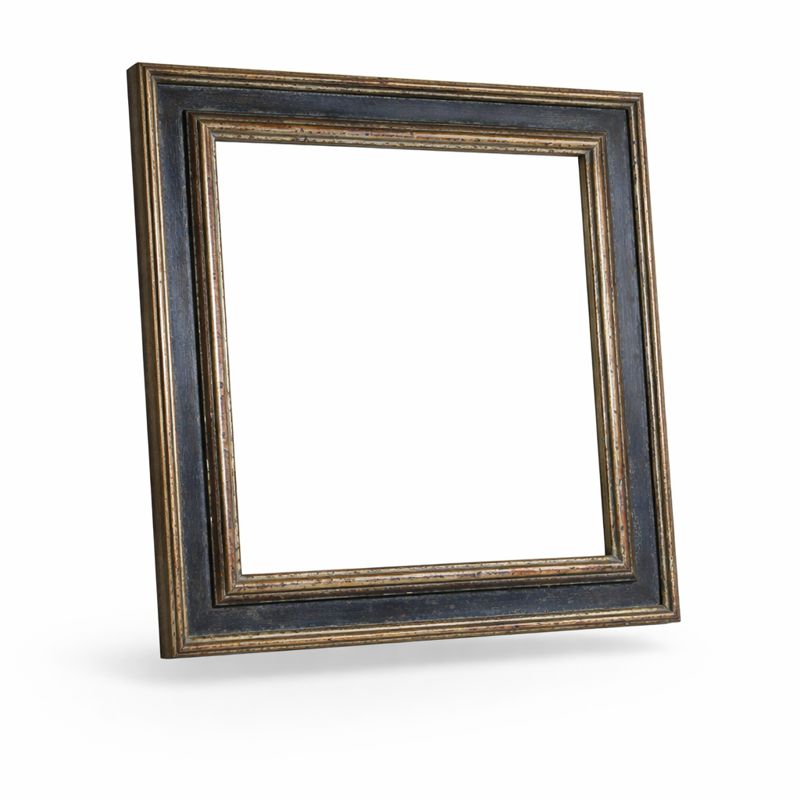
How to Frame Different Types of Artwork
Framing is never one job. A watercolour on paper, an oil on stretched canvas and a signed football shirt each move, fade and gather dust in their own way, so each needs a different answer. This is a practical guide to how I frame different types of artwork in my workshop, from prints and photographs to textiles, memorabilia, fine-art prints and mirrors, and how I decide which glass, mount and frame will both suit the piece and protect it for the long term.
How I decide which frame a piece needs
Every commission I take on starts the same way. Before I think about a moulding or a finish, I look at three things: what the work is made of, how it behaves over time, and where it is going to hang. Those answers settle most of the framing before any wood is cut.
Three technical decisions do the real work. The first is whether the surface should sit against the glass or be held away from it. The second is what glazing protects it, plain, anti-reflective or UV-filtering museum glass. The third is how the piece is mounted and held in place so it cannot slip, cockle or press against the glazing. Get those right and the profile becomes a question of taste rather than a risk to the artwork. If you want to see how those choices add up in practice, I break the parts down in my guide to what professional framing actually costs, and you can see the full range of options in my picture frame shop guide.
Framing prints, photographs and posters
Paper is the most sensitive material I handle. A print or photograph should almost never touch the glass, because trapped moisture and direct contact cause cockling, sticking and foxing over time. The usual solution is a passe-partout, a bevelled mount cut from acid-free board that holds the sheet a few millimetres off the glazing, tidies the composition and gives the work room to breathe. I use acid-free board and backing throughout, and UV-filtering glass wherever a piece will see daylight.
For a poster you plan to swap out often, a simple ready-made frame does the job. For a photograph or print you value, a made-to-measure frame with a proper mount is worth the difference. If you like a warmer, more decorative presentation I gild frames by hand, which I explain in my guide to gold and gilded picture frames. You can browse ready options in my photo frames range, or commission something specific from my custom picture frames.
Framing canvas and oil paintings
A stretched canvas behaves nothing like a sheet of paper. It has depth, it is painted right to the edge, and in most cases it is framed without glass so the surface can breathe. The two approaches I use most are a float frame, where the canvas sits inside the moulding with a narrow shadow gap all round so it appears to hover, and a traditional profile with a slip that borders the image. Oil and acrylic paintings usually take the float or a classic moulding rather than glazing.
Because canvas framing is a subject in its own right, I have written about it separately: start with choosing the best frame for a canvas painting and the different canvas picture frame types. For commissioned work I offer dedicated framing for oil paintings and custom frames for canvas prints and photo on canvas.
Box frames and shadow boxes for objects, textiles and memorabilia
This is the most bespoke work I do, and the piece often has depth that a flat frame simply cannot hold. A box frame, also called a shadow box, is a deep frame fitted with a spacer that creates real distance between the glazing and the object. That space is what lets me frame things that are not flat: a medal, a set of coins, a christening gown, an embroidered sampler or a signed sports shirt.
- Sports shirts and jerseys. I mount the shirt on a padded backing board and pin it from behind with concealed stitches, then build the box deep enough that the fabric never presses against the glass. It stays taut, the folds sit where you want them, and the shirt can be removed later without damage.
- Coins and medals. These sit in acid-free trays or recessed inserts so they are held securely and kept away from any material that could cause tarnishing.
- Textiles and embroidery. Cloth is laced onto a board rather than glued, so it holds an even tension, does not distort and can be taken out again if needed. A spacer keeps the surface off the glass.
- Three-dimensional objects and reliefs. I choose the depth of the box to the object itself, so nothing is compressed and the piece reads clearly behind the glazing.
The same deep construction is what people often mean by an American box or floating box frame for canvas. Because every object is a different size and depth, I build these frames to measure. For memorabilia and collections this is best handled as a proper commission through my bespoke picture frames for fine art, paintings and collections, and you can see the base profiles in my custom picture frames.
Framing diplomas, certificates and coins
Documents are usually about presentation as much as protection. A classic frame with a mount gives a diploma or certificate an official, considered look, and keeping every layer acid-free stops the paper yellowing over the years. If the piece hangs in daylight I fit UV-filtering glass. Commemorative coins are framed as above, set into an insert tray that holds them safely and keeps them from tarnishing. For these I usually work from my custom picture frames so the proportions suit the document.
Framing giclée prints and fine art
A giclée or other fine-art print rewards good glass. The depth of colour and fine detail are exactly what cheap glazing flattens, so I use UV-filtering museum glass that cuts reflections, holds the colour and protects the pigment from light. Combined with archival mounting and acid-free backing, this is the standard I apply to any print or work on paper that is meant to last. When a piece has real value or is part of a collection, this is a job for proper archival and museum framing for paintings and photographs.
Framing mirrors and large-format works
A mirror is a piece I make from the frame outwards. It uses the same solid timber, the same joinery and the same hand-gilding as a picture frame, but the frame also has to carry the weight of the glass and stay true over a large span. That is why I make mirrors to measure rather than to a standard size, and why the frame and the mirror are designed together.
Large-format work, whether a big painting or an oversized mirror, needs reinforced joints and a considered hanging solution so it sits safely and stays flat. I build these as bespoke commissions. If you are choosing a mirror, my mirrors in frames section is the place to start, with decorative mirrors and hand-gilded glamour mirrors as distinct ranges, and my guide on how to choose a glamour mirror walks through shape, proportion and finish.
Protecting the work: glazing, mounts and materials
Across every type of artwork, the protection comes down to the same handful of materials chosen well. Acid-free mounts and backing keep paper and textiles from acid burn and yellowing. UV-filtering and museum glass reduce fading and reflections. Spacers and boxes keep sensitive surfaces off the glazing. And where a frame is gilded, I use traditional water gilding on genuine gold leaf rather than imitation metal, which is what gives a real gold frame its depth and its longevity. This is also the difference I explain in conservation and specialist framing.
Frequently asked questions
What is a box frame?
A box frame, or shadow box, is a deep frame fitted with a spacer that holds the glass away from the artwork. That gap lets you frame objects with depth, such as medals, coins, textiles or a sports shirt, without the surface pressing against the glazing.
Box frame or flat frame: which do I need?
Use a flat frame for anything essentially two-dimensional, such as a print, a photograph or a painting on paper. Choose a box frame whenever the piece has depth or must not touch the glass, including memorabilia, embroidery and three-dimensional objects.
How do you frame a football shirt or sports jersey?
I mount the shirt on a padded backing board, pin it invisibly from behind so it stays taut, and build a box deep enough that the fabric never touches the glass. The result is a clean, secure display, and the shirt can be removed later without damage.
What glass is best for framing artwork?
For anything you value I recommend UV-filtering glass to reduce fading, and museum or anti-reflective glass where clarity matters, for example with photographs and fine-art prints. For a poster you will change often, standard glass is usually enough.
How long does a made-to-measure frame take?
My typical lead time is 4 to 8 weeks, depending on the complexity of the work and the finish. Hand-gilded and bespoke box frames sit at the longer end because each one is built and finished individually.
Can you frame an unusual size or shape?
Yes. I build every frame and mirror to measure, so non-standard sizes, deep objects and irregular pieces are exactly the kind of work I take on.
Framing your piece with me
Whatever you are framing, the aim is the same: to present it well and protect it properly, using materials chosen for the specific work. If you have a piece in mind, from a single print to a collection or a large mirror, you are welcome to get in touch or start a bespoke commission, and I will help you choose the right approach.