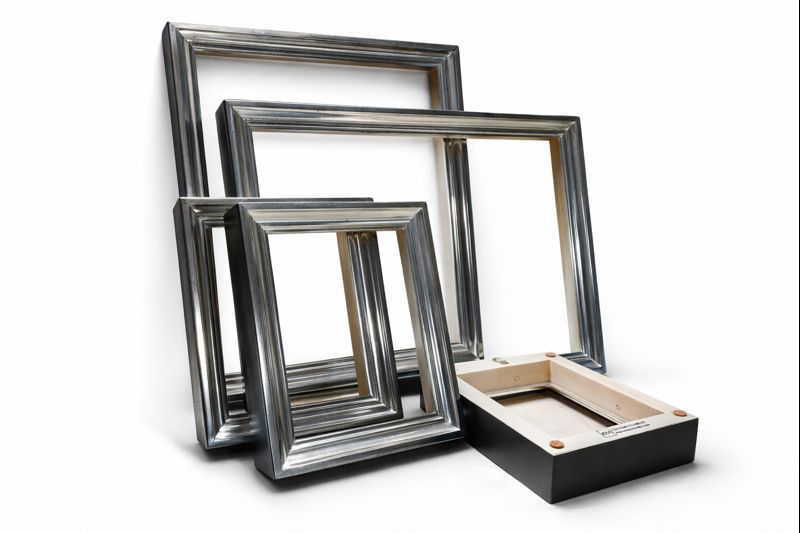
Gilded Picture Frames: Real Gold Leaf, Gesso and Hand-Gilding
A gilded picture frame is finished with genuine metal leaf, most often real gold, laid over a carefully prepared ground. It is not gold-coloured paint and it is not a printed film, and that difference is exactly what gives a gilded frame its depth and its glow. In my workshop I gild frames by hand using traditional methods, from the bare moulding through the gesso and clay preparation to the leaf and the final burnish. This guide explains what a gilded picture frame actually is, how it is made, and how to choose one for your artwork.
What makes a frame "gilded"?
A frame is gilded when fine sheets of metal leaf are applied to its surface. With a genuine gilded picture frame that leaf is real gold, beaten to an extraordinary thinness and laid by hand. The alternative you will see on inexpensive frames is gold-coloured paint or foil, which can look acceptable from a distance but lacks the reflective life of real leaf and tends to flatten and dull over time. Gilding is a craft in its own right, and a properly gilded frame reads as a piece of work rather than a coating.
Gold leaf or metal leaf?
Not every shiny frame is gilded with gold. Genuine gold leaf holds its colour permanently and does not tarnish, which is why it has been used on frames for centuries. Cheaper imitation leaf, often called Dutch metal, mimics the look at a fraction of the cost but can oxidise and shift in tone unless it is sealed. I work with genuine gold leaf for frames that need to last and hold their value. If you want the full comparison of the two materials, I have written about it separately in my piece on the difference between gold leaf and Dutch metal.
Water gilding, gesso and bole
The finish that separates a fine gilded frame from an ordinary one comes from how the surface beneath the leaf is prepared. I build up a ground of gesso, a traditional mixture that is sanded smooth, and over it a layer of bole, a fine coloured clay (commonly red or yellow) that is also known as pulment. The bole does two things: it gives the leaf a warm undertone, and once dry it can be burnished. I then lay the gold and bring selected areas up to a deep shine with an agate stone, leaving other areas matte, so the frame shifts between soft and mirror-bright as the light moves. This is water gilding, the most refined of the gilding methods, and you can read more about the technique itself on my water gilding page. The gesso and bole stage is slow and largely invisible in the finished piece, but it is where the quality of a gilded frame is decided.
Which carat of gold?
Gold leaf comes in different carats, and the carat changes both the colour and the character of the finish. Higher-carat leaf is warmer and richer: 23-carat and 23.75-carat yellow gold gives the classic deep, glowing tone, while 22-carat moon gold has a slightly cooler, softer warmth that many people prefer for contemporary interiors. Lower-carat white golds, around 12-carat and 6-carat, move toward a pale, silvery look that suits cooler colour schemes. I choose the carat to suit the artwork and the setting rather than defaulting to one option, because the same profile can feel traditional or restrained depending on the leaf.
Hand-carved and bespoke gilded frames
Gilding shows ornament beautifully, which is why hand-carved gilded frames have such presence. Carved detail catches and scatters the light, so a gilded ornamental frame becomes a decorative object in its own right. Because I make each frame to order, the profile, the carving, the carat and the level of burnish are all decisions we make for your specific piece. Made-to-measure also matters for fit: a gilded frame built to the exact dimensions of a painting sits correctly and protects it properly. For valuable or one-off work this is where a bespoke picture frame earns its place.
Where gilded frames work best
Gilded frames are the natural choice for oil paintings, traditional portraits and landscapes, and sacred or formal works, where the warmth of gold reinforces the character of the piece. They also lift a contemporary interior when set against neutral walls, where the contrast does the work. For oil work in particular I have put together guidance on framing oil paintings, and if you are weighing up the look of gold more broadly, including how it sits in different rooms, my guide to gold picture frames covers the styling side. To see real examples of my gilding, look at this classic frame in moon gold on a red clay base and this arched frame gilded with gold leaf.
Choosing and commissioning a gilded frame
If you would like a gilded frame, there are two routes. You can choose from frames I have already made in my gold gilded picture frames, including pieces that combine gilding with hand-painted sections in my gilded and partially painted frames. Or, if your artwork needs something built specifically for it, I can gild a frame to measure in the carat, profile and finish you choose. The simplest way to start is to get in touch with the dimensions and a photograph of the piece, and I will suggest options and prepare a quote.
Frequently asked questions
What is a gilded picture frame? It is a frame finished with real metal leaf, usually genuine gold, applied by hand over a prepared gesso and clay ground, rather than painted with gold-coloured paint.
Are gilded frames real gold? A genuinely gilded frame is finished with real gold leaf, which is solid gold beaten very thin. Frames described as gold-coloured or gold-effect use paint or imitation leaf instead, so it is worth asking which one you are buying.
What is the difference between a gilded frame and a gold frame? "Gold frame" usually describes the colour, however it was achieved, while "gilded" describes the method: real leaf applied by hand. A gilded frame is one specific, traditional way of making a gold frame.
What carat of gold is used for gilding frames? Most commonly 22-carat and 23-carat for warm yellow and moon golds, with lower-carat white golds around 6-carat and 12-carat for cooler, paler finishes. The right carat depends on the artwork and the interior.
Can you gild a frame to measure? Yes. I gild bespoke frames to the exact size of the artwork, choosing the profile, carving, carat and finish for the piece, which is the best route for valuable or unusually sized works.