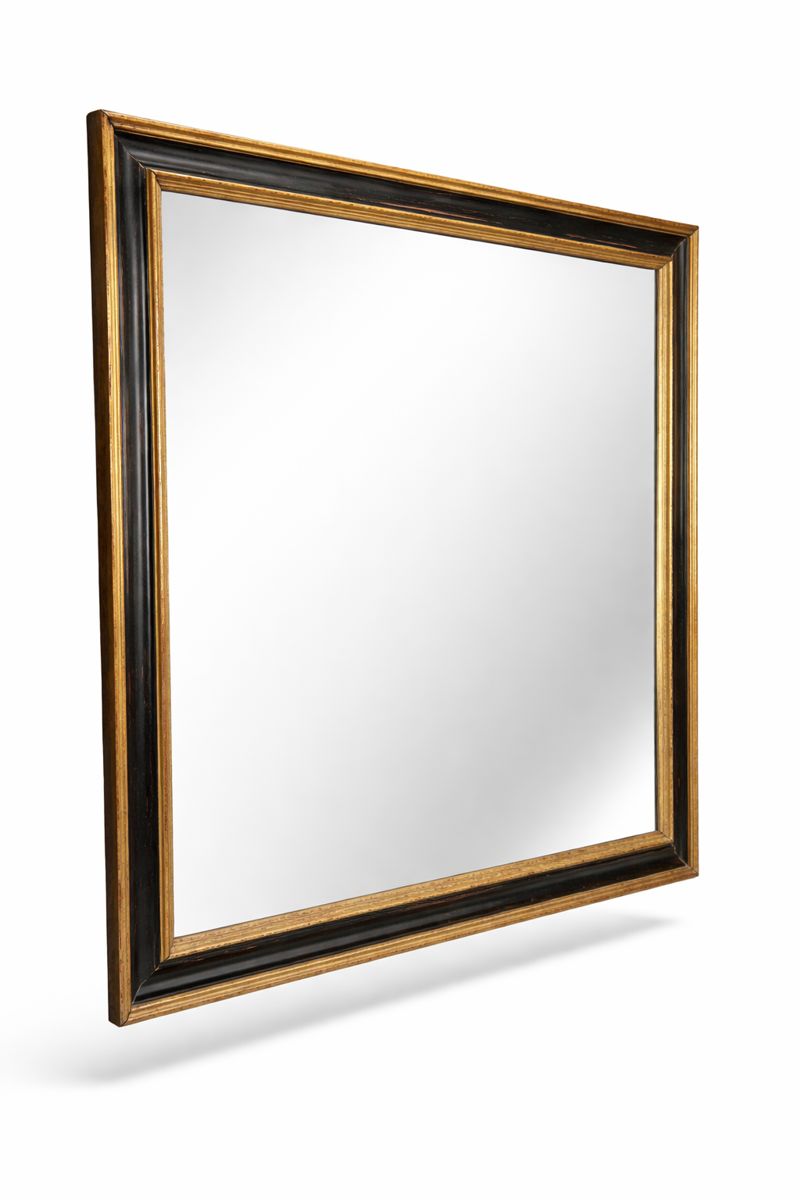
Custom Gilded Picture Frames: Made to Measure with Real Gold Leaf
Custom gilded picture frames bring together two crafts in one object: traditional joinery and hand gilding. In my workshop I build every frame to measure from solid timber, prepare the surface with gesso and coloured bole, then lay real gold leaf and burnish it by hand. The result is a frame made for one specific artwork, in the exact size, profile and shade of gold that the piece asks for.
This guide explains what goes into a made to measure gilded frame, how to choose between carats and colours of leaf, and where custom gilding earns its place: oil paintings, classical and sacred works, contemporary canvases and framed mirrors.
Why Choose a Custom Gilded Picture Frame?
Ready-made gold frames come in fixed sizes, with ornament pressed from moulded compo and, in most cases, a finish of imitation leaf or gold paint. They can look convincing at first glance, but they rarely fit an artwork precisely and the finish tends to darken with time.
A custom gilded frame answers a different set of needs. When I build custom picture frames to order, you decide on every element that shapes the final result:
- the rebate, cut to the millimetre for your painting, print or mirror glass,
- the width, depth and shape of the profile,
- the carat and colour of the gold leaf,
- the colour of the bole showing through the gold,
- the finish, from a mirror-bright burnish to a soft, aged patina.
You can see the range of finishes I work with in my gold gilded picture frames collection. Every frame there began as raw timber and was gilded by hand in the workshop, and every model can be ordered in your dimensions.
How I Make a Custom Gilded Frame in My Workshop
Every gilded frame I make follows a sequence that has changed very little in several hundred years. I start with a solid timber moulding, cut and joined for the exact dimensions of the work. The wood then receives many coats of gesso, a mix of chalk and glue, each coat sanded back until the surface feels like polished stone. Ornament, where the design calls for it, is carved by hand rather than pressed from a mould.
On top of the gesso I lay bole, a fine clay bound with glue. The bole does two jobs: it cushions the leaf during burnishing and it sets the undertone of the finished gold. Then comes the gilding itself. I use water gilding, the classical technique in which each leaf of gold is floated onto a wetted surface and, once dry, burnished with an agate stone. Burnishing compresses the leaf against the bole and produces the deep metallic shine that no gold paint can imitate.
The last stage is toning. A freshly gilded surface can be left bright, softened with a thin glaze, or gently rubbed through to the bole on the high points to suggest age. This is where a custom frame truly departs from anything mass-produced: the finish is tuned to your painting, not to a production line.
Choosing the Gold: Carats, Colours and Finishes
Gold leaf is not one material. I keep several kinds in the workshop, and the choice changes the character of a frame more than most clients expect:
- 23ct and 23.75ct yellow gold gives the classic warm tone of museum frames and old master gilding,
- 22ct moon gold is slightly paler and cooler, a quiet gold that suits both classical and modern work,
- 12ct and 6ct white gold read almost as silver but do not tarnish the way silver leaf does,
- palladium and silver offer cool, contemporary finishes; silver needs a protective coat, palladium does not.
The bole underneath matters just as much. Red bole lends warmth and depth to yellow gold, grey bole cools it down, and a plum or ochre clay shifts the tone again. On request I leave small areas slightly distressed so the clay shows through, which gives the surface life.
One decision comes before all the others: real gold leaf or imitation. Composition leaf costs less at the start, but it contains copper and zinc, so it oxidises and relies on a lacquer that itself ages. Genuine leaf keeps its colour for generations. I have written a separate comparison of gold leaf and Dutch metal if you want the full picture before you commission a frame.
Where Custom Gilded Frames Work Best
The original purpose of gilding was to honour the image inside the frame, and that logic still holds. These are the situations in which I most often build gilded frames to measure.
Oil paintings and classical works
Oil on canvas or panel carries weight, texture and often a deep stretcher, so it needs a frame with real depth and a rebate cut for the stretcher bars. A hand-gilded profile, whether fully bright or softly patinated, is the traditional partner for portraits, landscapes and sacred painting. If you are preparing a canvas for framing, my page on framing oil paintings covers rebate depth, spacers and fitting in more detail.
Contemporary art and partial gilding
Gilding is not reserved for old masters. Some of my favourite commissions pair a painted profile with a single gilded element: a black frame with a burnished gold sight edge, a grey architectural profile with one gilded moulding, a deep floating frame with leaf laid inside the shadow gap. Partial gilding gives a modern canvas a precise flash of light without turning the frame into ornament. Examples of this approach are gathered in my category of gilded and partially painted frames.
Gilded frames for mirrors
Everything described above applies to mirrors as well. The same timber, gesso, bole and leaf that frame a painting will frame a mirror, and a gilded mirror often does more for a room than a single artwork, because it works with light all day. I build glamour mirrors and classical gilded mirrors to measure, in the same finishes as my picture frames and with high clarity mirror glass. If you are furnishing a hallway or a living room, a made to measure gilded mirror is worth considering alongside your framing.
Made to Measure: Sizes, Formats and Fit
Standard frame sizes cover a narrow band of formats, and gilded ready-mades are scarcer still. Made to measure removes the limit entirely. I regularly build gilded frames for panoramic canvases, square works, small icons and arched or round paintings, and each rebate is cut to the actual object, not to a nominal size.
Fit matters more with gilded frames than with painted ones, because a gap or a forced fit shows immediately against a bright gold edge. If you are weighing up whether your artwork needs this route, I explain the trade-offs in my article on when a custom frame beats a ready-made one, and I walk through the decision step by step in the guide on how to choose custom picture frames.
Caring for and Restoring a Gilded Frame
A water gilded frame needs very little: dry dusting with a soft brush, no sprays, no damp cloths, and a spot on the wall away from direct radiator heat. Genuine leaf does not tarnish, so there is nothing to polish.
Old gilded frames are a different matter. Worn corners, flaking gesso and darkened bronze paint from earlier repairs can all be put right. I take on this work in the workshop, from filling losses to regilding entire profiles, and I describe the process in my guide to restoring and regilding antique frames.
Frequently Asked Questions
Is real gold leaf worth the extra cost on a picture frame?
In my experience, yes, if you plan to keep the frame. Genuine leaf does not oxidise, so the surface stays stable for decades, while imitation leaf darkens and depends on a lacquer that ages. On a frame built from solid timber and gesso, real gold matches the lifespan of the rest of the work.
Which carat of gold should I choose for a frame?
For a classic warm gold, 23ct or 23.75ct yellow gold is the traditional choice. If you want something quieter, 22ct moon gold sits beautifully next to both old and contemporary paintings. For cool, silvery finishes I recommend 12ct or 6ct white gold, or palladium. I always advise on carat and bole colour against a photograph of the artwork.
How long does a custom gilded frame take?
Longer than a painted frame. Gesso needs many coats with drying time between them, and water gilding and burnishing cannot be rushed. I agree the lead time individually for every commission before any work starts.
Can you make a gilded frame for a mirror instead of a painting?
Yes. I build gilded framed mirrors to measure using exactly the same techniques, and some clients order a mirror and picture frames in matching finishes so that a whole room reads as one composition.
Do you ship custom gilded frames internationally?
I do. Frames are packed carefully and sent by courier across Europe and to the United States. For US deliveries frames travel without glass, which I explain and plan for when you place the order.
Commission a Gilded Frame Built for Your Artwork
If you have a painting, print or mirror in mind, send me its dimensions and a photograph through my bespoke picture frames page. I will suggest a profile, a carat of gold and a bole colour to match the work, and prepare a quotation for a frame built and gilded by hand, to your measurements.